
The best 13 cocoa butter substitutes for chocolate making, confectionery and baking as recommended by an experienced chocolatier.
I use cocoa butter in my chocolate making, but also when I'm making confectionery (such as nougat) and in my baking because it has neutral flavour, withstands high temperatures and sets very firm.
My chocolate courses students always find it fascinating, when I tell them that cocoa butter is part of chocolate coverture and it's the ingredients that help to get our chocolate nice and shiny and to have a great snap when you break it.
If you buy cocoa butter separately, you'd know that it can be quite pricey. In fact that's the reason why cheaper chocolate doesn't contain much cocoa butter and is regularly replaced by other butters and oils.
So, what do you do if your recipe calls for cocoa butter and you don't have any? Or if you are concerned about the cost of cocoa butter and want to use more affordable ingredients?
I've been working with chocolate for over 25 years, making chocolate truffles, bars and other chocolate treats for my lovely customers and for the last 15 years also run chocolate courses, so I've seen the price of cocoa butter going up a lot in that time.
In this blog post I want to explore some of the options you have when you want to replace cocoa butter in your chocolate making or cooking.

What are the best substitutes for cocoa butter?
- Regular unsalted or salted butter
- Coconut butter
- Coconut oil
In my experience, the actual use of the different substitute for cocoa butter will depend on what you are trying to achieve. This is because each cocoa butter substitute behaves slightly differently and has slightly different taste, which can have an impact on the final result.
What is Cocoa Butter? And why is it very special in chocolate making?
To put this simply, cocoa butter is an ingredient in a chocolate. It's a natural fat derived from cacao beans and used for chocolate making, cooking, baking and also widely used in cosmetics.
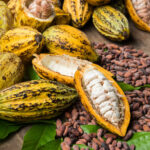
When cacao beans are harvested, they are dried, roasted and then go through a process where all the main ingredients (cocoa butter, cocoa mass and cocoa solids) are separated. The ingredients are then put back together to create coverture (chocolate to you and me...) based on individual recipes.
This process allows for the creation of milk chocolate (where sugar and milk powder is added) and also white chocolate (only cocoa butter is used together with sugar and milk powder). It also allows the manufacturers to produce a different strength of chocolate like 50% - 85% cocoa solids plain chocolates.
Cocoa butter is also sold separately for individual culinary uses, chocolate making and the cosmetics industry. I buy cocoa butter to make my own cocoa butter colours for decorating chocolate moulds and I also often use cocoa butter to temper chocolate with.
As I mentioned before, cocoa butter is quite expensive, which often leads the mainstream chocolate manufacturers to replace it with a cheaper alternative like vegetable fats or palm oils.
Unfortunately (or not, depending on your point of view) the cosmetics industry can easily charge £60 for a pot of face cream with cocoa butter, whereas an artisan chocolate producer struggles to push price of a small chocolate bar to £6. Both use cocoa butter for their product, but sadly the customers are used to paying different prices.

Cocoa butter nutritional facts
One tablespoon of cocoa butter is a pure fat. It's 120 calories and 14 grams of fat and nothing else. This is about 900 calories per 100 grams, but you are unlikely to use that much in a single recipe.
There is no protein, carbohydrates, sugar or fibre, which is something to bear in mind if you are counting calories.
Substitute for cocoa butter in chocolate making
First of all, I should point out that cocoa butter is plant-based, so there is no need to replace it in case you are adapting your recipes for vegan diets.
No matter what you replace the cocoa butter with, you need to understand that the consistency, texture and the flavour or your final product (chocolate) will change. As long as you are fine with that, then go ahead and swap the cocoa butter for something else.
In my experience, especially for chocolate making you ideally want your cocoa butter substitute to be firm enough and withstand slightly higher temperatures.
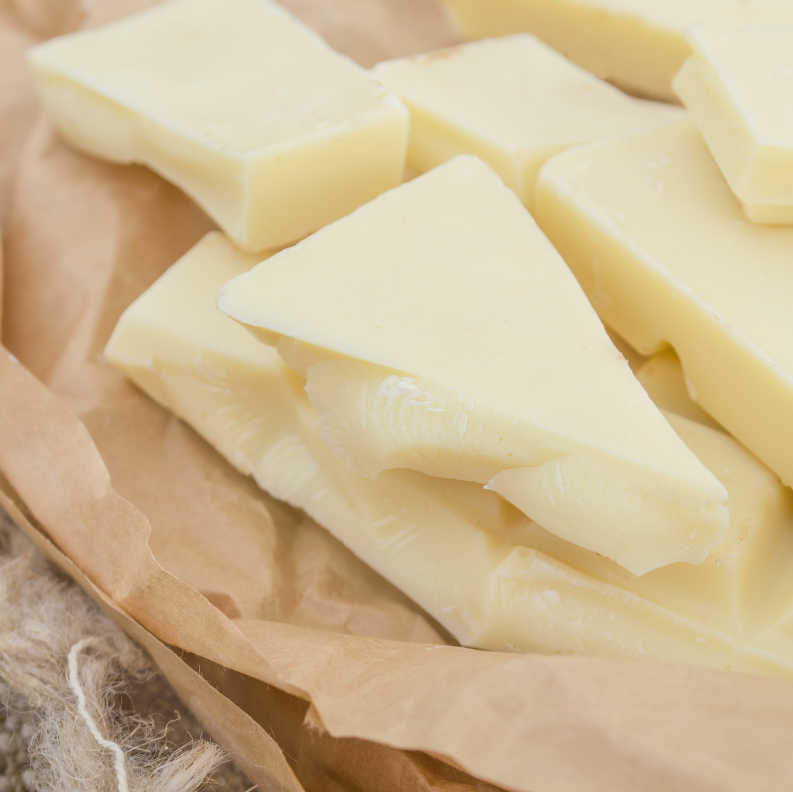
Best substitute for regular chocolate making
- Coconut Butter (it is firmer than coconut oil. It's not as firm as cocoa butter but it will work well)
- Coconut Oil (easy to melt, but adds flavour)
- Regular Butter (salted or unsalted)
Cocoa butter substitutes for raw chocolate making
The best replacement for cocoa butter in raw chocolate making:
- Cold pressed cacao butter
- Cold pressed coconut butter or oil
Cocoa butter substitute for cooking
- Vegetable oil
- Sunflower oil
- Coconut oil
Cocoa butter substitute for baking
- Vegetable oil
- Dairy Butter
Cocoa butter substitutes for sweets confectionery
In my experience, cocoa butter is used in confectionery to firm up, add shine and fluidity to certain recipes. My favourite recipe for nougat uses cocoa butter to make the texture more shiny. In this case, I know I can easily use any kind of oil or butter to make this recipe, as the butter is there not to firm up the texture (like in chocolate making) but to add shine and fluidity.
Be careful about using coconut oil in confectionery that has a delicate flavour because the coconut can overpower it. In my nougat recipe, if I have to replace the cocoa butter, I use basic sunflower oil, because it doesn't have any taste and it's affordable to use.
- Vegetable oil
- Sunflower oil
- Coconut oil
- Regular dairy butter
- Coconut Butter

What to use instead of cocoa butter for painting in the chocolate moulds
I often use cocoa butter to paint in my chocolate moulds to give them colourful finish and shine. It's a little tricky to replace cocoa butter in this case, but you still have a few options here:
Coloured cocoa butter: This is the most common substitute for cocoa butter when painting chocolate moulds. Coloured cocoa butter is made by mixing cocoa butter with powdered food colouring or oil-based food colouring. It is ready made and available in a variety of colours and can be used to paint designs onto chocolate moulds.
Colored white chocolate: White chocolate can be melted and mixed with oil-based food colouring to create a coloured chocolate that can be used for painting moulds. This is a good option for designs, where you'd normally use white chocolate to line the moulds anyway. White chocolate is a bit thicker than cocoa butter when melted and since it still needs to be tempered before you use it, it can be a little tricky to create intricate patterns.
Edible luster dust: Luster dust is a type of food colouring that comes in powder form and can be mixed with a clear alcohol, such as vodka, to create a paint-like consistency. It can be used to paint designs onto finished chocolates and adds beautiful shimmering effect.
If you have creative shimmer powder that's cocoa butter based, you can just brush it into the moulds and then pour tempered chocolate in (and out) to create your chocolate shells. The cocoa butter in the shimmer will melt into the chocolate and create wonderful shimmer effect, depending on the colour you use.
Raw cacao butter: Use it in the same way as you'd cocoa butter (see my notes below)
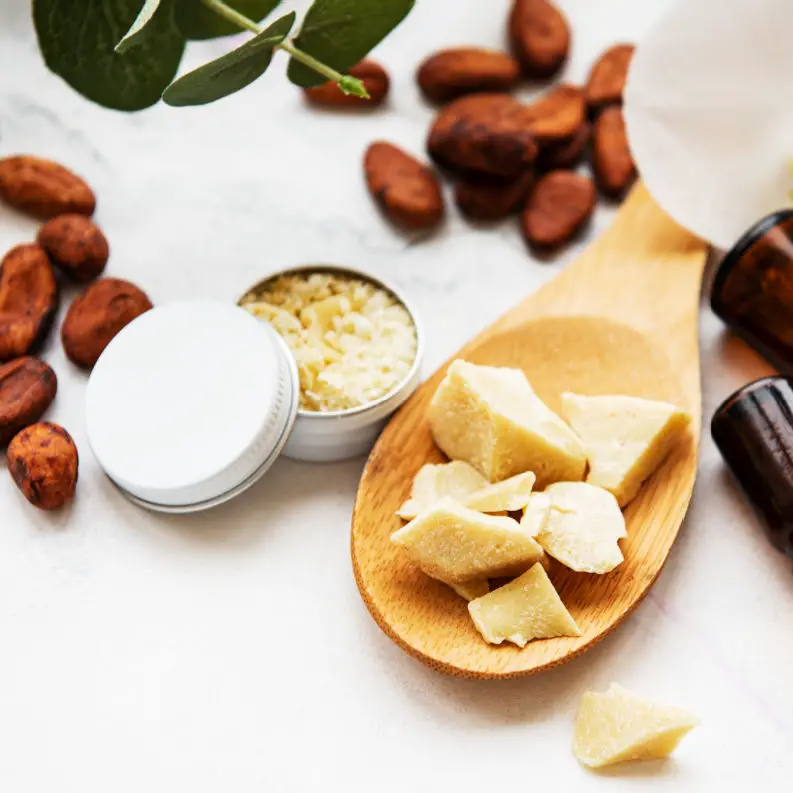
The 13 best cocoa butter substitutes for chocolate making, confectionery and baking (and how to use them)
1. Cacao butter
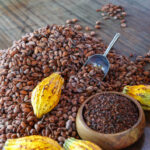
Cacao butter comes from the same cocoa beans as cocoa butter, but the process of extracting the butter is a bit different.
I know that some people also argue that cold pressed cacao butter is also healthier, but please bear in mind it's still pure fat and has the same nutritional value as cocoa butter. It does mean that this way, the cacao butter still contains high antioxidant levels, which is why it's highly regarded.
The process is more complex and takes longer than the regular way of extracting the cocoa butter, so be prepared to pay more for a raw cocoa butter.
Best substitution for:
Since cacao butter is the closest to the cocoa butter, you can substitute it in any recipe or chocolate making without any problems. The taste, smell and the texture will be exactly the same.
Cacao butter is perfect for using in a raw chocolate making recipes as it's extracted by cold pressing the cocoa beans and it all happens under the low temperature of 46-48C.

2. Dairy butter
Dairy butter is a type of fat that is made from milk or cream. It is commonly used in cooking, baking, and as a spread for bread or toast.
Dairy butter can be used as a substitute for cocoa butter in some recipes, especially in baked goods and desserts. However, it is important to note that dairy butter has a different texture and flavour than cocoa butter, and may not work well in all recipes.
I think, I should also mention, that dairy butter contains milk solids, which can burn at high temperatures, so it should be used with caution in recipes that require high heat.
Best substitution for:
When using dairy butter as a substitute for cocoa butter, it is best to use it in recipes that can accommodate its flavor and texture, such as shortbread cookies, pie crusts, or buttercream frosting. It may not be suitable for use in recipes that require a firm, stable texture, such as chocolate making or candy making.

3. Vegetable oil
Vegetable oil is a type of oil that made from various plant sources, for example soybeans, corn, canola, sunflower, or palm. I like it as a cocoa butter substitution, because it is such a versatile ingredient. I always have some at home, because I use it cooking, frying, baking and making salad dressings.
When using vegetable oil as a substitute for cocoa butter, it is best to use a neutral-flavoured oil, such as canola or sunflower oil, to minimize any impact on the taste of the final product. It may not be suitable for use in recipes that require a firm, stable texture for example solid chocolate bars or hard sweets.
Best substitution for:
Vegetable oil can be used as a substitute for cocoa butter in some recipes, especially in cooking and frying. Saying that vegetable oil has a different texture and taste than cocoa butter, and may not work well in all recipes.
In my experience, it's great as a thinning ingredient to loosen up slightly thick chocolate and I also use it sometimes in chocolate ganache, as ganache doesn't need to be completely firm.
4. Sunflower oil
Sunflower oil is extracted from sunflower seeds. It is a popular ingredient in cooking, frying, baking, and salad dressings due to its mild flavour and high smoke point.
I find, that when using sunflower oil as a substitute for cocoa butter, it is best to use a high-quality, neutral-flavoured oil, such as refined sunflower oil, to minimize any impact on the taste of the final product.
Best substitution for:
Sunflower oil can be used as a substitute for cocoa butter in some recipes, especially in cooking and frying. However, it is important to note that sunflower oil has a different texture and taste than cocoa butter, and may not work well in all recipes.
It may not be suitable for use in recipes that require a firm, stable texture, such as chocolate making or candy making (similarly to the vegetable oil).

5. Coconut oil
Coconut oil is extracted from the meat of mature coconuts. It is a popular ingredient in cooking, baking, and skincare products due to its high smoke point and reasonably neutral flavour.
But, I should mention, that coconut oil has a distinct coconut flavour and aroma that may not work well in all recipes, so it is best used in recipes that can accommodate its flavour, such as tropical desserts, coconut flavoured confectionery or chocolate. Especially in chocolate making, I find that the coconut flavour is very difficult to mask afterwards, so it's better to go with the flavour.
My favourite flavour combination includes Coconut & Lime, where the coconut flavour comes directly from the oil and all I need to add is just fresh lime juice (if I'm making chocolate ganache filling) or lime essence oil if I'm making chocolate bars.
Best substitution for:
Coconut oil can be used as a substitute for cocoa butter in some recipes, especially in baking and cooking. It has a similar texture and melting point to cocoa butter, and can be used in a 1:1 ratio in most recipes.
I also often use it to thin thick chocolate or add coconut flavour to chocolate ganache (whilst making the ganache to a bit further).
I find that when using coconut oil as a substitute for cocoa butter, it is best to use a high-quality, unrefined coconut oil to minimize any impact on the taste of the final product.

6. Coconut butter
Coconut butter is a spreadable paste made from ground-up coconut flesh. It is similar in texture to nut butter, but has a distinct coconut flavor and aroma. Coconut butter is high in fat and fiber, and is often used as a spread or topping for toast, smoothie bowls, and desserts.
Coconut butter is much more firmer than coconut oil, but still has a lower melting point than cocoa butter which might not work well in all recipes.
Best substitution for:
Coconut butter can be used as a substitute for cocoa butter in some recipes, especially in desserts and cakes.
I usually find that when I'm using coconut butter as a substitute for cocoa butter, it works best with recipes that already have coconut flavour. It also works great with contrasting citrus flavours, such as lemon, pineapple or lime chocolate truffles.
I also used it for making chocolate bars such as my vegan white chocolate bars or dark chocolate coconut bars.
7. Soy Lecithin
Soy lecithin is a type of fat that is made from soybeans. It is commonly used as an emulsifier, which means it helps to mix ingredients that would otherwise separate, such as oil and water. Soy lecithin is often added to processed foods, such as cakes, biscuits, chocolate, and margarine, to improve their texture and shelf life. It is also used in non-food products, such as cosmetics and medications, as a stabilizer.
Best substitution for:
Most chocolate ingredients do include soy lecithin as an emulsifier already, but it's possible to replace cocoa butter with an extra amount of soy lecithin. You can also mix it with other cocoa butter substitutions on my list to make up a quantity you need.
I should also mention that soya lecithin is only available in specialist shops and it's not something you can just buy in regular supermarket.
8. Sunflower Lecithin
Sunflower lecithin is similar to soya lecithin, but it's made from sunflower seeds. Like soy lecithin, it is commonly used as an emulsifier to blend ingredients that would otherwise separate, such as oil and water.
Sunflower lecithin is often used as a substitute for soy lecithin in food products, especially for people who are allergic to soy. It is also used in non-food products, such as cosmetics and medications, as a stabilizer and emulsifier.
Sunflower lecithin is considered to be a healthier alternative to soy lecithin because it is non-GMO, allergen-free, and does not contain phytoestrogens, which can affect hormone levels in some people.
Best substitution for:
You can use it as a direct replacement of the cocoa butter and you'd need the same amount of sunflower lecithin as the recipe mentions cocoa butter.

9. Palm Oil
Palm oil is made from the fruit of the oil palm tree. It is commonly used in food production, especially in processed foods, because it is cheap, versatile, and has a long shelf life. Unfortunately, the production of palm oil has been linked to deforestation, habitat destruction and other environmental and social issues, which is why lot of people stopped using it.
Palm oil hasn't have the same light chocolate taste and fragrance like cocoa butter, but it can still work really well in most recipes.
Best substitution for:
Palm oil can be used as a substitute for cocoa butter in chocolate making and other recipes that call for cocoa butter.
I think, when using palm oil as a substitute for cocoa butter, it is best to use a high-quality, sustainably sourced palm oil to minimize the environmental impact of its production.
To replace palm oil for cocoa butter in any recipe, just measure out the same amount of palm oil as the recipe gives you for cocoa butter.

10. Ghee
Ghee is a type of clarified butter that has been simmered and strained to remove all water and milk solids. It is commonly used in Indian cuisine, and has a rich, nutty flavour and a high smoke point, which makes it ideal for high-heat cooking.
Ghee has quite a distinct flavour and aroma that may not work well in all recipes, but it's firm enough to be used in chocolate bar making (darker chocolate is better as it has a stronger flavour that doesn't let the ghee flavour to be that visible).
Best substitution for:
Ghee can be used as a substitute for cocoa butter in some recipes, especially in cooking and savoury dishes. I've also used it for dark chocolate bars making and making milk or dark chocolate ganache for filling truffles or decorating cakes.
It's also perfectly lovely in savoury recipes, such as curries, roasted vegetables or sautéed meats. I wouldn't use it much with white chocolate, unless there is very little amount in the recipe (where the flavour won't be that noticeable).

11. Shortening
Shortening is a type of fat that is solid at room temperature and used in baking and cooking. It is typically made from hydrogenated vegetable oil, such as soybean, cottonseed, or palm oil. I often use shortening in baking to create a tender, flaky texture in pastries, pie crusts, and cakes.
Best substitution for:
Shortening can be used as a substitute for cocoa butter in some recipes, especially in baking and chocolate making.
Shortening doesn't have much of a flavour, so it's actually really good for replacing cocoa butter in chocolate making. The only potential problem is that it has much lower heating point, so it's not as firm as cocoa butter when it sets. Saying that it's fine for thinning chocolate, mixing with other fats to make chocolate (even with cocoa butter) and also for making chocolate truffles (as these are always slightly soft).
When using shortening as a substitute for cocoa butter, I think it's best to use a high-quality, neutral-flavored shortening to minimize any impact on the taste of the final product. I think I should also mention that shortening is typically high in trans fats, which are unhealthy when consumed in large amounts, so it should be used in moderation.

12. Plant based butter
Plant-based butter is made from various plant-based ingredients, such as vegetable oils, nuts, or seeds. I sometimes use it as an alternative to dairy butter when I'm cooking for my vegan friends or have somebody on my chocolate courses on dairy-free diet.
Best substitution for:
I use plant-based butter as a substitute for cocoa butter in making chocolate bars fillings, truffle fillings or making coating chocolate. It's also great for making chocolate ganache for drip cakes or for thinning chocolate melts or chocolate coverture.
You do need to bear in mind that plant-based butter has a different texture and flavour than cocoa butter, so don't expect absolutely the same results. But, in my experience, the only problem I sometimes find is that the plant based butter doesn't set as hard as cocoa butter (so it's really best to use for soft type of chocolates).
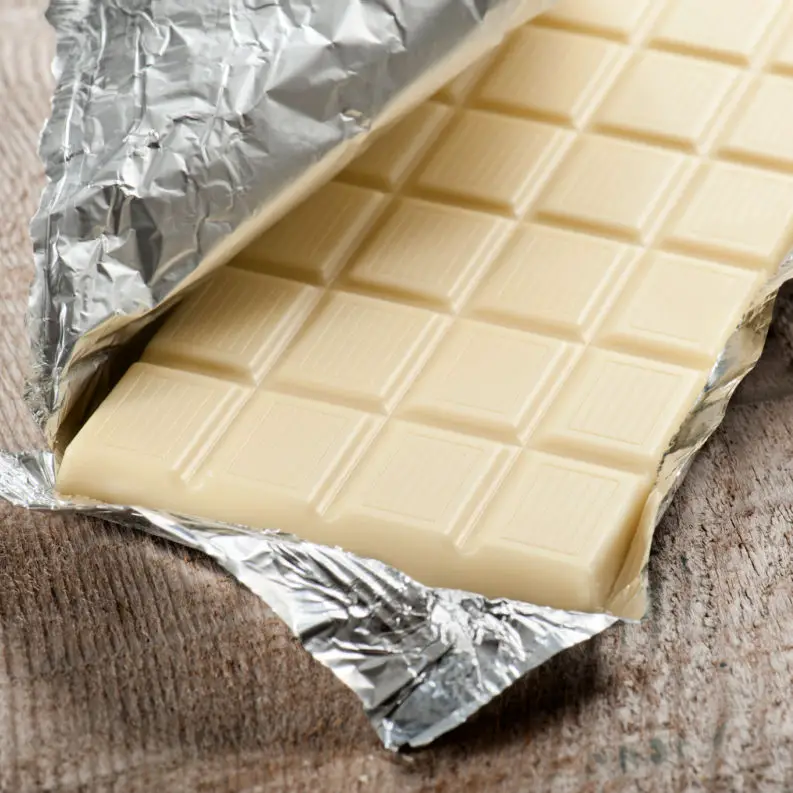
13. White Chocolate
White chocolate can be used as a substitute for cocoa butter in some recipes, especially in desserts and cakes that call for a creamy, sweet flavour. But, in my experience, because white chocolate has a high sugar content and a different flavour than cocoa butter it may not work well in all recipes and chocolate making.
Best substitution for:
When using white chocolate as a substitute for cocoa butter, it is best to use it in recipes that already have white chocolate as one of the ingredient or have neutral flavour, such as homemade white chocolate truffles, caramel or vanilla fudge, or white chocolate ganache.
White chocolate can be melted and used in a 1:1 ratio to replace cocoa butter in most recipes, but it will make most recipes sweeter than they should be, so I'd also adjust (down) the amount of sugar the recipe has.
White chocolate can be also use for painting in chocolate moulds and for thinning milk or dark chocolate. Just bear in mind that if you use white chocolate to thin dark chocolate you no longer have dairy free chocolate (because of the milk powder in white chocolate).
This blog post was originally written on 19 March 2021 and last updated on 28 January 2026



Leave a Reply