
I've spent years working with chocolate and honestly, the more I learn about cocoa beans, the more fascinating they become. Most people think chocolate is just chocolate, but the reality is that the beans behind your favourite bar are as diverse as wine grapes – and just as important to the final flavour.
This is your complete guide to the main 12 cocoa bean varieties, what's so special about them, where they grow, prices and why they are important for keeping the cocoa production going.

How Many Cocoa Varieties Are There? The Real Answer
Ask a simple question, get a complicated answer. When someone asks "how many cocoa varieties exist," the truthful response depends entirely on what you're actually counting.
The simple answer that everyone gives is three main varieties – Criollo, Forastero, and Trinitario – which is technically true but wildly oversimplified. It's like saying there are three types of wine grapes: red, white, and rosé. Accurate at the broadest level, but missing about 99% of the interesting detail.
If you're being practical, there are about 20-30 commonly grown commercial types that you'll actually encounter labeled on fine chocolate bars – varieties like Porcelana, Nacional, CCN-51, or ICS 6.
Get more technical and you're looking at 400-600 named selections from breeding programs. But the scientific reality is far more complex: international cocoa gene banks collectively maintain somewhere between 7,000-10,000 distinct genetic accessions, each representing a unique tree or population collected from somewhere in the cocoa-growing world.
And modern DNA analysis suggests the complete picture – including all the wild and semi-wild populations growing in Amazon forests that have never been formally studied – could run to 15,000 or more genetically distinct types.
The tragedy is we're losing this amazing cocoa tree plants diversity faster than we can study it: old plantations get replaced with high-yielding modern hybrids, wild forests get cleared, and unique local varieties disappear when the last farmer who grew them passes away. Every lost variety is genetic information we can't get back, characteristics that took thousands of years of evolution to develop, gone in a generation.
3 main varieties
- Criollo
- Forastero
- Trinitario
10 distinct genetic clusters
- Criollo (the ancient cultivated variety)
- Amelonado (Lower Amazon Forastero)
- Contamana (Upper Amazon)
- Curaray (Ecuador/Peru Amazon)
- Guiana (French Guiana region)
- Iquitos (Northern Peru Amazon)
- Marañon (Peru)
- Nacional (Ecuador - genetically distinct from Criollo)
- Nanay (Peru/Ecuador border)
- Purús (Western Amazon)
Plus Trinitario, which is a hybrid group rather than a pure genetic cluster.
Within those 10 main genetic groups, there are literally thousands of distinct cultivars, clones, hybrids, and local varieties.
International Cocoa Germplasm Collections (the gene banks that preserve cocoa diversity):
- CATIE in Costa Rica: Over 1,200 distinct accessions
- CRC in Trinidad: About 2,400 accessions
- CEPLAC in Brazil: Over 650 accessions
- INIAP in Ecuador: About 3,000 accessions
- Various other collections worldwide: 2,000+ additional accessions
Named commercial varieties
- Porcelana
- Ocumare
- Chuao (geographic designation, not technically a variety)
- Nacional/Arriba
- Various Criollo sub-types: 15-20 named selections
Hybrid breeding program selections:
- TSH series: About 20-30 released varieties (TSH 565, TSH 919, TSH 1188, etc.)
- ICS series: About 100+ selections, maybe 20-30 commonly grown (ICS 1, ICS 6, ICS 39, ICS 95, etc.)
- EET series: 500+ accessions collected, maybe 30-50 in commercial use
- POUND series: 10-15 original selections
- SCA series (Scavina): 6 main selections (SCA 6, SCA 12, etc.)
- PA series (Parinari): 35+ selections
- IMC series (Iquitos Mixed Calabacillo): 67 selections
- UF series (United Fruit Company selections): Several dozen
Modern hybrids and clones:
- CCN-51 (and the less common CCN-10, CCN-15)
- AMACACAO series (16 released varieties)
- Various national breeding program releases from Ghana, Côte d'Ivoire, Indonesia, Malaysia, Nigeria, etc.: Easily 100+ named varieties
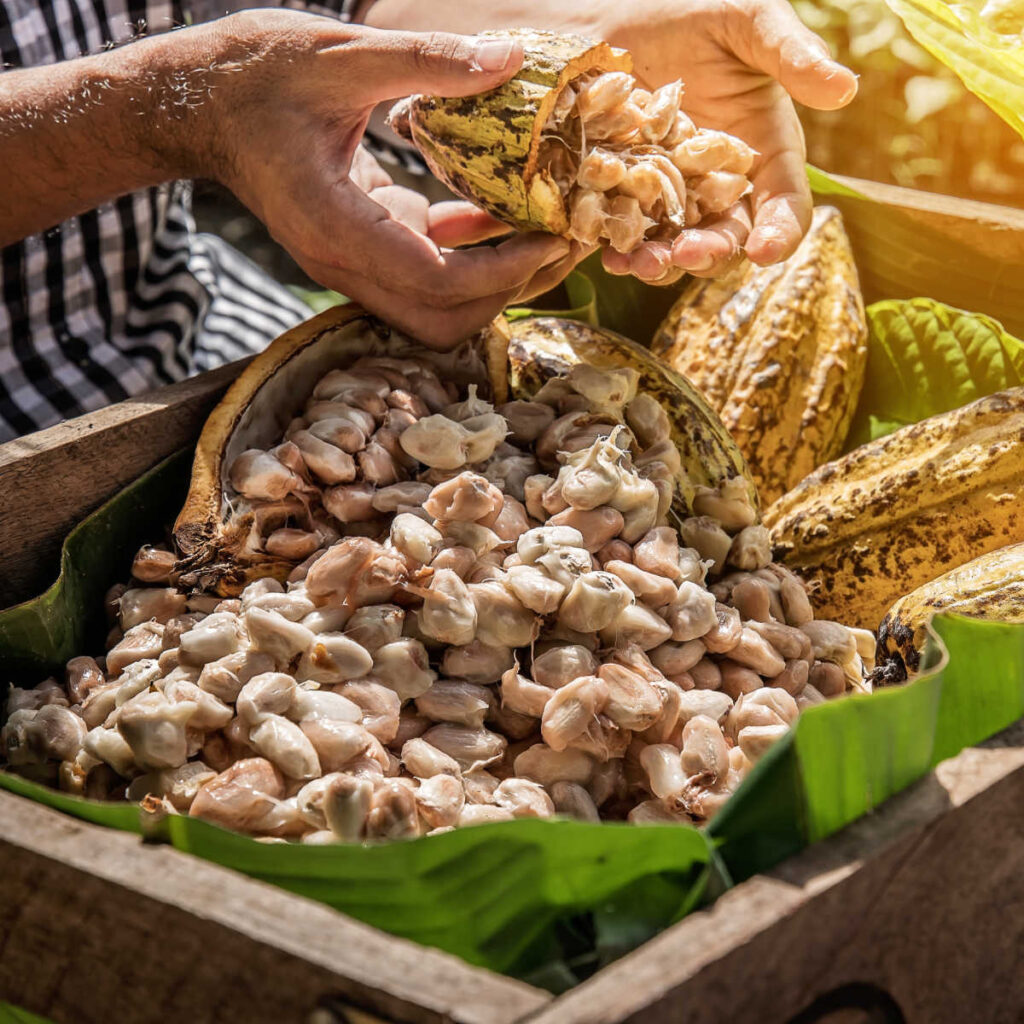
1. Criollo: The rare variety
This is the rarest and most prized cocoa variety you'll find – and for good reason. The beans are pale in colour (actually more beige than brown), and they produce chocolate with complex, delicate flavours – nutty, fruity, with very little bitterness. When you taste really fine chocolate, you're probably tasting Criollo genetics.
The trees are vulnerable to disease and pests, which is exactly why farmers often choose other varieties. But if you've ever wondered why some chocolate bars cost £15 instead of £3, Criollo is usually part of the answer.
The name "Criollo" means "native" in Spanish. This variety was the chocolate of the Aztec and Maya civilizations. When you eat Criollo chocolate, you're tasting history – literally the same genetic lineage that was used in ancient ceremonial drinks thousands of years ago.
Growing Regions
Criollo beans grow mainly in Venezuela, Mexico, Nicaragua, Guatemala, and scattered regions of the Caribbean. You'll also find small amounts in Sri Lanka and Madagascar. The trees are delicate, which is why you don't see them everywhere.
Annual Production
Here's the thing about Criollo – it represents less than 5% of global cocoa production. We're talking roughly 250,000 to 300,000 tonnes out of the world's total 5+ million tonnes of cocoa produced annually. This makes it incredibly precious.

2. Forastero: The most common variety
This is the variety you've probably eaten most of your life without knowing it. These beans are hardy, disease-resistant, and produce reliably high yields – which is exactly why they're grown so widely. The trees are tough. The beans are darker, more purple when fresh, and they create chocolate with stronger, more bitter, more "classically chocolatey" flavours.
This is your everyday chocolate. Your favourite chocolate snack bars including Mars bars, Cadbury, Hershey's – all built on Forastero beans.
The word "Forastero" means "foreign" or "stranger" in Spanish. It was named this by Venezuelan growers because it wasn't the native Criollo they were used to. Ironically, Forastero is actually the original wild cocoa that grew in the Amazon rainforest millions of years ago.
Growing Regions
Forastero dominates West Africa – specifically Côte d'Ivoire, Ghana, Nigeria, and Cameroon. You'll also find it throughout Brazil (where it originated in the Amazon basin), Ecuador, and across Southeast Asia in countries like Indonesia and Malaysia.
Annual Production
Forastero accounts for roughly 80-85% of global cocoa production. That's about 4 to 4.5 million tonnes annually. Côte d'Ivoire alone produces nearly 2 million tonnes per year, and it's almost entirely Forastero.
Sub-varieties
- Amelonado: The most common type, grown extensively in West Africa
- Nacional: A special Ecuadorian variety (more on this below)
- Cundeamor: Found in Venezuela

3. Trinitario: The hybrid variety
This is where things get really interesting. Trinitario is a natural hybrid between Criollo and Forastero – and it combines the best of both worlds.
Here's what happened: In 1727, a devastating hurricane and disease outbreak wiped out most of Trinidad's Criollo plantations. The few surviving Criollo trees cross-pollinated naturally with hardier Forastero trees that had been introduced from Venezuela. The result? Trinitario – a variety that's nearly as flavourful as Criollo but far more resilient.
You get complex flavours (thanks to Criollo genetics) with much better disease resistance and yield (thanks to Forastero). This is why so many fine chocolate makers love working with Trinitario beans – they're predictable but still interesting.
Every Trinitario tree is technically unique because it's a hybrid. The genetic variation means you get incredibly diverse flavour profiles – some Trinitario beans taste fruity and acidic, others are nutty and caramel-forward. It's like having dozens of varieties in one family
Growing Regions
Trinidad (where it originated – hence the name), Caribbean islands, Venezuela, Colombia, Ecuador, Cameroon, Papua New Guinea, and increasingly in Southeast Asia. You'll find it in pretty much every quality-focused growing region now.
Annual Production:
Trinitario represents about 10-15% of global production, roughly 500,000 to 750,000 tonnes annually. The numbers are growing because farmers love the balance it offers.

4. Nacional (Arriba): The Ecuador variety
Nacional was thought to be extinct for decades after disease wiped out most plantations in the early 1900s. But it survived in isolated pockets, and it's now having a renaissance. The flavour is extraordinary – distinctly floral (you'll actually taste jasmine notes), with fruity complexity.
The local name "Arriba" (meaning "upriver") refers to the geographical origin along the river systems.
DNA testing in the 2000s revealed that many trees labeled "Nacional" were actually hybrids. Real, pure Nacional is now so rare that individual trees are mapped and protected like precious genetic resources.
It's so rare variety, that farm-gate prices for verified Nacional run about $4,500-6,500 per tonne. At retail, you're looking at £10-18 for a 70-80g bar from a good maker.
Growing Regions
Exclusively in Ecuador, primarily in the coastal regions along the Guayas River basin. You'll find the best examples in Los Ríos and Manabí provinces.
Annual Production:
True Nacional is rare – probably less than 1% of Ecuador's 350,000 tonnes of annual cocoa production. Maybe 2,000 to 3,000 tonnes of verified Nacional beans per year, if that.

5. CCN-51: The controversial variety
CCN-51 stands for "Colección Castro Naranjal, clone 51" – it was developed in Ecuador in the 1960s as a high-yielding, disease-resistant variety. And it works. These trees produce roughly three times more cocoa than traditional varieties.
The flavour is… fine. Not terrible, but not interesting. It's consistent and neutral, which makes it perfect for bulk chocolate production but slightly disappointing for fine chocolate makers who might prefer single origin chocolates. You get cocoa taste without much character.
CCN-51 is becoming the "Starbucks problem" of the cocoa world – it's economically valuable for farmers (more yield = more income), but it risks replacing more interesting varieties. Some countries are actively trying to prevent its spread to protect their fine cocoa heritage.
Growing Regions
Ecuador originally, but now spreading rapidly across South America and into Central America. You'll find it in Peru, Colombia, and increasingly in other countries looking for high-yield varieties.
Annual Production
Hard to pin down exactly, but CCN-51 now represents roughly 30% of Ecuador's total production – that's about 100,000 tonnes annually and growing fast.

6. Porcelana: The white variety
The beans are almost pure white when fermented – hence "Porcelana" (porcelain). While most cocoa beans turn dark purple or brown during fermentation, Porcelana stays pale ivory, sometimes with just the faintest lavender tint.
This isn't just aesthetic. The pale colour indicates an extremely low level of certain compounds (particularly tannins and anthocyanins) that create bitterness and astringency. What you get instead is the most delicate, subtle, extraordinarily refined chocolate you'll ever taste.
Porcelana trees are… difficult. That's putting it mildly. They're incredibly susceptible to disease, they don't produce many pods (maybe 10-15 per year on a healthy tree, compared to 25-35 for hardier varieties), and they require very specific growing conditions.
A single bar of Porcelana chocolate can easily cost £20-30 or more. Some chocolate makers treat Porcelana releases like wineries treat special vintage releases – small batches, numbered bars, immediate sellouts. You'll see bars labeled "Bar 47 of 300" or similar. Some makers only release Porcelana once every few years, when they can source enough beans.
Growing Regions
Extremely limited production in Venezuela, specifically in the Maracaibo region. A few other countries have tried cultivating it, but Venezuela remains the primary source.
Annual Production:
We're talking tiny amounts – perhaps 50 to 100 tonnes per year globally, if that. Many years, production is measured in hundreds of kilograms rather than tonnes.

7. Chuao: The most famous cocoa in the world
This isn't technically a different variety – it's Criollo and Trinitario genetics – but Chuao has become so legendary that it deserves its own entry.
The cocoa trees in Chuao have been growing in the same valley for over 400 years. The genetics are pure because nothing else can get in – the geography creates a natural barrier to cross-pollination.
The farmers use traditional methods passed down through generations. Everyone in the village participates in the cocoa pods harvest. It's not just cocoa production – it's cultural heritage.
Some of the trees in Chuao are over 100 years old and still producing fruit. There are families who've been tending the same trees for four or five generations.
Chuao commands premium prices – $7,000-9,000 per tonne at the farm level, sometimes higher. At retail, chocolate bars made with Chuao cocoa typically cost £12-22 for a 50-70g bar.
Growing Regions
One place only: the village of Chuao, on Venezuela's Caribbean coast, accessible only by boat or a treacherous mountain road. The village has about 2,000 residents, and cocoa is essentially the entire economy.
The valley runs from the coastal mountains down to the Caribbean Sea. The trees grow in volcanic soil, they're shaded by larger forest trees, and they receive consistent moisture from both rain and coastal fog. You couldn't design better cocoa-growing conditions if you tried.
Annual Production
The entire village produces about 20-25 tonnes of dried cocoa beans per year. That's it. The entire annual harvest from one of chocolate's most legendary origins would fit in a couple of shipping containers.
Most of the harvest is bought by a single Italian chocolate company (Amedei) under an exclusive agreement, though small amounts do reach other makers.

8. Amelonado: The original West African standard
This is the variety you've eaten most of your life without knowing it. If you've ever eaten a standard Cadbury bar, a Hershey's bar, or most supermarket chocolate, you've tasted Amelonado.
The variety came from Brazil originally (where it still grows) but was introduced to West Africa in the late 1800s and early 1900s by colonial powers looking to establish cocoa production outside South America. It adapted brilliantly to West African conditions and became the foundation of the region's cocoa industry.
Amelonado is reliable. It grows consistently, produces decent yields (600-800 kilograms per hectare under good conditions), tolerates West African climate conditions reasonably well, and produces exactly what bulk chocolate manufacturers want: consistent, neutral-tasting cocoa.
The pods are distinctive – smooth, melon-shaped (hence "Amelonado," which means "melon-like" in Portuguese), typically yellow or orange when ripe. The trees are vigorous and relatively hardy compared to delicate fine varieties.
Farm-gate prices in West Africa typically run $2,200-3,200 per tonne, depending on global market conditions and quality, which is the only reason why chocolate in the supermarkets can be as affordable as it is.
Fine varieties like Criollo or Porcelana are wonderful and pricey, but it's the Amelonado that made chocolate accessible to billions of people rather than remaining a luxury for the wealthy.
Growing Regions
Amelonado dominates West Africa – specifically Côte d'Ivoire, Ghana, Nigeria, and Cameroon. It's the most widely planted Forastero sub-variety in the world.
Annual Production
West Africa countries are in the top 10 cocoa producing countries, which together produce about 70% of the world's cocoa – roughly 3.5-4 million tonnes annually – and the vast majority comes from Amelonado trees or their descendants.

9. TSH (Trinidad Selected Hybrids): The disease fighters
Trinidad had been a major cocoa producer – then Witches' Broom arrived in the 1920s and destroyed roughly 80% of production within a decade and the entire economy collapsed.
TSH varieties were developed in Trinidad starting in the 1950s and 60s at the Cocoa Research Centre (now part of the University of the West Indies). The goal was straightforward: create hybrids that could resist Witches' Broom disease, which had absolutely devastated Trinidad's cocoa industry.
TSH varieties can survive Witches' Broom, Black Pod, and various other diseases that would kill traditional Criollo or even many Trinitario trees.
TSH hybrids combine Trinitario genetics (for flavour) with selected Forastero varieties (for disease resistance and yield).
They also yield well – not CCN-51 levels, but significantly better than traditional fine varieties. A farmer might get 800-1,200 kilograms per hectare from TSH trees, compared to 300-500 from Criollo.
Farm-gate prices typically run $3,200-4,000 per tonne – higher than bulk Forastero, lower than fine Trinitario or Criollo.
Growing Regions
Originally Trinidad, but now you'll find TSH varieties throughout: Caribbean islands (Jamaica, Grenada, Saint Lucia), Central America (Costa Rica, Panama), South America (Venezuela, Colombia, Ecuador), West Africa (limited but increasing), Southeast Asia (Papua New Guinea, Indonesia)
Annual Production
It's impossible to get exact figures because TSH beans are usually blended with other varieties in regional production. But rough estimates suggest 60,000-80,000 tonnes annually across all growing regions, and increasing.
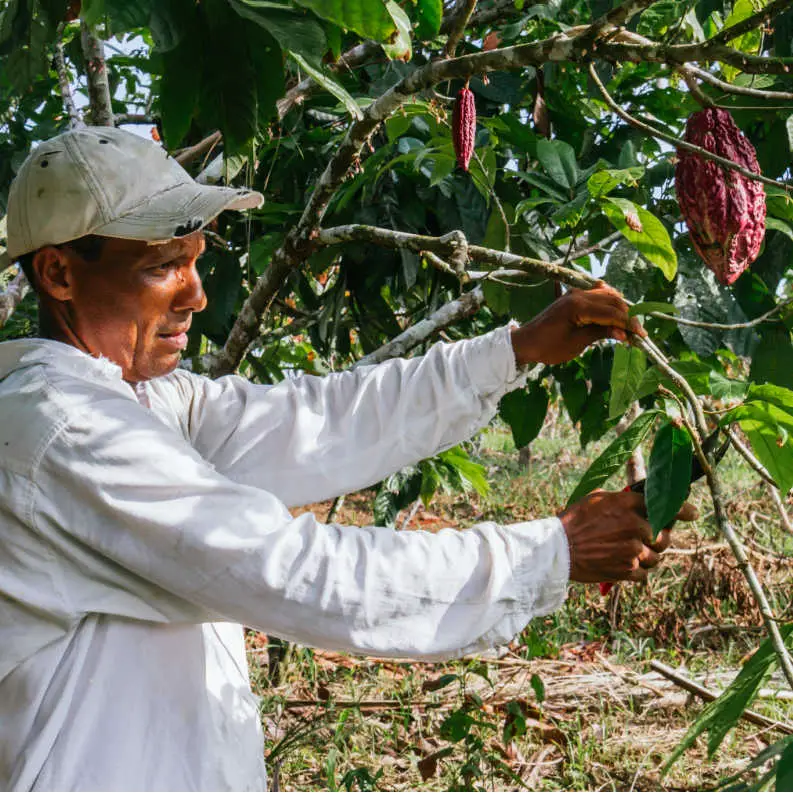
10. ICS (Imperial College Selection): The colonial legacy
ICS varieties were developed in Trinidad in the 1930s and 40s by the Imperial College of Tropical Agriculture (hence the name). Like TSH, they were bred in response to the Witches' Broom catastrophe, but the ICS program came earlier and had slightly different priorities.
ICS selections were chosen primarily from surviving Trinitario populations in Trinidad. Researchers identified trees that had naturally survived disease outbreaks, propagated them through seeds and grafts, and tested the offspring for consistency.
Farm-gate prices run similar to TSH – about $3,200-4,200 per tonne for well-fermented ICS beans from good origins.
Chocolate bars made with ICS varieties (when they're actually labeled, which is rare) typically cost £6-10 for a 70-80g bar – mid-range pricing.
Growing Regions
ICS varieties spread from Trinidad throughout: Caribbean (especially Jamaica, Grenada, Dominican Republic), Central America (particularly Costa Rica and Panama), South America (Ecuador, Peru, Brazil), West Africa (Ghana has some ICS plantings), Southeast Asia (Papua New Guinea uses ICS varieties extensively)
Annual Production
ICS varieties probably account for 100,000-150,000 tonnes globally, though again, exact figures are difficult because beans are typically blended. Papua New Guinea alone produces about 40,000-50,000 tonnes annually, much of it from ICS-based genetics.

11. EET (Ecuador Exotic Types): The Ecuadorian survivors
EET varieties are selections from wild and semi-wild cocoa populations discovered in Ecuador, primarily in the Amazon basin regions.
The "Exotic Types" name comes from the fact that these weren't cultivated varieties – they were wild genetics that researchers collected, tested, and selected for desirable characteristics. Some EET selections show remarkable disease resistance simply because they evolved in the Amazon where diseases are endemic.
The collection program started in the 1950s and continues today. Researchers are now going back to EET collections looking for heat tolerance, drought resistance, and other characteristics that might matter more in 2030-2040 than they did in 1960.
Some EET accessions were collected from trees growing completely wild in the Amazon – never cultivated, never pruned, just growing in the forest alongside other trees.
There's ongoing debate about whether some wild Amazonian populations might represent "proto-cocoa" – ancestral genetics from before humans started cultivating the crop 4,000+ years ago.
Farm-gate prices vary significantly – from $3,000-5,500 per tonne depending on which EET variety and how it's marketed.
Growing Regions
Primarily Ecuador, but EET genetics have been exported to: Peru (significant plantings in the Amazon regions), Colombia (increasing use in rehabilitation programs), Central America (experimental plantings) and West Africa (limited trials).
Annual Production
EET varieties account for perhaps 40,000-60,000 tonnes annually, mostly in Ecuador and Peru. Production is growing as farmers recognize that some EET selections combine decent yields with interesting flavours.

12. POUND Varieties: The forgotten hybrids
POUND varieties are hybrids developed in Trinidad in the 1930s-40s, named after Dr. F.J. Pound, a British botanist who collected wild cocoa specimens from the Upper Amazon and brought them back to Trinidad for breeding work.
Pound collected specimens from the Nanay, Marañón, and Iquitos regions of Peru and Ecuador – areas with incredibly diverse wild cocoa populations.
The fact that any of his collections survived the journey and grew successfully in Trinidad is remarkable. The fact that they're still influencing cocoa genetics 85+ years later is extraordinary.
Some of the trees growing in Trinidad today are direct descendants of seeds Pound collected from a riverbank in Peru in 1938. They're living links to wild Amazon cocoa populations that may no longer exist in their original locations.
But over the last decades, local farmers who had POUND trees are gradually replacing them with more economically viable options. It's not that POUND varieties are bad – they just not quite good enough in any single category to justify continued planting.
When specifically identified and sold separately (which is rare), POUND varieties might fetch $3,500-4,500 per tonne – a modest premium over bulk cocoa but nothing like the prices for Criollo or Nacional. More commonly, POUND beans are simply blended into regional production and sold as generic Trinitario.
Growing Regions
POUND varieties never achieved the widespread distribution of TSH or ICS varieties. You'll find them mainly in Trinidad (limited remaining plantings), some Caribbean islands (Grenada, Saint Lucia) and parts of Central America.
Annual Production:
Very limited – probably less than 5,000-8,000 tonnes annually, and declining. POUND varieties are becoming increasingly rare in commercial production, though they remain important in germplasm collections for breeding purposes.
This blog post was originally written on 5 February 2026 and last updated on 5 February 2026


Leave a Reply