
We all know where chocolate goes—considering we eat millions of pounds of it every single day in Britain alone! That can't be a bad thing, right? But have you ever stopped to wonder about the journey it takes before it reaches your hand? Whether you're a fan of dark, white, or milk chocolate, the story of its origin is actually quite magical.
As I found out, when doing my research there is a complex process involved in bringing the ‘food of the gods’ within reach of mere mortals like ourselves. So the next time you unwrap your favourite chocolate, or bite into a bar, take a moment to consider where chocolate comes from and how it's managed to make its way to within your easy reach.

Growing the cocoa trees
Well, let's start with where chocolate comes from by looking at where it's grown. It all starts with the cacao tree (Theobroma cacao). If chocolate feels mysterious, it's because where it grows certainly is!
You'll find these trees tucked away in the hot, rainy band on either side of the Equator, where most of the world's chocolate producing countries are. This cacao belt provides the perfect humidity and conditions that these trees need. The conditions are so specific, that the tree won't grow (naturally) anywhere else in the world.
The cacoa tree is quite fragile and hides under the canopy of taller, more sturdy trees to stay protected from the sun. Unlike most trees you'll see in a park, cocoa tree doesn't self-pollinate. It relies on a tiny midge fly. Without these little insects living in the damp leaf litter, we wouldn't have any chocolate at all. It's almost as if the tree doesn't want to be found!
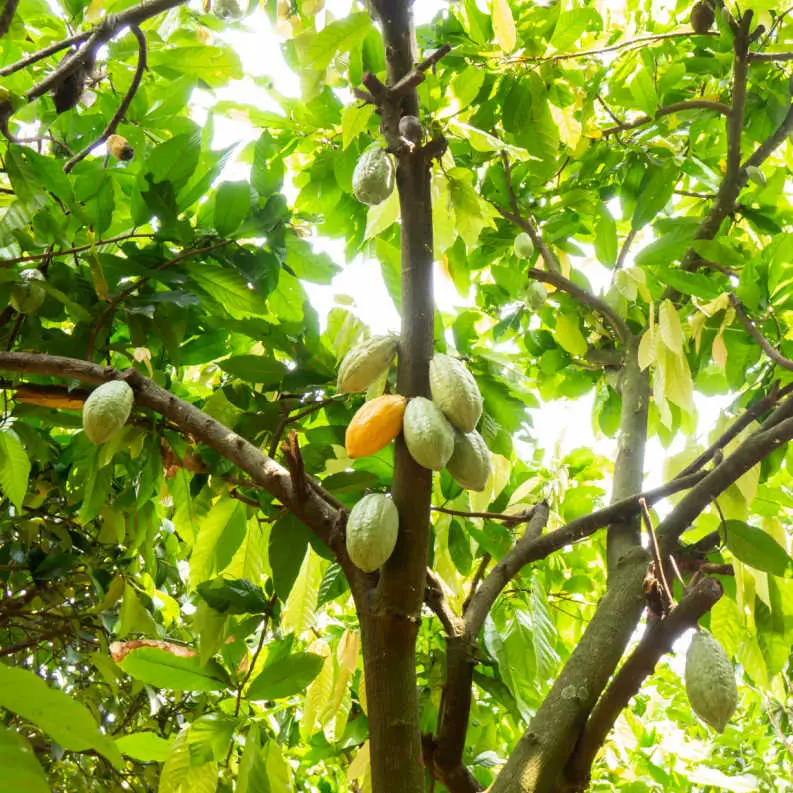
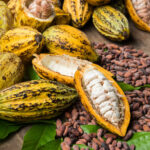
Cocoa trees reach maturity in three or four years. You'll notice something very strange if you see a cocoa tree in person: the cocoa fruit, or cocoa pods, grow directly from the main trunk and the larger branches. This is called cauliflory.
A single tree can produce over a thousand pods a year, each taking about six months to ripen. Inside that tough shell is a sticky white pulp and 30 to 40 seeds or cocoa beans. In their raw state, they are incredibly bitter but packed with magnesium, caffeine and Vitamin C.
CHOCOLATE HISTORY
The true origins of chocolate
We owe a lot to the Maya and Aztecs of Mexico and Central America. In fact, that's where we get the word chocolate from. But they didn't have Dairy Milk bars, but instead made cocoa into a drink! They ground the beans into a thick, porridge-like drink mixed with chilli peppers and maize, which would have been very different than how we make our hot chocolate now!
I love the fact that cocoa beans were actually used as money back then. People paid their taxes in cocoa beans because they were so highly prized and stayed fresh for ages. It was considered a gift from the god, which is why we call it Theobroma—literally "food of the gods."
CHOCOLATE HISTORY

Harvesting & fermentation of cocoa pods
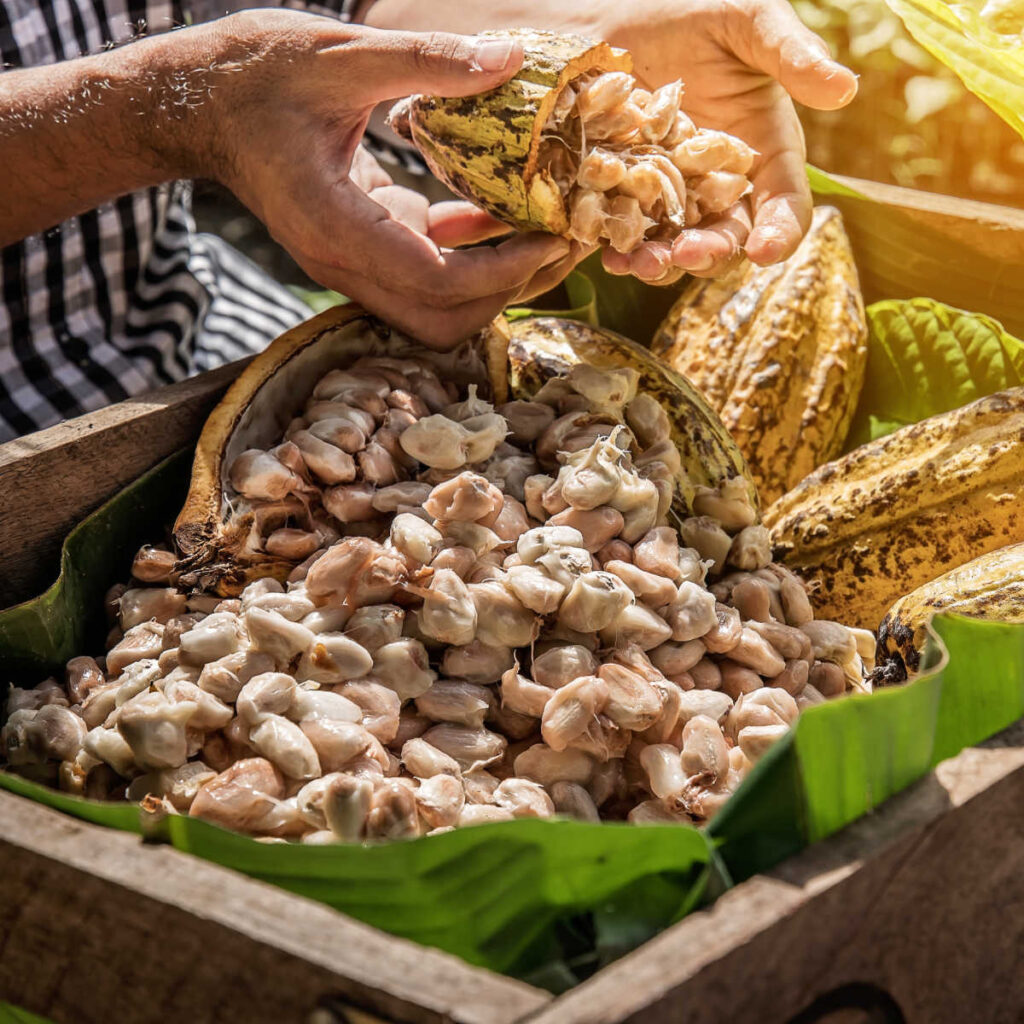
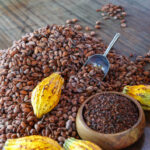
Harvesting the cocoa pods is a very labour intensive business. Because the trees are so delicate, the pods have to be snipped off by hand. Once the beans are scooped out, they are laid on a bed of banana leaves.
This is the start of the fermentation process, and it's the most important step of all! For about five to seven days, the beans are left to sweat, which develops that unique chocolate aroma.
Without this, it would just taste like a bitter seed. After they've fermented, they are dried in the sun, cleaned, and the shells are removed to reveal the nibs. These cocoa nibs are then roasted to really make the flavour pop.
CHOCOLATE HISTORY
The chocolate making process
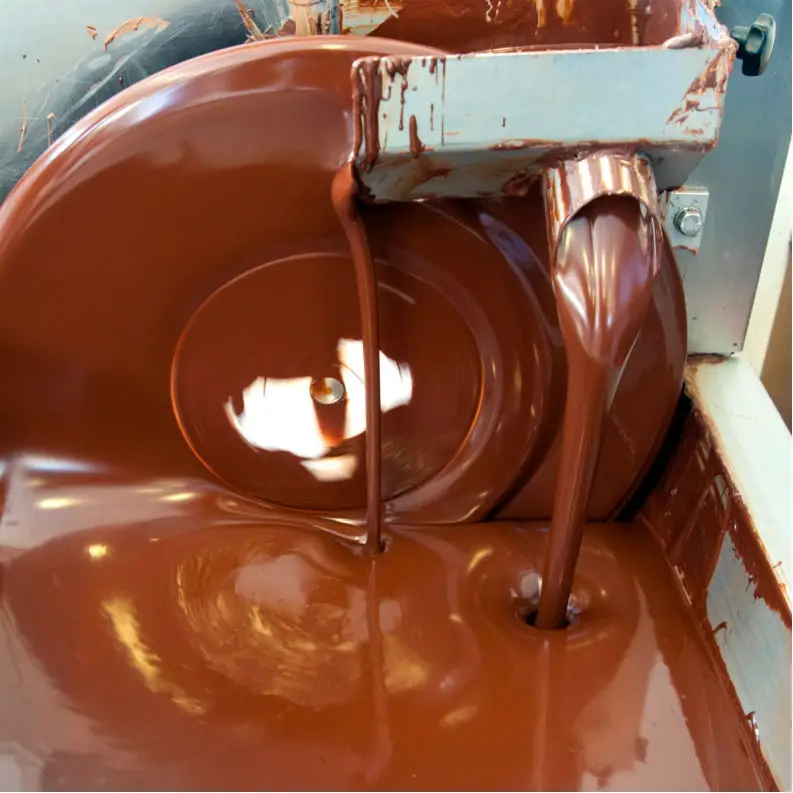
To make the bars we recognize, the roasted beans are crushed into a paste called cocoa mass. We then add sugar, more cocoa butter, and milk if we’re making milk chocolate. This mixture is sent through rollers to get rid of any graininess.
Then comes the "conching"—a machine that stirs and aerates the mixture for hours. This is what makes it so silky. Finally, the chocolate is tempered —heated and cooled several times—to give it that satisfying snap when you break off a square.
At this stage, the chocolate can be moulded into the shapes we recognise at chocolates or chocolate bars, or have extra ingredients stirred in such as fruit, nuts or caramel pieces.
CHOCOLATE HISTORY

Cocoa trees growing locations
While the cocoa tree started in South America, it has done a lot of travelling! Today, most of our chocolate comes from West Africa and South Asia.
Indonesia grew almost no cocoa before the early 1980s, when production increased rapidly. Now it is the world's third leading producer of cocoa beans, growing 777,500 tonnes. Number 2 in the list of top producing countries is Ghana, in West Africa, where it accounts for around 20% of the nation's GDP.
The cocoa tree with pods hanging from the trunk, is celebrated on one of the countries’ coins so almost every Ghanian handles a cocoa pod on a daily basis, in one way or another!
Also in West Africa, the Ivory Coast, is the world's top producing cocoa country accounting for nearly 30% of all cocoa produced worldwide. That's in excess of 1,448,992 tonnes. Over 60% of revenue coming into the Ivory Coast is through trade in cocoa.
CHOCOLATE HISTORY

The Secret of the Soil
You might have heard wine experts talk about terroir, and honestly, it's exactly the same for chocolate! Because cacao is so sensitive, the "where" isn't just a country on a map—it's the actual soil.
If a tree is grown in the volcanic soil of Vanuatu or Madagascar, the beans will naturally pick up a bright, fruity, almost citrus-like acidity.
But if you take that same tree and plant it in the deep, earthy loam of Brazil, it might taste more like tobacco or heavy cream. I think it's pretty cool that you can actually taste the geography of the rainforest in a single bite.
This is why single origin chocolate bars—where all the beans come from one specific farm—are becoming such a favourite for people who really know their chocolate.
CHOCOLATE HISTORY

The cocoa beans journey from farms to chocolate factories
When we ask where chocolate comes from, we often forget the massive journey it takes across the oceans. Once the beans are dried and bagged in places like Ecuador or Vietnam, they aren't turned into bars right there in the jungle.
Instead, they are loaded into massive shipping containers and sent on a voyage that can last weeks. Most of these beans head for the main chocolate ports of Europe—specifically the ports of Amsterdam and Antwerp.
These two cities handle the vast majority of the world's cacao. From there, they are whisked away to the big chocolate houses in Switzerland, Germany, and our own factories here in the UK. So, in a way, your chocolate bar has a passport with more stamps than most people!
The rare white cacao
Here is a bit of a conspiratorial secret: not all cacao is purple! While most beans are a deep violet colour inside, there is a very rare cocoa bean variety found in the Piura Valley of Peru called Cacao Blanco (White Cacao).
This isn't for making white chocolate though, it's actually a genetic mutation that makes the bean white on the inside. It's incredibly rare and produces a chocolate that is naturally sweet, creamy, and lacks almost all the bitterness of regular beans.
It's the holy grail for chocolate hunters. If you ever see a bar labelled "Piura Blanco," grab it and I'm sure the taste will pleasantly surprise you!

The 2026 Future: Lab-Grown and Sustainable Cacao
As we look at the world today, the "where does chocolate come from" is starting to change again. Because of climate change making the "Cacao Belt" a bit more unpredictable, some clever scientists are actually starting to grow "cell-based" chocolate in labs in San Francisco and Israel.
Don't worry, though—it's not going to replace the traditional farms anytime soon! But it does mean that in the future, where chocolate comes from might be a high-tech facility rather than a tropical forest.
For now, though, the focus is on regenerative farming. This is where farmers in places like Costa Rica are planting cacao alongside fruit trees and hardwoods to rebuild the rainforest as they grow. It's a great way to ensure we have chocolate for the next 4,000 years, and that can't be a bad thing!
This blog post was originally written on 5 November 2016 and last updated on 9 February 2026



Leave a Reply