
Discover what single origin chocolate really means and why it tastes so different. Learn which origins to try, where to buy in the UK, and whether it's worth the £6-12 price tag. Your complete guide to understanding single origin chocolate written by a professional chocolatier.
You've probably seen "single origin" on chocolate bars and wondered if it's just fancy marketing or if there's something actually special about it. The reality is that single origin chocolate is one of the most exciting things happening in the chocolate world right now, and once you understand what it means, you'll taste chocolate in a completely different way.
I've been using single origin chocolates in my chocolate making for the last 16 years and I love sharing the different types of single origin chocolates with my students when I'm running my chocolate workshops.
I'm going to walk you through everything you need to know about single origin chocolate - what makes it different, why it matters, and how to choose bars that will actually blow your mind.

What Single Origin Chocolate Actually Means
Single origin chocolate is made from cacao beans that come from one specific location. This could be a single country, a particular region within that country, or even one individual farm or estate.
This is totally different from most commercial chocolate you'll find in supermarkets. Those bars are typically made from a blend of beans from multiple countries - Ghana mixed with Ecuador mixed with Indonesia, for example. The chocolate makers do this to create a consistent flavour year after year. And that's absolutely fine if you want predictable chocolate.
But I love, that single origin chocolate is the opposite of predictable.
Because the beans all come from one place, the chocolate tastes distinctly of that place. You'll find that chocolate from Madagascar tastes completely different from chocolate from Peru, even when both are made with the same percentage of cacao. I always say, that it's a bit like wine - a Malbec from Argentina has a different character than a Malbec from France, even though it's the same grape.
The flavour comes from the terroir (I know, I know, fancy word, but it's actually useful here). The soil, climate, rainfall, and even the other plants growing nearby all influence how the cacao tastes. Add in the specific variety of cacao tree, how the farmers ferment and dry the beans, and you get chocolate that's unlike anything else.

When Did Single Origin Chocolate Become a Thing?
You might be surprised to learn that single origin chocolate is actually a pretty recent phenomenon - at least as something regular people like you and me can buy and enjoy.
For most of chocolate's history, the idea of highlighting where cacao came from would have seemed completely bizarre. Chocolate makers blended beans from multiple countries to create consistent products, and that's just how it was done. The focus was on brand names and recipes, not on the origin of the beans themselves.
The whole single origin movement really started in France in the 1980s and 90s, which makes sense because the French have always been a bit obsessed with terroir and provenance (just look at their wine and cheese industries).
Bonnat, a family-run chocolate maker in Voiron, France, is often credited as one of the very first to create and market single origin chocolate bars to consumers. They started making origin-specific bars when basically no one else was even thinking about it.
Around the same time, Valrhona (another French chocolatier) began creating single origin "Grand Cru" chocolates, though these were initially aimed more at professional pastry chefs rather than people buying bars in shops.
But here's the thing - even though these French makers were doing brilliant work, single origin chocolate didn't really become a thing until the 2000s. This is when the modern artisan chocolate movement (or "bean-to-bar" movement, as it's often called) properly took off.
Small, independent chocolate makers started popping up all over the world - in the USA, UK, Scandinavia, and beyond. Makers like Amedei in Italy, Askinosie in Missouri, and later Pump Street Bakery in Suffolk were creating exceptional single origin chocolates and, importantly, telling the story of where the beans came from and who grew them.
The real explosion happened around 2005 to 2010. Suddenly there were dozens, then hundreds, of small chocolate makers focusing on single origin bars, direct trade relationships with farmers, and transparency about their entire process. I like that it wasn't just about making chocolate anymore - it was about connecting consumers to the origin of their food.
I think what's really interesting is that the single origin chocolate trend followed almost exactly the same path as single origin coffee, which became popular maybe five to ten years earlier. Coffee lovers started caring about whether their beans came from Ethiopia or Colombia or Guatemala, and they wanted to taste those regional differences.
Now, you can walk into a good chocolate shop in London or Edinburgh or Manchester and choose from bars made with beans from a dozen different countries, often from specific farms or cooperatives. That's pretty remarkable when you think about it - and it's totally changed how we understand and appreciate chocolate.

Why Single Origin Chocolate Tastes So Different
Here's what really makes single origin chocolate special: you can actually taste the place where the cacao was grown.
I remember the first time I tried a single origin bar from Tanzania. I was expecting something similar to the dark chocolate I'd been eating for years, but instead I got these bright, fruity notes that reminded me of berries. It was completely unexpected, and honestly, it changed how I thought about chocolate entirely.
I still think, it's pretty amazing that different origin chocolates have distinct flavour profiles, for example:
Madagascar chocolate often has bright, fruity, almost citrusy notes. You might taste red berries or even a slight tanginess.
Ecuador (particularly Arriba Nacional beans) tends to be floral and complex, with jasmine notes and sometimes a pleasant nuttiness.
Venezuela produces chocolate that's often nutty and earthy, with caramel undertones.
Peru gives you chocolate with fruity and nutty characteristics, sometimes with hints of tropical fruit.
Papua New Guinea creates chocolate with smoky, earthy flavours and sometimes tobacco or leather notes (which sounds weird but is actually really interesting).
Vietnam is known for fruity, sometimes slightly spicy chocolate with red fruit notes.
The thing is, even within these countries, you'll find variation. Chocolate from the Sambirano Valley in Madagascar tastes different from beans grown in other parts of Madagascar. A bar from Manabí province in Ecuador won't taste the same as one from Esmeraldas province.
This is exactly what makes single origin chocolate so fascinating - there's always something new to discover.

What is better single origin or regular chocolate
You might be wondering if single origin is actually better than blended chocolate, or if it's just different.
The honest answer? It's mainly different, though I think single origin is more interesting.
Regular blended chocolate isn't bad - in fact, some of the world's best chocolate makers create absolutely fabulous blends. They're combining beans from different origins to achieve a specific flavour profile or to balance out certain characteristics. A chocolatier might blend beans from three different countries to get exactly the right amount of fruitiness, bitterness, and smoothness they're looking for.
Blended chocolate aims for consistency and balance. Single origin chocolate celebrates distinctiveness and character. Neither is wrong - it just depends on what you're looking for.
But here's what you get with single origin that you don't get with blends:
Traceability - You know exactly where your chocolate comes from, often down to the specific farm or cooperative. There are chocolate bars now where you can actually look up the farmers who grew your cacao.
Distinctive character - The chocolate tastes unique and unrepeatable. That Madagascar bar won't taste like anything else.
Transparency - Single origin chocolate is usually made by craft chocolate makers (we call it "bean-to-bar" chocolate) who are pretty open about their sourcing, production methods, and how much they pay farmers.
Exploration - You can taste your way around the world, experiencing how different terroirs affect flavour.
How Single Origin Chocolate is Made
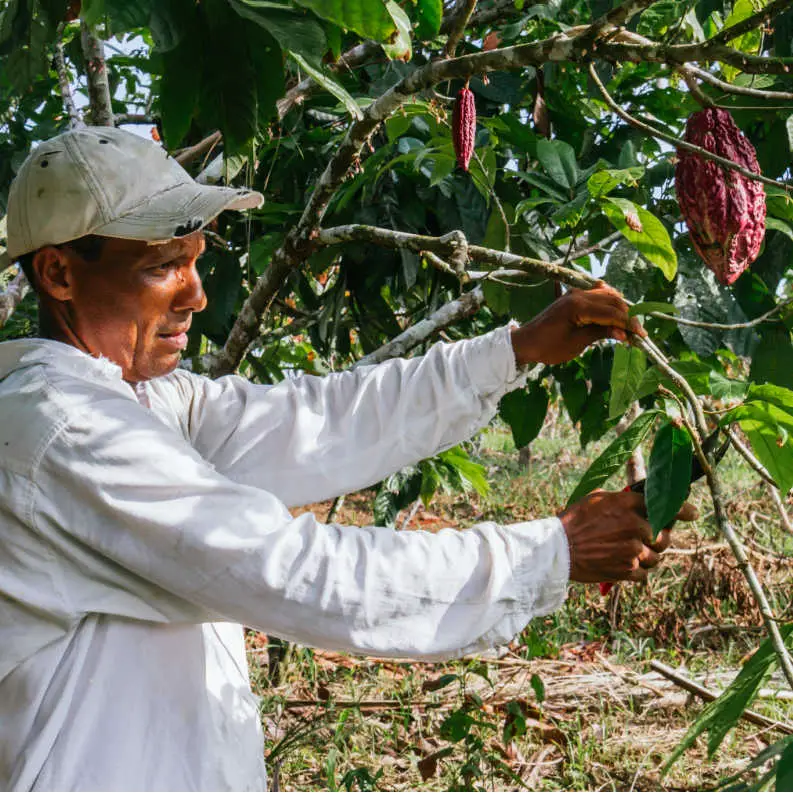
The beautiful thing about most single origin chocolate is that it's made by small-batch chocolate makers who control the entire process from bean to bar.
The chocolate maker sources cacao beans directly from farmers or cooperatives from one of the top cocoa growing countries. They often visit the farms personally to build relationships and ensure quality. This is totally different from big chocolate companies that buy beans through commodity markets without knowing much about where they came from.
Once the beans are harvested, they are directly shipped to the chocolate maker's facility (which might honestly just be a small workshop) and they are roasted first. This is where a lot of the flavour development happens, and different makers have different roasting philosophies. Some roast light to preserve delicate fruit notes, others roast darker to bring out chocolate and nutty flavours.
After roasting, the beans are cracked and winnowed to remove the shells, leaving just the cacao nibs. These nibs are then ground (refined) for anywhere from 24 to 72 hours or even longer. During this process, the nibs break down into liquid chocolate (called chocolate liquor, though there's no alcohol in it).
Most artisan chocolate makers make their chocolate from just three two ingredients: cocoa powder, cocoa butter and sugar. That's it. Some add extra bit of cocoa butter to adjust the texture, and milk chocolate obviously includes milk powder. But you won't find the long list of ingredients you see in commercial chocolate - no soy lecithin, no vanilla, no artificial flavours.
The chocolate is then tempered (a process of carefully heating and cooling to create the right crystal structure) and moulded into bars.
The whole process might take a week or more, and the batches are usually pretty small - maybe a few hundred bars at a time. This is the opposite of industrial chocolate production, which pumps out thousands of identical bars every hour.

What to Look For When Buying Single Origin Chocolate
If you want to try single origin chocolate, here's what I recommend looking for:
Clear origin information - The wrapper should tell you exactly where the cacao comes from. If it just says "single origin" without specifying the country or region, that's a bit suspicious.
Percentage of cacao - This tells you how much of the bar is actually cacao (the rest is sugar and maybe milk). For dark chocolate, you'll typically see anywhere from 60% to 100%. I usually go for 70-75% because I think that's the sweet spot where you get intense chocolate flavour without it being overwhelmingly bitter, but this is totally personal preference.
Short ingredient list - Really good single origin chocolate usually has just 2-3 ingredients. If you see a long list of additives, it's probably not artisan chocolate.
The maker's name - Single origin chocolate is almost always made by small, independent chocolate makers. You'll see names like Friis Holm, Pump Street Bakery, Dick Taylor, Amedei, Bonnat, or smaller local makers depending on where you live.
Harvest year - Some chocolate makers actually put the harvest year on their bars, just like wine. This is pretty cool because you can taste how the same origin changes from year to year.
Price - I hate to say it, but really good single origin chocolate isn't cheap. You're probably looking at anywhere from £6 to £12 for a small bar (usually around 50-70g). This is because the makers are paying farmers fair prices, using quality ingredients, and making small batches. And honestly, when you taste the difference, it's worth it.
How to Taste Single Origin Chocolate
Once you've got your hands on a good single origin bar, you probably want to actually taste all those amazing flavours everyone keeps talking about.
I challenge you to try the same percentage of cacao from three different origins - maybe a 70% Madagascar, a 70% Ecuador, and a 70% Peru. Taste them side by side and you'll immediately understand what single origin means. The differences are honestly remarkable.
Here's how I approach tasting chocolate (and I do this all the time):
Let it come to room temperature - Cold chocolate doesn't release its aromas and flavours properly. If you've had your chocolate in the fridge (please don't store it there normally, but I know sometimes it happens), let it sit out for at least 30 minutes.
Look at it first - Good chocolate should have a nice shine and a smooth surface. It should snap cleanly when you break it - a dull sound means the chocolate wasn't tempered properly.
Smell it - Before you even taste it, take a good sniff. You'll often pick up fruity, nutty, or floral notes just from the aroma.
Let it melt - Don't chew right away. Place a piece on your tongue and let it slowly melt. As it melts, different flavour notes will emerge. You might notice fruity notes first, then nutty or earthy flavours, then maybe a pleasant bitterness at the end.
Notice the texture - Is it smooth and creamy, or slightly grainy? Does it melt quickly or slowly? Good chocolate should feel silky in your mouth.
Pay attention to the finish - After you've swallowed, what flavours linger? The best chocolate has a long, pleasant finish where you're still tasting interesting flavours minutes later.
Single Origin and Direct Trade
One thing I really love about single origin chocolate is that it helps to build better conditions for the farmers who grew the cacao.
Most craft chocolate makers who work with single origin beans also practice something called "direct trade." This means they buy beans directly from farmers or cooperatives, cutting out the middlemen who traditionally take a huge chunk of the profit.
When a chocolate maker buys directly, they can:
Pay farmers more - Often 2-3 times the commodity price for cacao, sometimes even more for exceptional quality.
Build long-term relationships - Coming back to the same farmers year after year, often helping them improve their post-harvest processing to create even better beans.
Be transparent - Many craft chocolate makers publish exactly how much they pay for beans. You'll find this information on their websites or even on their packaging.
Support sustainable farming - Direct trade relationships often encourage farmers to focus on quality over quantity and to use sustainable farming practices.
The reality is that most cacao farmers worldwide are pretty poor, often earning less than £1,50 or $2 a day. When you buy single origin chocolate from a maker who practices direct trade, you're supporting a more equitable supply chain.
And that can't be a bad thing!
Where to Find Single Origin Chocolate
Finding really good single origin chocolate is easier now than it's ever been, though it depends a bit on where you live.
Specialty chocolate shops - If you're lucky enough to have a dedicated chocolate shop in your town, they'll almost certainly stock single origin bars from various makers. The people working there are usually really passionate and can guide you to origins they think you'll enjoy.
Coffee shops - Interestingly, good coffee shops often sell craft chocolate too. The same people who care about single origin coffee tend to care about single origin chocolate.
Online - This is probably the best option for most people. Many craft chocolate makers sell directly from their websites, and there are also online retailers that specialize in craft chocolate and stock bars from dozens of different makers.
Farmers markets - I love exploring local farmers markets and craft fairs and finding out local chocolate makers who also work with single origin chocolate.
Is Single Origin Chocolate Worth It?
Look, I'm not going to pretend that single origin chocolate is cheap - because it really isn't. In the UK, you're typically looking at anywhere from £6 to £12 for a standard bar (usually around 50-70g), though some really exceptional bars from renowned makers can go up to £15 or even £20.
I know that sounds like a lot when you can pick up a large bar of Dairy Milk for under £2, but here's the thing - you're paying for something completely different.
These craft chocolate makers are buying beans at fair prices directly from farmers, often paying two or three times the commodity rate. They're making tiny batches by hand, with just cacao and sugar, and the whole process takes days rather than hours.
Plus, you'll find that because the flavour is so intense and distinctive, you actually savour it differently - I usually make a single bar last a week or more, breaking off just one or two squares at a time to really appreciate it.
When you break down the cost per tasting experience rather than per gram, it starts to feel pretty reasonable. And honestly, once you've tasted a really fabulous single origin bar from Madagascar or Ecuador, you'll understand where that £8 went - and you'll probably think it was worth every penny.
This blog post was originally written on 4 February 2026 and last updated on 4 February 2026



Leave a Reply