
The history of traditional sweets and chocolates in the 1910s in UK and USA including a list of 11 iconic chocolates and sweets first introduced during the 1910s, such as Milk Tray, Fox Glaciers or Jelly Babies.
It's no surprise that the 1910s list of sweets and chocolates is very short. There was quite a lot of chocolate bars and sweets introduced in early 1900s and once the war broke out in 1914 there was no time to invent new confectionery.
To celebrate the end of the war, Barrats brought out 'Peace Babies', which we all know now as 'Jelly Babies'. But, the situation didn't improve much until 1920s and 30s which saw a huge increase in new chocolate snack bars and sweets.
The political landscape in the UK during the 1910s was marked by significant political reforms and social upheaval. The decade saw the rise of the suffragette movement, with women campaigning for the right to vote.
The Liberal Party and the Conservative Party were the dominant political forces, and the decade was characterized by political instability, including two general elections in 1910.
The early 1910s in the UK were characterized by the Edwardian era, a time of relative prosperity, but the outbreak of World War I in 1914 had a profound impact on life in the UK. The war brought about changes in social norms, economic conditions, and daily life.
Rationing and shortages affected the availability of certain goods, including chocolate and confectionery, as resources were diverted to support the war effort. Many confectionery companies shifted their production to provide treats for soldiers serving overseas.
TRADITIONAL SWEETS & CHOCOLATE HISTORY

1. Bournville Plain Chocolate (1910, UK)
In 1910, Cadbury launched Bournville Plain Chocolate, naming it after the "model village" factory estate they built in Birmingham. While Cadbury was already famous for milk chocolate, this bar was created as a premium dark chocolate with a higher cocoa content and a distinctively smooth texture.
It was originally sold in a red wrapper and marketed as a sophisticated treat that was "pure and wholesome" for the whole family. Bournville was the standard chocolate ration for British soldiers during world wars because it stayed solid and fresh much longer than milk chocolate bars.
2. Wrigley's Juicy Fruit & Spearmint Gum (1911, UK Release)
Wrigley's Spearmint gum actually launched in the USA in 1893, but it became a global sensation during the 1910s when it was aggressively marketed across the UK and Europe.
William Wrigley Jr. originally started as a soap salesman and gave the gum away as a free gift, only to realize the gum was more popular than the soap!
The flavour comes from the spearmint plant, which has slightly cooler and milder taste compared to peppermint. To make sure that everyone knew the brand, Wrigley once mailed a free sample of gum to every single person listed in every telephone book in the United States, proving that bold advertising was just as important as the product itself!
TRADITIONAL SWEETS & CHOCOLATE HISTORY
3. Milk Tray (1915- UK)
Milk Tray was first introduced by Cadbury in 1915, which makes it one of the of the oldest chocolate assortment boxes in the UK, which is still being sold today. It was initially sold in plain purple packaging before adopting the iconic Milk Tray box design in the 1920s.
Milk Tray chocolates come in a variety of flavours and fillings, including milk chocolate, dark chocolate, white chocolate, caramel, fruit cremes, and nut clusters. There is something for everyone, which makes it a popular choice for gifts.
The popular advertising slogan "All because the lady loves Milk Tray" has been associated with the brand for decades.
4. Fox' Glaciers (1918 - UK)
Fox's Glacier Mints were first introduced in 1918 by the UK-based confectionery company, Fox's. They quickly gained popularity for their refreshing mint flavour and distinctive clear appearance.
These mints are made with simple ingredients, including sugar, glucose syrup, natural flavorings, and peppermint oil. Unlike traditional mint sweets that are opaque, these mints are clear and resemble small, translucent ice crystals, hence the name "Glacier Mints."
Apart from the traditional Glacier Mints you can also buy Glacier Fruits and Glacier Mint Collection as well as two brand new Glacier Moments bags – After Darks and Little Lifts.
MORE CHOCOLATE HISTORY
5. Life Savers (1912 - USA)
Life Savers were invented in 1912 by Clarence Crane in Cleveland, Ohio, USA. They are ring-shaped hard candies with a hole in the centre, resembling the shape of a lifebuoy. They come in various flavours and are often used to freshen breath.
6. Fruit Pastilles (1918 - UK)
Fruit Pastilles were first introduced by Rowntree's in the UK in 1918. They are chewy, gelatin-based candies flavoured with real fruit juice with no artificial colours and coated in sugar.
MORE SWEETS HISTORY
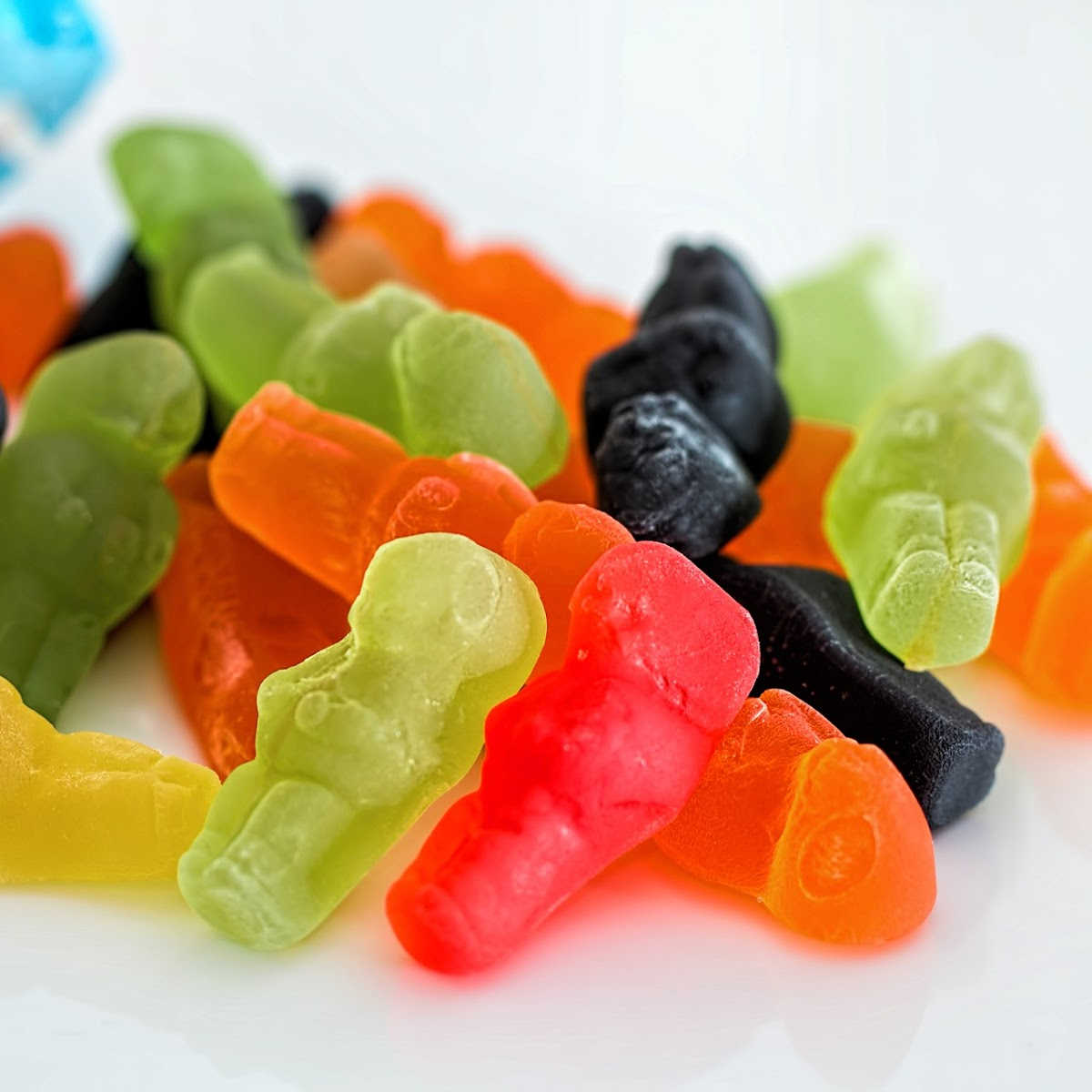
7. Jelly Babies (1918 - UK)
Jelly Babies are small, baby-shaped jelly sweets with a soft and chewy texture, which are dusted with a cornstarch. They have different fruit flavours, including lemon, lime, orange, strawberry, and blackcurrant.
Jelly Babies were first made towards the end of the 1918 by British confectioner George Bassett & Co. They were originally known as "Peace Babies" to commemorate the end of World War I but were later rebranded as "Jelly Babies."
MORE SWEETS HISTORY
8. Peter Paul Mounds (1919 - USA)
Peter Paul Mounds are coconut-filled chocolate bars that were introduced in 1919 by the Peter Paul Candy Manufacturing Company, which later merged with Cadbury. They are made of sweetened shredded coconut coated in dark chocolate.
9. Cherry Mash (1918 - USA)
A century-old chocolate delight that continues to capture the hearts of many, the Cherry Mash is another iconic American candy. The Cherry Mash has a soft fondant maraschino cherry centre, dipped in smooth milk chocolate and coated with chopped roasted peanuts.
Similar to the Canadian candy called the Cherry Blossom, the Cherry Mash was first made by Ernest Chase in 1918 in St. Joseph, Missouri and it's one of the oldest continuously manufactured sweets in the United States.
MORE SWEETS HISTORY
10. Goo Goo Cluster (1912 - USA)
Goo Goo Cluster is a candy bar that was invented in 1912 in Nashville, Tennessee, by Howell Campbell and Porter Moore. It's made with caramel, marshmallow nougat, fresh roasted peanuts, and milk chocolate.
Over the years, Goo Goo Cluster has introduced several variants of the original candy bar, including Goo Goo Supreme, Goo Goo Peanut Butter, and Goo Goo Pecan.
Goo Goo Cluster is one of the earliest combination candy bars created in the United States and the cool thing is that you can actually visit the shop and create your own personalised Goo Goo Cluster.
You can also take a guided tour of the Nashville factory, where you can learn about the candy-making process and sample various Goo Goo Cluster products.
MORE SWEETS HISTORY
11.Clark Bar (1917, USA)
The Clark Bar was introduced in 1917 by David L. Clark, an Irish immigrant based in Pittsburgh. It was a revolutionary chocolate bar because it was the first successful combination bar in America, using a new technology that allowed a thin chocolate shell to be wrapped around a crunchy, non-chocolate centre. The original recipe had a crispy peanut butter and spun-taffy middle with a real caramel centre.
During World War I, the bar became incredibly famous because it was individually wrapped and sent to American troops overseas. It was so essential for morale that during World War II, when factory strikes threatened production, the government stepped in to declare the candy essential to the war effort!
David Clark named the bar after a famous racehorse, and for decades, the factory had a large glowing Clark Bar sign that became a legendary Pittsburgh landmark.
MoonPie (1917, USA): A large snack made of marshmallow sandwiched between graham crackers and dipped in chocolate.
Mallomars (1913, USA): A chocolate-coated marshmallow on a graham cracker base.
Heath Bar (1914, USA): A crunchy English-style toffee bar covered in milk chocolate.
Mary Janes (1914, USA): Chewy molasses and peanut butter sweets.
The Turtle (1916, USA): Clusters of pecans and caramel dipped in chocolate, so-called because they looked like little turtles.

Sweets & Chocolate History 1910s (1910 - 1919)
1910: The rise of the display case
Before 1910, sweets were often kept in wooden drawers or hidden behind the counter. This year, glass display cases became the standard in British shops. For the first time, children could press their noses against the glass and see every single colourful option before spending their pocket money.
1911: The first chocolate delivered by airmail
During the first-ever official airmail flight in the UK, the pilot carried a small box of chocolates along with the letters. It was a clever publicity stunt to show that even "fragile" luxury goods could be transported through the sky without melting or breaking.
1912: Chocolate on the Titanic
When the Titanic set sail, it carried over 1,800 pounds of chocolate and confectionery for its passengers. The first-class menu featured fancy French bonbons, but even the third-class passengers were given simple chocolate bars—showing that chocolate had finally become a treat for everyone, regardless of their ticket price.
1913: The new foil-wrapping machine
This was the year that high-speed machines were perfected to wrap individual chocolates in foil automatically. Before this, "fancy" chocolates were prone to going stale or sticking together. Foil wrapping meant chocolates could be sold individually for a penny, making luxury flavours affordable for school children.
1914: The Princess Mary's Christmas chocolate tins
When World War I broke out, Princess Mary set up a fund to send a gift to every soldier. Over 400,000 brass tins were sent to the front lines, most containing tobacco or pipes, but non-smokers were given tins filled with acid drops and a solid bar of chocolate. These tins are now famous collectors' items!
1915: Sugar during the First World War
As the war intensified, sugar was needed for more than just sweets—it was used in the production of explosives! Governments began to limit how much sugar sweet makers could buy, which led to the first "shrinkflation," where chocolate bars stayed the same price but became noticeably smaller.
1916: The British export to overseas
With the British home market struggling due to the war, companies like Cadbury began focusing more on sending their sweets to Australia, Canada, and New Zealand. This helped turn British chocolate into a global brand, as people across the Commonwealth grew up with a taste for UK-made confectionery.
1917: Sugar & sweets rationing
By 1917, sugar was officially rationed in the UK. Many sweet shops had to close down because they simply had nothing to sell. To stay in business, some confectioners started using honey or malt as sweeteners, though the results were often much stickier and less popular than the original recipes.
1918: Taxes on sugar & low sugar stocks
In 1918, a major legal battle broke out in the United States over whether chocolate was a "food" or a "candy." Under the Revenue Act of 1918, the government placed a high tax on luxury items like candy to help pay for the war. Hershey’s sued the government, arguing that chocolate was a nutritious food and shouldn't be taxed so heavily. The case went all the way to the Supreme Court, which ultimately ruled that while chocolate has food value, it is legally a "candy"—a decision that cost chocolate companies millions in taxes.
On the other side of the Atlantic, 1918 was the year British sweet shops almost ran out of stock entirely. Sugar supplies were so low that the government gave manufacturers only one-quarter of the sugar they had before the war. To survive, shopkeepers had to get creative; some even started selling "breath fresheners" and "medicated drops" because they were classified differently than regular sweets and were easier to keep in stock.
1919: Chocolate companies merger
After the war ended, many small sweet companies were struggling to survive. This led to a massive merger between two of the world's biggest rivals: Fry's and Cadbury. They joined forces to become "British Cocoa and Chocolae Company Limited," creating a confectionery superpower that could dominate the global market.
This blog post was originally written on 23 February 2024 and last updated on 31 January 2026



Leave a Reply