
The history of traditional sweets and chocolates in the 1900s in UK and USA including a list of 12 iconic chocolates and sweets first introduced during the 1900s, such as Toblerone, Cadbury Milk Chocolate Bar, Bourville Dark Chocolate Bar, Wine Gums, Hershey's Milk Chocolate Bar or Tootsie Roll.
The early 1900s was a bit of a whirlwind for the UK! On the political side, the Liberal and Conservative parties were constantly battling it out, but this rivalry actually led to some great things for ordinary people.
It was the era when more people were finally given the right to vote, and the government started introducing "social welfare" programmes—basically the very first safety nets to help look after families in need. Of course, everything changed in 1914 with the arrival of World War I, which shifted how everyone lived, worked, and even what they ate.
While the politicians were busy in London, the way we shopped was having a massive makeover, too! This was the age of the "Department Store." Famous names like Selfridges and Harrods became the talk of the town, offering a world of luxury under one roof.
It was also the time when the first milk chocolate bar arrived to the local shops. Big names like Cadbury, Rowntree's, and Fry's were becoming well known, filling shops with treats like the brand-new Dairy Milk, chewy Fruit Gums, and the classic Fry's Chocolate Cream.
However, chocolate was still a bit of a luxury for many. If you only had a penny in your pocket, you'd most likely head for the jars of traditional boiled sweets, liquorice, or a chewy slab of toffee.
TRADITIONAL SWEETS & CHOCOLATE HISTORY
- Victorian Traditional Sweets & Chocolates History >>
- The best of chocolate bars & sweets from 1920s >>
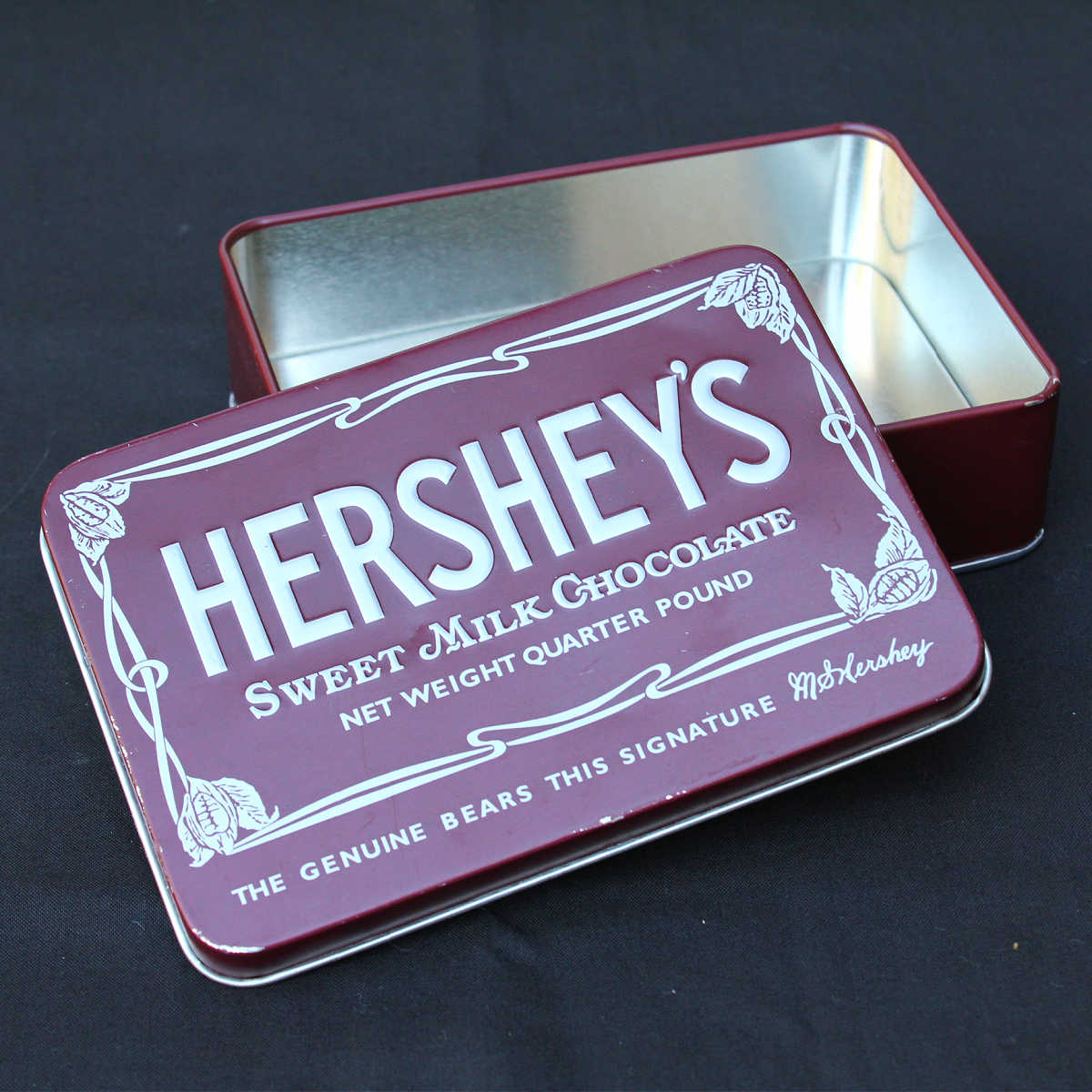
1. Hershey's Milk Chocolate Bar (1900 - USA)
The Hershey Milk Chocolate Bar was first introduced by Milton S. Hershey's company, The Hershey Chocolate Company, in 1900. Milton S. Hershey was inspired to create a smooth and creamy milk chocolate bar after tasting Swiss-made chocolate during a trip to Europe.
Hershey revolutionized the chocolate-making process by developing a method known as the Hershey Process, which involved using fresh milk to create a smoother and creamier chocolate. This process set Hershey's chocolate apart from other chocolate manufacturers of the time.
One of the key factors contributing to the popularity of the Hershey Milk Chocolate Bar was its affordability - the chocolate bar was produced, so that the cost could be affordable for the average consumer.
Over the years, Hershey's has expanded its range of chocolate products to include various flavours and formats, including Hershey's Special Dark, Hershey's Cookies 'n' Creme, and Hershey's Kisses.
MORE SWEETS HISTORY

2. Milka (1901, Switzerland)
This famous Swiss milk chocolate was launched with its iconic lilac-coloured packaging. It was one of the first bars to use high-quality Alpine milk.
The name itself was a clever mash-up of the two main ingredients: Milch (milk) and Kakao (cocoa). While most chocolate at the time was quite dark and gritty, Milka's creator, Philippe Suchard, used a special "conching" process and high-quality Alpine milk to make the bar incredibly smooth and melt-in-the-mouth.
The famous "Milka Cow" (the purple cow we see on the packets today) was part of the advertising from the beginning. The company wanted to show everyone that their chocolate was made with fresh, wholesome milk from cows grazing in the beautiful Swiss mountains.
3. Tunnock's Caramel Wafer (1901, Scotland)
The Tunnock's Caramel Wafer's history started in 1890 when Thomas Tunnock bought a tiny bakery in Uddingston, Scotland, for just £80!
While the shop began by selling delicious cakes and biscuits, it was Thomas's son, Archie Tunnock, who truly struck gold in the early 1900s. He spent ages experimenting with five layers of wafer and four layers of caramel, eventually deciding to wrap the whole thing in chocolate to keep it fresh.
The result was so popular that it became a Scottish icon, famous for its shiny red and gold foil wrapper. Even today, the factory is still owned by the Tunnock family, and they are so loved in Scotland that they even had a starring role in the Glasgow 2014 Commonwealth Games opening ceremony with giant dancing tea cakes!
4. Whitman's Sampler (1904, USA)
This was a revolution for boxed chocolates. It was the first time a box of chocolates included an "index" (a map) inside the lid so you could see which chocolate had which filling!
The box itself was designed to look like a traditional hand-stitched cross-stitch sampler. It was so popular that it became the go-to gift for soldiers to send home to their sweethearts, and it actually became the best-selling box of chocolates in American history!

5. Cadbury Dairy Milk (1905 - UK)
Whilst 'Dairy Milk' sound like a description, it's actually a brand name for Cadbury Dairy Milk chocolate bar. The bar was first introduced in the United Kingdom in 1905 and was created by George Cadbury Jr, who was given the challenge of developing a milk chocolate bar with more milk than anything else on the market.
The result was Cadbury Dairy Milk, which contained a higher proportion of milk than previous chocolate bars and quickly became the market leader in the UK after its launch. By 1914, Dairy Milk was the company's best-selling chocolate bar.
In the 1950s, Dairy Milk became one of the first chocolate bars to be advertised on television in the UK, with the famous slogan "a glass and a half of milk in every half pound" emphasizing the bar's high milk content.
Over the years, Cadburries started to introduce different flavours of Dairy Milk chocolate bar, often using their other chocolate bars such as Crunchie or Daim as a flavour. Other flavours include: Dairy Milk Caramel, Dairy Milk Silk (with almonds), Dairy Milk Fruit & Nut, Dairy Milk Oreo, Dairy Milk Mint Oreo, Dairy Milk Orange, Dairy Milk Hazelnut, Dairy Milk Chopped Nut, Dairy Milk Tripple Chocolate and many more.
MORE SWEETS HISTORY
6. Hershey's Kisses (1907, USA)
When they first hit the shelves in 1907, Hershey's Kisses were a total game-changer because they were so different from the chunky chocolate bars people were used to.
The chocolate machine that made them made a "smooching" sound as it dropped the chocolate, which is how they got their name!
Each one was a perfect little "raindrop" of solid milk chocolate, but the most amazing thing was that they were all wrapped by hand in individual squares of silver foil! It stayed that way until 1921, when a machine was finally invented to do the folding.
MORE SWEETS HISTORY
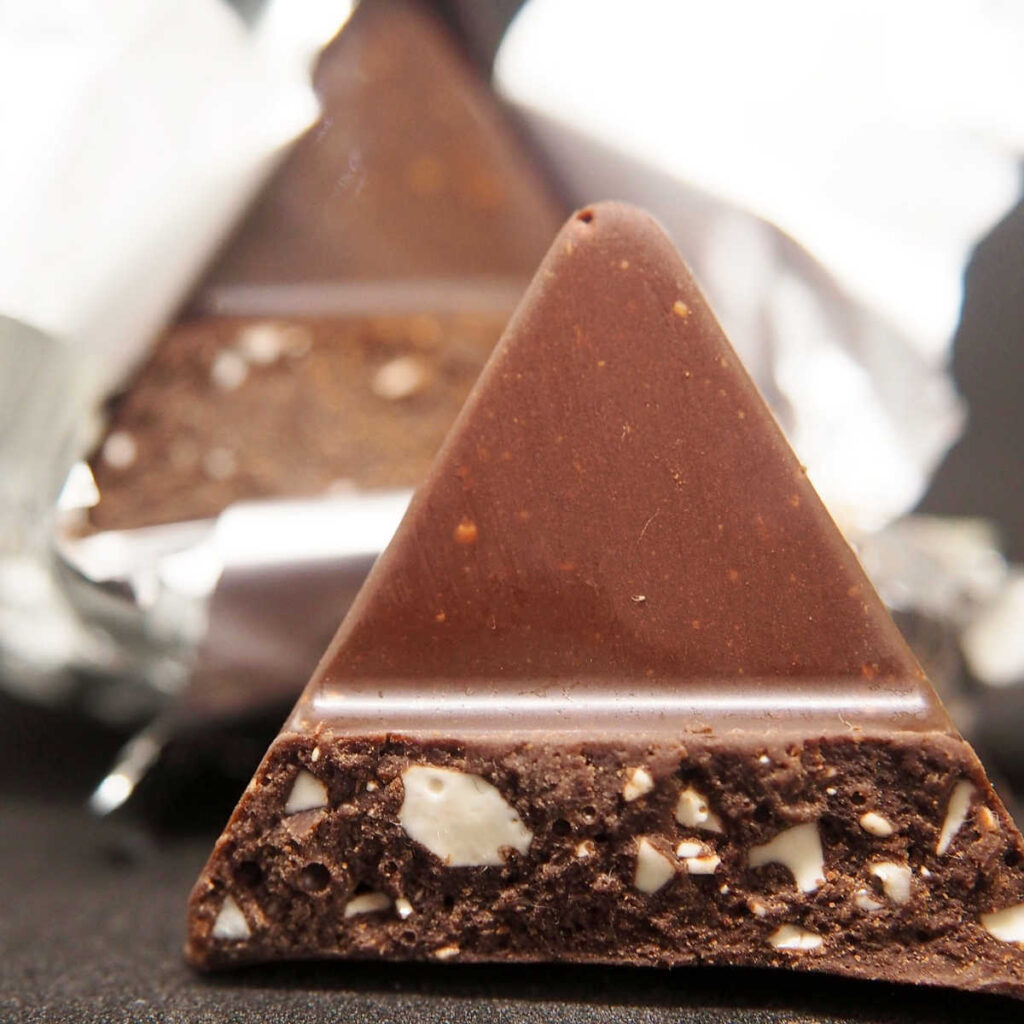
7. Toblerone (1908)
Probably the most famous Swiss confectionery bar is Toblerone. First made in 1908 and still produced in the Swiss capital of Bern, we have Theodor Tobler and his cousin Emil Baumann to thank for this distinctive towering addition to the chocolate landscape.
The name "Toblerone" is a blend of "Tobler" (the creator's name) and "torrone," an Italian word for nougat. The triangular shape of Toblerone bars is inspired by the Swiss Alps, paying homage to the chocolate's Swiss origins. The logo also includes an image of a bear, a symbol of the city of Bern.
In 2016 two peaks were removed from the chocolate bar and larger gaps were introduced between each peak, in two of the bars in the United Kingdom, to cut the weight of the bars and reduce costs, while retaining the same package size.

8. Bournville (1908 - UK)
Bournville is dark chocolate bar produced by Cadbury, a British chocolate company that is owned by Mondelez International. The brand is named after the Bournville area of Birmingham, England, where the Cadbury factory is located.
Bournville chocolate was first introduced in 1908, and it was marketed as a high-quality, "plain" chocolate bar that was made with a high percentage of cocoa solids.
The bar was initially sold in a distinctive purple wrapper with a gold seal, which has become an iconic symbol of the brand. Bournville chocolate has a great dark chocolate flavour and is often used in baking recipes.
The brand has since expanded to include a variety of flavours, such as Bournville Old Jamaica, which is infused with rum and raisins.
MORE SWEETS HISTORY
9. Tootsie Roll (1907 - USA)
Tootsie Roll is a classic American candy that was invented in 1907 by Leo Hirshfield. It is a chewy chocolate-flavoured candy with a distinctive cylindrical shape.
Tootsie Roll was named after its creator's daughter, Clara "Tootsie" Hirschfield. Leo Hirshfield, the founder of the candy company, named the candy after his daughter's nickname, which he affectionately called her from a young age.
Tootsie Roll has been referenced in various forms of pop culture, including songs, movies, and television shows. One of the most famous references is the 1970s song "The Tootsie Roll" by the musical group 69 Boyz, which sparked a popular dance craze.
Over the years, Tootsie Roll Industries has introduced several variations of the original Tootsie Roll, including Tootsie Pops (hard candy lollipops with a Tootsie Roll centre), Tootsie Fruit Chews, and Tootsie Frooties (chewy fruit-flavoured candies).
MORE SWEETS HISTORY
10. Lollipops (1908, USA)
While "sugar on a stick" existed for years, George Smith of New Haven, Connecticut, claimed he was the first to mass-produce them. He named them "Lolly Pops" after a famous racehorse of the time.
George Smith was so protective of his creation that he fought to trademark the "Lolly Pop" name in 1923, claiming he had been using it since 1908.
Interestingly, his original lollipops were quite different from the round ones we see today—they were soft and chewy rather than hard candy. Despite the trademark, the name eventually became so popular that it turned into a general term used for any sweet on a stick.
MORE SWEETS HISTORY
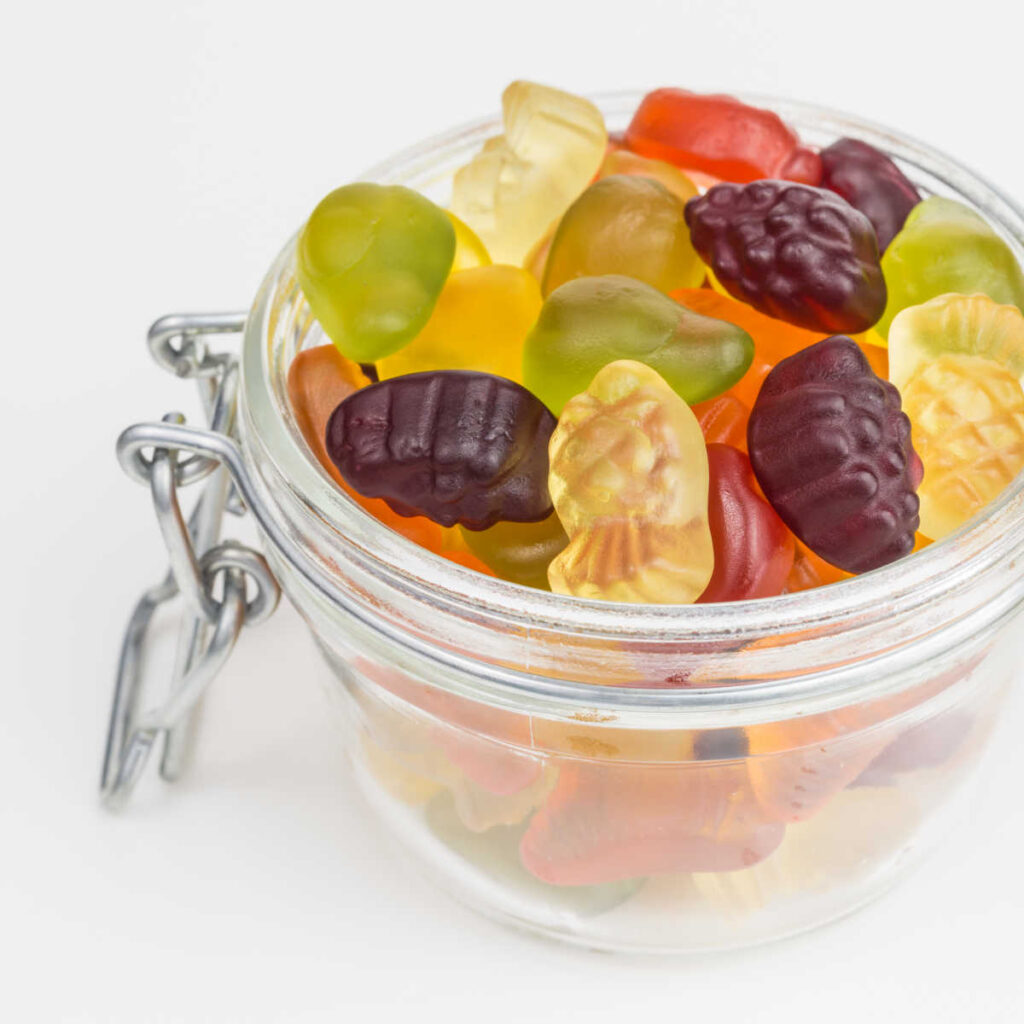
11. Fruit Gums (1909) - Maynards (UK)
Fruit Gums were introduced by Maynards in the UK in 1909. They are soft, chewy sweets flavoured with fruit juice and shaped like various fruits, for example strawberry, orange, lemon, blackcurrant, and lime.
Maynards Fruit Gums were invented by Charles Riley Maynard, who founded the company with his brother Tom in 1909. The brothers started by selling their sweets from a small shop in London, eventually growing their business into a successful confectionery brand.
Maynards Fruit Gums were originally sold in jars at the Maynard brothers' shop, where customers could buy them by weight. Fruit Gums became particularly popular during World War II, when they were included in soldiers' rations as a morale-boosting treat.

12. McCraw's Old Fashioned Taffy (1908 - USA)
This is lovely oldfashioned soft chewy taffy, originally made by Charles McCraw.
The coolest thing about McCraw's was how it was packaged. Instead of a box or a bag, it came as a thin, 30cm (12-inch) long strip wrapped in wax paper. Because it was so thin, you could slowly peel it back and nibble on it for ages. It was the ultimate "value for money" treat for a kid with a single penny!
While most sweets back then were just one colour, Charles McCraw had the brilliant idea to swirl his flavours together. If you bought a "multivariable" strip, you might get Vanilla, Chocolate, Strawberry, and Banana all in one long, stretchy piece.

Chocolate & Sweets History during the 1900s (1900 - 1909)
1900: Chocolate tin for every soldier
During the Boer War, Queen Victoria decided to send a "New Year's Gift" to all her soldiers serving in South Africa. She ordered 123,000 tins of chocolate!
Because the three big chocolate companies (Cadbury, Fry, and Rowntree) were owned by Quakers who didn't believe in war, they refused to put their names on the tins. The Queen wasn't happy, so they eventually agreed to put their names on the chocolate inside, but the tins stayed "brand-free."
1901: Sweets are moving away from being a 'medicine'
Queen Victoria passed away, and the "Edwardian Era" began. This changed the style of sweet shops. The old, dark Victorian shops started to get bigger windows and brighter lights. Sweets were no longer seen as "medicine" from a chemist; they were now officially about fun and "leisure."
1902: Sweet tins to celebrate the coronation
King Edward VII was crowned, and this led to the first-ever mass production of commemorative sweet tins. Millions of children were given decorative tins filled with sweets to celebrate the new King. This started the British tradition of keeping "royal tins" for decades to store buttons and coins!
1903: The invention of the waffle cone
At the St. Louis World' s Fair (which actually ran into 1904), an ice cream seller ran out of clean glass cup, which at the time were used to serve ice-cream. A nearby pastry maker rolled up his thin, waffle-like "Zalabia" wafers into cones to hold the ice cream. It was a genius move—confectionery was now "portable" and you could eat the 'cup' too!
1904: Conching machines improve the smoothness of the chocolate
This year, chocolate makers started using science more than luck. In Switzerland, researchers began using high-tech "conching" machines for much longer—sometimes for 72 hours—to make chocolate so smooth it felt like silk. This moved chocolate from a "grainy" snack to a smooth luxury chocolate bar.
1905: The British & Swiss chocolate rivalry
A huge rivalry broke out between British and Swiss chocolate makers. The Swiss had the secret to milk chocolate, but British companies began pouring massive amounts of money into advertising to prove that British milk was better. This "Milk War" resulted in the iconic blue and gold packaging we still associate with quality chocolate today.
1906: The sugar tax debate
In Britain, there was a huge political row about the "Sugar Duty" (a tax on sugar). Because sweets were now a "staple food" for the poor, politicians argued that taxing sugar was like taxing the happiness of children. This debate helped keep sweets cheap enough for everyone to afford.
1907: The first automated sweet wrapper machine
Before 1907, almost every sweet was wrapped by hand. This year, new "automated wrapping machines" became common. This meant sweets could stay cleaner and last longer on the shelf. It also meant companies could start putting "collectible cards" inside the wrappers, which became a huge craze for school children.
1908: Improvements to the Easter Eggs production
Confectioners perfected the art of "Centrifugal Casting." This is a fancy way of saying they spun chocolate moulds around really fast so the chocolate stuck to the sides, leaving the middle empty. This was the year that hollow Easter Eggs became affordable for the average family, not just the super-rich.
1909: The wine gums legal battle
A famous legal battle took place over the naming of "Wine Gums." The creator's father, a very religious man, almost fired his son because he thought he was selling alcohol to children! The son had to prove in a "tasting trial" that the sweets were 100% alcohol-free and that the names (like Port and Sherry) were just about the sophisticated flavours.
1909: The rise of the penny tray sweets
By the end of the decade, the "Penny Tray" became a legend in British corner shops. Most children now had a tiny bit of pocket money, and shopkeepers began setting out trays of "half-penny" sweets. For the first time, children—not parents—were the ones deciding which sweets were the most popular.
This blog post was originally written on 23 February 2024 and last updated on 29 January 2026


Leave a Reply