
The chocolate brownie is one of the most popular cakes in the world, yet its exact origin still remains a subject of debate among food historians. This dense, baked square sits somewhere between a cake and a cookie, and its evolution is tied directly to the American culinary scene at the turn of the 20th century.
I enjoy baking chocolate brownies because they are so easy to make and you can easily change the recipe depending on what ingredients you have at home. Over the years I've tried and tested so many recipes, that I simply had to find out more about the history of chocolate brownie and how it all began.
BROWNIE RECIPES

The origins of the first chocolate brownie at Palmer House (1893)
The most widely accepted origin story traces back to Chicago during the World's Columbian Exposition in 1893. Bertha Palmer, a prominent socialite and wife of the Palmer House Hotel owner, requested a dessert for the ladies attending the fair.
She was quite specific about what she wanted - the new treat should be smaller than a piece of cake, easy to eat from a boxed lunch and rich and decadent.
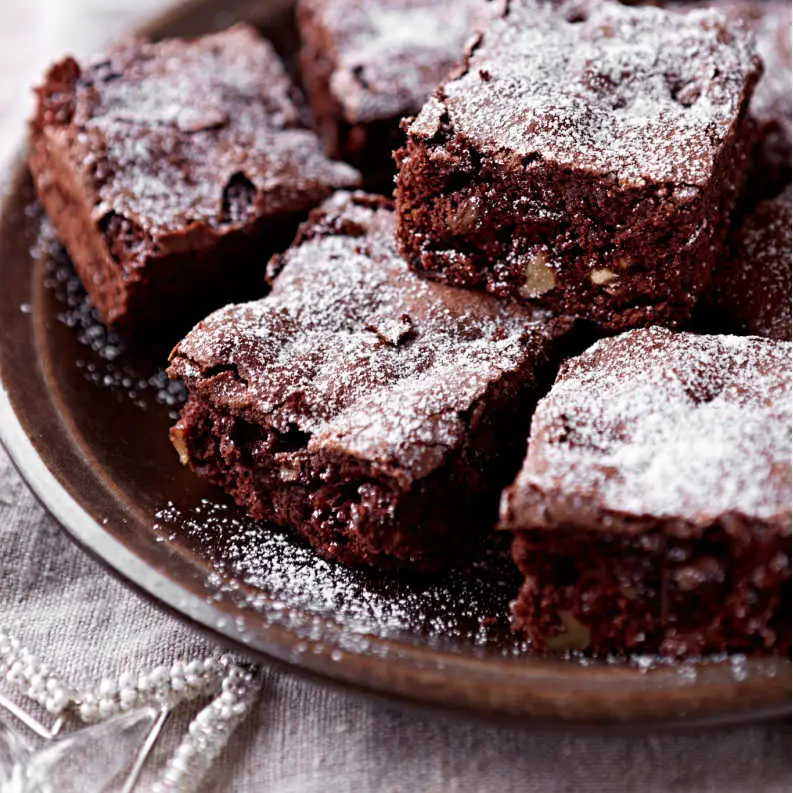
The hotel's pastry chef created a dense, fudgy square made with extra chocolate, walnuts, and an apricot glaze. ]The recipe itself is quite fascinating and because of all that chocolate, the cost would have been quite high. The ingredients included almost the same amounts of chocolate, butter, crushed walnuts and sugar and very small amount of flour. All of this whisked with large amount of eggs (the original recipe has 8!). The glaze was made with gelatin, water and apricot jam and then poured on the top to set.
The Palmer House Hotel still serves this original recipe today.
The first written recipes (1896–1906) in USA
While the Palmer House dessert existed in 1893, the word "brownie" first appeared in print in Fannie Merritt Farmer's Boston Cooking-School Cook Book in 1896. Interestingly, this version contained no chocolate; it was a molasses-based cake.
This recipe was a lot more budget friendly than the Palmer Hotel recipe as it included equal amounts of butter, sugar and molasses, together with just one egg, small amount of flour and equal amount of chopped pecans (as butter, sugar and molasses combined together).
The transition from molasses-based treats to the chocolate version recognised today can be traced through several different cookery books publications that happened afterwards.
In 1899, the Machias Cookbook in Maine included a recipe titled "Brownie's Food," which might have been the first link between the name and the cake.
By 1904, the "Bangor Brownie" appeared in both the Service Club Cook Book in Chicago and a New Hampshire publication, including chocolate as one of the ingredients and leaving out the molasses.
Fannie Farmer's Boston Cooking School Cook Book (1906)
The most significant turning point arrived in 1906 when Fannie Farmer updated her Boston Cooking-School Cook Book. She adapted her earlier 1896 recipe by adding melted chocolate and baking it in a seven-inch square pan. Because Fannie wrote the recipe for regular house cooks, she included small amount of chocolate, which was still very pricey at the time.
So this version of the recipe included equal amounts of butter and bread flour with twice the amount of sugar and chopped walnuts, 1/2 chocolate bar and eggs. The use of bread flour in this recipe provided a slightly chewier structure than standard cake flour.
This version helped standardise the brownie for a national audience, moving it away from its regional Maine roots and into kitchens across the United Kingdom and America. Over the following decades, as chocolate became cheaper and more mass-produced, bakers began doubling or tripling the amount of chocolate to achieve the "ultra-fudgy" style popular in the 21st century.
Betty Crocker Picture Cooky Book (1950s)
By the 1950s, the brownie had transformed from a thin tea-time snack into a much richer, more substantial dessert. The post-war era brought an abundance of baking supplies and the rise of commercial brands like Hershey's and Nestlé, which encouraged home bakers to use significantly more chocolate.
A standard recipe from a 1950s cookbook, such as the Betty Crocker Picture Cooky Book, typically called for double the chocolate found in the 1906 version to achieve a darker colour and more intense flavour. It also (alarmingly may I say...) included double the amount of sugar.
How brownies become popular in Britain
While the brownie became a household name in America by 1906, it took slightly longer to appear in mainstream British cookery books. Early mentions in the UK were often found in magazines that shared "American-style" recipes or in books aimed at international audiences.
By the 1920s, the recipe began to appear more frequently in the UK. British home cooks, who were already fond of "traybakes," found the brownie easy to adapt.
One of the first significant mentions of the brownie in a British context was in the 1923 edition of The Daily Express Prize Recipes. It included American-inspired "Chocolate Squares" that were effectively what we now call brownies.
By the 1930s, more technical British baking books, such as those by the Good Housekeeping Institute, began including "American Brownies" to satisfy the growing public interest in foreign desserts.
The two main types of the brownie recipe
As the recipe spread across the globe, they developed into three distinct brownies styles based on the specific ratio of ingredients used in the batter.
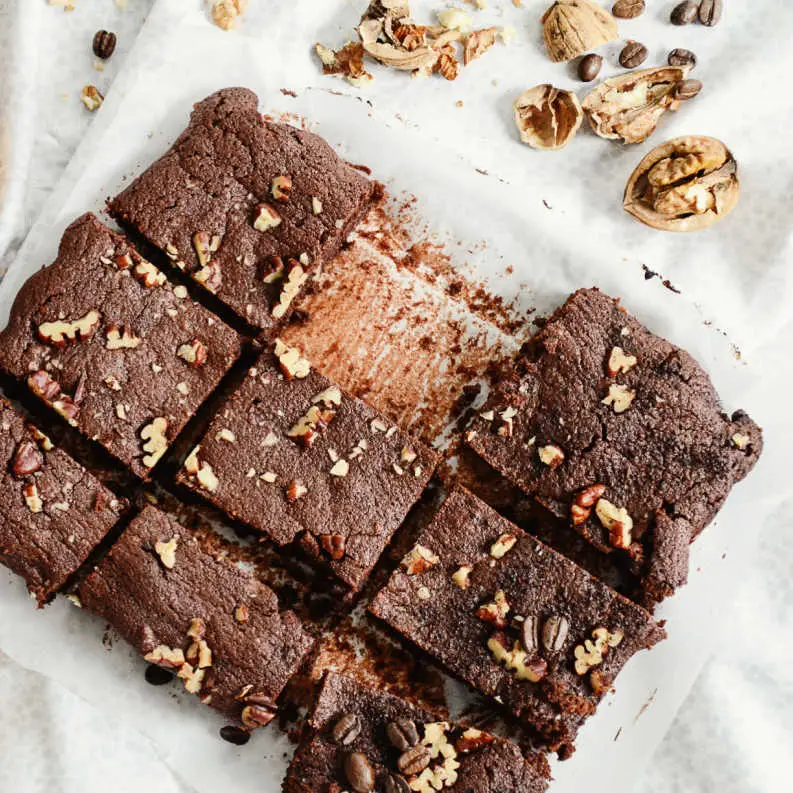
Fudgy brownies are characterised by a higher fat-to-flour ratio, relying on large quantities of melted butter and chocolate to produce a dense, moist, and heavy texture that mimics fudge.
In contrast, cakey brownies contain a larger amount of flour and typically include baking powder as a leavening agent to create a lighter, airier crumb similar to a traditional sponge cake.
A third variation, the chewy brownie was developed by using extra eggs and a combination of different sugars, which made the brownies more chewy.
The different ingredients were also influenced by the mixing method, as creaming the butter and sugar together incorporates more air for a cake-like result, while simply stirring the ingredients keeps the dessert dense and fudgy.
BROWNIE RECIPES

Evolution of the Name
The name "brownie" did not originally come from the colour of the cake. It is believed to be inspired by the "Brownies"—mischievous, fairy-like characters created by Canadian illustrator and author Palmer Cox. His popular cartoons and books in the late 1800s made the name a household term, which bakers likely adopted to make the treat more appealing to children.
The National Brownie Day
United States celebrates National Brownie Day on December 8th and there are many regional variations worldwide, such as the Brazilian "brigadeiro" brownie, which tops the traditional square with a thick layer of condensed milk and cocoa fudge.
Brownies in the Guinness World Records
According to the Guinness World Records, the largest chocolate brownie ever made was created by the Something Sweet Bake Shop in Alabama in 2013. This massive dessert weighed approximately 1,360 kilograms and contained hundreds of kilograms of chocolate, flour, and sugar.
Brownies during the war
Beyond size records, brownies hold a unique place in history as one of the first treats to be sent to soldiers during World War I and World War II because their dense structure and high sugar content allowed them to stay fresh during long shipping journeys across the Atlantic.
The scientific perfection behind the brownies crackle top finish
If you've ever baked brownie, you know that the tricky bit is to achieve that perfect crackled top. This thin, shiny crust on top of your brownie is actually a layer of meringue that forms when sugar dissolves into the egg whites during the mixing process.
Culinary scientists discovered that using high-quality Dutch-processed cocoa powder or increasing the whisking time of eggs and sugar gets you amazing papery crust.

Butterscotch Brownies (Blondies)
The discovery of the blondie actually predates the chocolate brownie, as late 19th-century bakers often used brown sugar and molasses to create dense, butterscotch-flavoured squares.
These early treats were frequently called butterscotch brownies, with one of the first recipes appearing in the 1896 Boston Cooking-School Cook Book by Fannie Farmer.
Because cocoa was an expensive luxury item in the 1800s, home cooks relied on the combination of butter and brown sugar to achieve a rich, caramelised flavour without the cost of imported chocolate.
It was only after the chocolate version became a global sensation in the early 1900s that these golden cake squares were seen as a variation rather than the original form.
I find it fascinating, that the name blondie did not become standard until the mid-20th century to help people distinguish them from the new chocolate brownies.
Advertisements and culinary journals from the mid-1950s began popularising "blonde brownies" as a distinct category, but it wasn't until the late 20th century that the name "blondie" became a household term.
By the 1980s, specialty bakeries and commercial mix brands like Betty Crocker and Duncan Hines (in the USA) helped to promote blondies and make them trendy as a sophisticated alternative to the traditional chocolate brownie.
Interestingly, blondies are chemically different from brownies because they rely entirely on the Maillard reaction—a chemical process between amino acids and reducing sugars—to develop their distinct toasted-butter flavour.
This blog post was originally written on 31 January 2026 and last updated on 31 January 2026



Leave a Reply