
Confused by chocolate labels? I've compared the sugar content of popular UK bars, from Cadbury to 100% dark chocolate to find out which ones have the lowest amount. Find out how many teaspoons of sugar are in a 100g bar and check out my recommendations for the best low-sugar chocolate bars in my 2026 guide.
In my 25+ years of chocolate making and teaching workshops, the question I get asked most is: 'How much sugar is actually in this?
With so many headlines about "sugar-free" breakthroughs, it is hard to know what is fact and what is just clever marketing. In this guide, I'll show you exactly how many teaspoons of sugar are in your favourite UK brands and how to choose a bar that tastes great without the sugar crash.
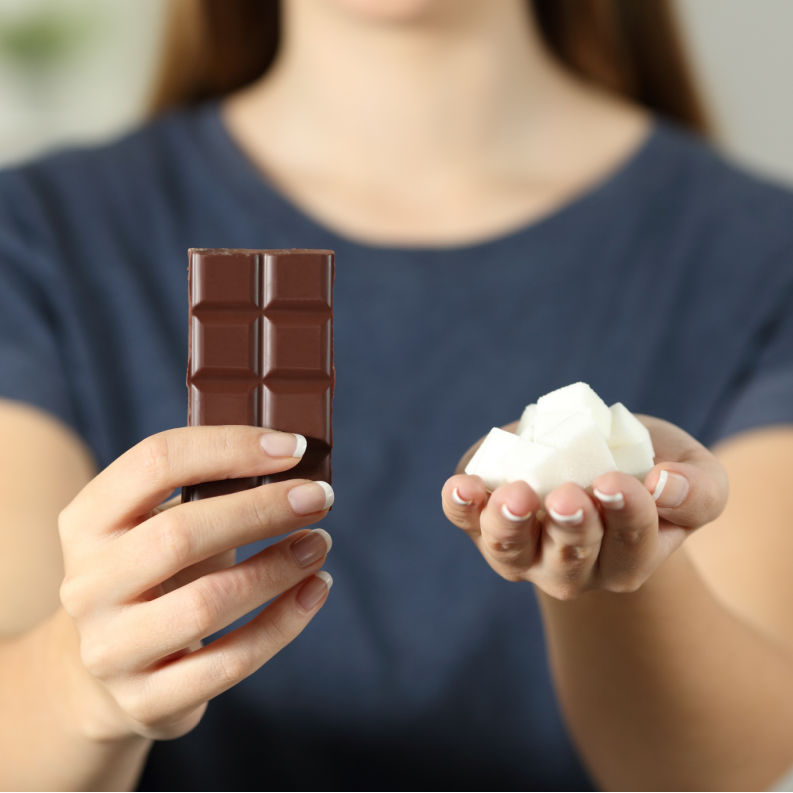
Daily sugar recommended maximum limits by NHS
The NHS provides clear guidelines on sugar intake to help prevent weight gain and tooth decay. These limits refer specifically to free sugars—any sugar added to foods or drinks, plus the sugars found naturally in honey, syrups, and unsweetened fruit juices.
- Adults: No more than 30g of free sugars a day (roughly equivalent to 7 sugar cubes).
- Children (7 to 10 years): No more than 24g of free sugars a day (6 sugar cubes).
- Children (4 to 6 years): No more than 19g of free sugars a day (5 sugar cubes).
- Children under 4: It is recommended to avoid sugar-sweetened drinks and food with added sugar entirely.
To put this into perspective, a 1/2 of a standard 100 g bar of milk chocolate often contains around 25g of sugar. This means eating just 1/2 chocolate bar can account for nearly the entire daily limit for an adult and exceeds the limit for a young child.
The "free sugar" definition does not include the natural sugars found in whole fruit or milk, which is why the lactose in the milk chocolate bars doesn't "count" toward this 30g limit in the same way added refined sugar does.
MORE CHOCOLATE FACTS

My top tip: The "Rule of 100" for plain dark chocolate bars
A brilliant shortcut to estimate sugar content is the rule of 100. If you are buying a high-quality dark chocolate bar that only contains cocoa and sugar, you can simply subtract the cocoa percentage from 100 to find the approximate sugar amount.
For an 80% cocoa bar of 100 grams, the calculation looks like this:
- 100 (Total Bar) - 80 (Cocoa Solids) = 20g of Sugar
While mass-produced chocolate might have small amounts of vanilla or lecithin, those ingredients usually take up less than 1% of the bar. So, if you see an 85% bar, you can safely assume it contains roughly 15g of sugar, and a 90% bar has only about 10g.
MORE CHOCOLATE FACTS

Sugar content in regular chocolate bars
By regular chocolate bar, I mean 100g of basic chocolate bar with no flavouring, toppings or additional ingredients, that you normally get in supermarkets or specialist chocolate shops.
White chocolate Bar
This depends on the different brands, but the sugar content could be as much as 60% of the whole chocolate bar.
Milk Chocolate Bar
Most milk chocolate bars typically include 50% sugar - some of which comes from the milk used.
Dark Chocolate Bar
The amount of sugar in dark chocolate is highly variable. It can be as much as 40%, but it can have no sugar in it at all, although most people would consider that much too bitter.
Artisan chocolate makers often use different types of sugars, such as natural coconut sugars or other alternatives, but regardless what sugar they use, the calories are pretty much the same. Most sugar is natural and contains about 23 calories per teaspoon.
| Type of Chocolate | Typical Cocoa Solids | Sugar per 100g (approx.) | Teaspoons of Sugar |
| White Chocolate | 0% (Uses cocoa butter only) | 59g | 15 |
| Milk Chocolate | 20% – 35% | 52g | 13 |
| 50% Dark | 50% | 45g | 11 |
| 70% Dark | 70% | 29g | 7 |
| 80% Dark | 80% | 18g | 4.5 |
| 100% Dark | 100% | 0.5g | < 0.25 |
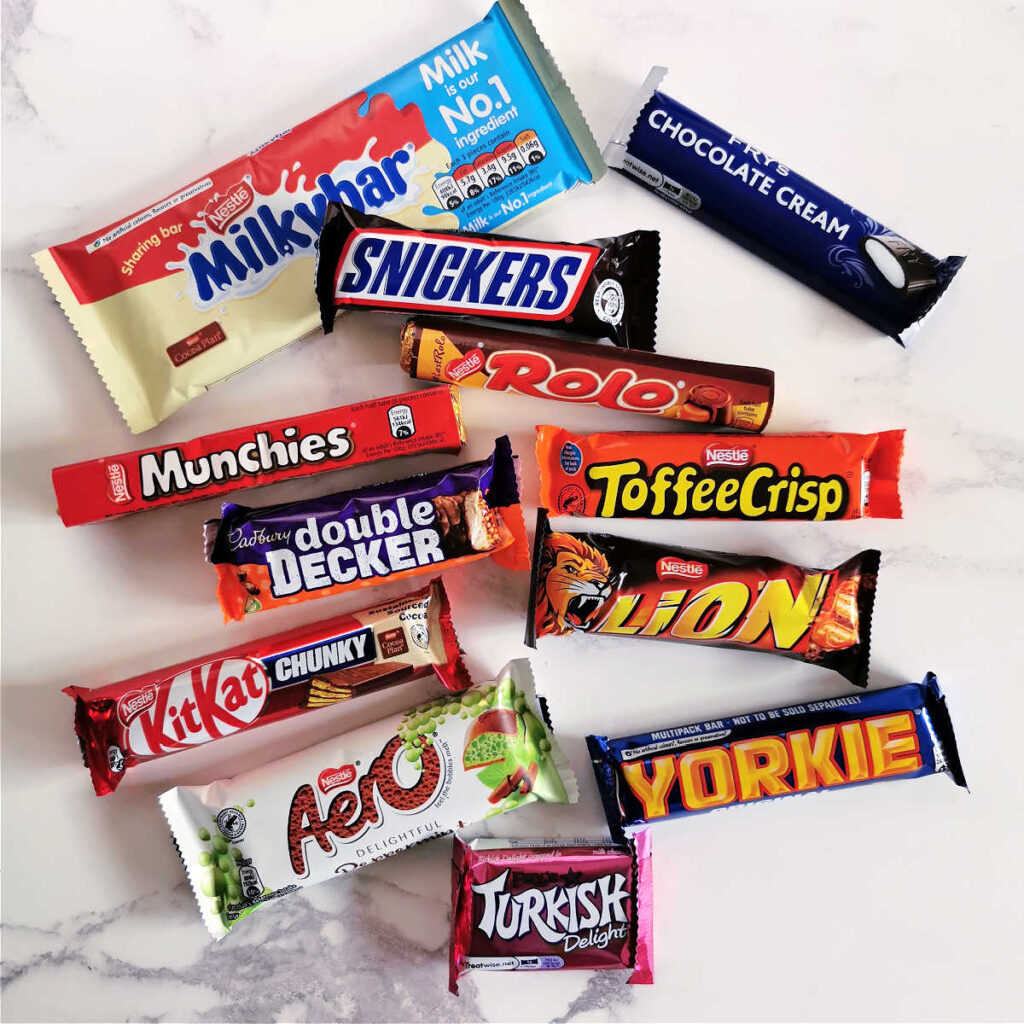
Sugar content in chocolate snack bars
The sugar content in chocolate snack bars is much higher than in regular chocolate bars. In my opinion, it's much healthier to have a few squares of a proper chocolate bar than a chocolate snack bar any time.
For example, standard size Mars Bar contains around 20g of sugar, which is about 70% of the whole weight of the snack bar. This is about 5 teaspoons of sugar, which equals to about 115 Calories (just for the sugar portion alone) and very close to the amount of recommended sugar intake for the whole day!
And something like standard 50g Cadbury Boost bar contains half of it's weight in sugar (24g). Yes, that's a lot!
Most of other Cadbury chocolate bars contain around 50% sugar (Boost, Caramel, Wispa, Flake, Curly Wurly, Chomp, Freddo), which explains why I've always found Cadbury's chocolate incredibly sweet.
For years, chocolate manufactures have been adding more sugar into chocolate bars, bulking up on necessary wheat, change the cocoa butter to saturated fats to make the chocolate stretch further at a time when the average weight and size of a bar has decreased. No wonder my student often ask me if chocolate is gluten free, when one of the bulking ingredient is starch and flour based ingredients.
It's often almost impossible to taste the actual chocolate if you have that high content of sugar and other ingredients in the chocolate bar.
| Product | Standard Bar Size (g) | Sugar per Bar (g) | Teaspoon Equivalent (approx.) | Sugar per 100g |
| Mars Bar | 51g | 31g | 7.5 | 61g |
| Galaxy Smooth Milk | 42g | 23g | 5.5 | 54g |
| Cadbury Dairy Milk | 45g | 25g | 6 | 56g |
| Snickers | 48g | 23g | 5.5 | 49g |
| Maltesers (Standard Bag) | 37g | 20g | 5 | 53g |
| Cadbury Wispa | 36g | 19g | 4.5 | 52g |
| KitKat (4 Finger) | 41.5g | 21g | 5 | 51g |
| Cadbury Fudge | 22g | 14g | 3.5 | 65g |
| Milkybar (White) | 25g | 14g | 3.5 | 57g |

What chocolate has less sugar ?
So, now I've scared you with the amount of sugar in regular chocolate bars, I'm sure you want to know what sort of chocolate you should be eating!
Sometimes, you are better off with a few squares of white chocolate bar than eating a whole Mars Bar, but it's best to stick to dark chocolate if you want to keep your sugar intake low.
Saying that there are zero or no added sugar chocolate bars options out there. But don't be fooled that means 'no sugar', because the traditional sugar is usually replaced with plant-based sweeteners. While these are great for keeping your sugar intake near zero, they often contain polyols. If you end up eating too many of these at once, they can sometimes cause an upset stomach or have a laxative effect!
For those who want a bit of a boost, protein bars have become a popular choice. Brands like Grenade, Fulfil, and the low-sugar versions of Mars and Snickers are designed specifically for the fitness market. They taste like chocolate with almost no sugar at all, replacing it with a mix of protein and sweeteners to keep the calories lower.
But, some bars, such as Nakd or Deliciously Ella, are marketed as a healthy choice because they have "no added sugar." However, since they are mainly made from dried fruits like dates and raisins, they are actually very high in natural fruit sugars. In fact, some of these bars contain more sugar than a standard chocolate, so they might not be the best choice if you are strictly watching your sugar levels.
I'd also look out for chocolates with nuts. These bars do use real sugar, but because they are also packed with whole nuts, you get a hit of healthy fats and fibre which helps slow down how quickly your body absorbs the sugar. It's a sensible middle ground, if you want a real chocolate taste without the massive sugar crash.
| Product | Bar Size | Sugar per Bar | Teaspoon Equivalent | Sugar per 100g |
| Sainsbury's No Added Sugar Dark | 100g | <0.5g | Trace | 0.8g |
| Grenade Protein Bar (Dark Choc) | 60g | 0.4g | Trace | 0.7g |
| The Wizard's Magic (Original) | 55g | 0.1g | Trace | 0.2g |
| Fulfil Vitamin & Protein Bar | 55g | 1.5g | <0.5 | 2.7g |
| Snickers Low Sugar Hi-Protein | 57g | 1.9g | 0.5 | 3.3g |
| Mars Low Sugar Hi-Protein | 57g | 1.7g | 0.5 | 3.0g |
| Kind Bar (Dark Choc Nut) | 40g | 5.0g | 1.25 | 12.5g |
| Nature Valley (Choc & Peanut) | 40g | 6.0g | 1.5 | 15.0g |
| Nakd Bar (Cocoa Orange) | 35g | 14.0g | 3.5 | 40.0g |
MORE CHOCOLATE FACTS
- Can dogs eat chocolate? The complete guide >>
- What is white chocolate made of & is it really a chocolate?

My tips on how to read a chocolate label
When you're standing in the supermarket aisle, the marketing on the front of the packet can be distracting. To find the truth about the sugar content, you need to have a look at the detailed description on the back:
Check the "Of Which Sugars" line: Don't just look at "Total Carbohydrates." The "of which sugars" figure tells you exactly how much sweetener has been added. For a healthier choice, aim for a bar with less than 25g of sugar per 100g.
The Order of Ingredients: Ingredients are always listed in order of weight. If "Sugar" or "Sugar Syrup" is the first or second ingredient on the list, it is the primary component of that bar. In high-quality dark chocolate, "Cocoa Mass" or "Cocoa Butter" should always come first.
Identify "Hidden" Sugars: Manufacturers often use different names for sugar to make the label look healthier. Keep an eye out for Invert Sugar, Glucose Syrup, Barley Malt Extract, or Sweetened Condensed Milk. These are all just different forms of sugar that add to your daily limit.
Spot the "Portion Size" Trick: Many labels show the sugar content for a "portion," which might only be two small squares (20g). Since most people eat more than that in one sitting, always look at the "Per 100g" column to get an honest comparison between different brands.

Cadbury Darkmilk chocolate bar
A few years ago, Cadbury spotted a gap in the market for people who found standard milk chocolate a bit too sugary but weren't quite ready to jump into the bitterness of 70% dark chocolate. They launched Darkmilk with 38% cocoa solids—a significant step up from the 20-25% found in a regular Dairy Milk.
Because the bar was more cocoa-heavy, there was naturally less room for sugar. While a classic Dairy Milk is about 56% sugar, Darkmilk sat at roughly 49%. It wasn't exactly a health food, but it was a little less sweet than regular milk chocolate bar.
But, by late 2024 this chocolate bar has started to disappear from the chocolate aisles in Tesco and Sainsbury's. This sparked rumours that the range had been axed entirely.
The truth is a bit more complicated. While Cadbury (owned by Mondelez) confirmed they faced some "temporary supply challenges," Darkmilk is technically still a core part of their range. However, they have thinned out the selection. While the Original Darkmilk survived, many of the fun variations like Salted Caramel or Roasted Almond have become much harder to find.

More milk chocolate bars with less sugar
Lindt Excellence 45% and 55% Cocoa
Lindt has mastered the "high-cocoa milk" category. Their 45% Milk bar is a great starting point, but for a real sugar saving, their 55% Milk bar is excellent. Because it contains 55% cocoa solids, it has roughly 25% less sugar than a standard milk chocolate bar, yet it still retains that silky, melt-in-the-mouth texture Lindt is famous for.
Hotel Chocolat "Supermilk"
Hotel Chocolat's Supermilk 65% is arguably the gold standard for this category. It contains 65% cocoa, a splash of milk, and even less sugar than a typical 70% dark chocolate bar. It's a fantastic choice if you want the health benefits and low sugar of dark chocolate but find the texture of plain dark chocolate a bit too dry or bitter.
Montezuma’s "Absolute Black" with Milk
For those who want to go even further, Montezuma's (often found in Waitrose or Holland & Barrett) offers high-cocoa milk chocolates that use organic ingredients and higher cocoa butter content. This means that even if the chocolate does include sugar, the cocoa butter will make you feel full after eating just a few squares.
| Product | Sugar per 100g | Teaspoon Equivalent | Sugar Source / Sweetener |
| Sainsbury's No Added Sugar Milk | 10.5g | 2.5 | Maltitol & Lactitol |
| Balance Milk Chocolate Bar | 11.0g | 2.75 | Maltitol & Fiber |
| M&S Reduced Sugar Milk | 31.1g | 7.5 | Real Sugar (35% less) |
| Duffy's Venezuela Milk (55%) | 35.0g* | 8.5 | Real Sugar |
| Cadbury Dairy Milk (30% Less Sugar) | 37.0g | 9 | Real Sugar & Soluble Fibre |
| Pump Street Milk (60%) | 24.3g | 6 | Real Sugar |
| Lindt Excellence 55% Milk | 38.0g | 9.5 | Real Sugar |
My tips for choosing the best milk chocolate bar
Bars like the Sainsbury's No Added Sugar version have the lowest sugar content because they replace sugar entirely with sweeteners like Maltitol. This brings the sugar down to about 10g per 100g (mostly naturally occurring lactose from the milk).
Bars like M&S Reduced Sugar and the Cadbury 30% Less Sugar version still use real sugar but use clever ingredients like chicory root fibre to bulk out the bar.
Artisan chocolate bars like Pump Street (60%) or Duffy's (55%) have less sugar simply because they have more cocoa butter and cocoa powder. These are often the best choice if you want to have clean ingredient list without artificial sweeteners.
The Dairy Milk Comparison: For context, a standard bar of Cadbury Dairy Milk contains 56g of sugar per 100g (14 teaspoons). Even the "highest" sugar option on the list above is still a significant saving!

White chocolate bars with lower sugar content
White chocolate is notoriously high in sugar because it contains no cocoa solids—only cocoa butter, milk, and sweeteners. Saying that there are some "no added sugar" and "low sugar" white chocolate bars available in the UK.
As with the other categories, these figures are based on a 100g chocolate bar. For context, a standard Milkybar or Lindt White bar contains roughly 58g to 60g of sugar per 100g.
| Product | Sugar per 100g | Teaspoon Equivalent | Sweetener Used |
| Torras Sugar Free White | 7.0g | 1.75 | Maltitol |
| Holland & Barrett No Added Sugar Swiss White | 11.0g | 2.75 | Maltitol |
| Free’ist Sugar Free White | 12.1g | 3 | Erythritol & Stevia |
| Nostradamus 35% Toasted White | 27.1g | 6.75 | Real Sugar (Reduced) |
| Standard Milkybar (for comparison) | 52.6g | 13 | Real Sugar |
My tips for choosing the white chocolate bar with lower sugar content
You will notice that even "Sugar Free" white chocolate still has about 7g to 12g of sugar. This isn't added sugar; it is the lactose naturally found in the high amount of milk powder required to give white chocolate its flavour.
Most supermarket options, like those from Holland & Barrett use Maltitol. It tastes almost exactly like sugar but can cause digestive issues if eaten in large amounts. Brands like Free'ist use a blend of Erythritol and Stevia, which many people find easier on the stomach.
Options like Nostradamus chocolate don't use artificial sweeteners, but they use much more cocoa butter and milk, meaning the sugar is roughly half that of a standard high-street bar.
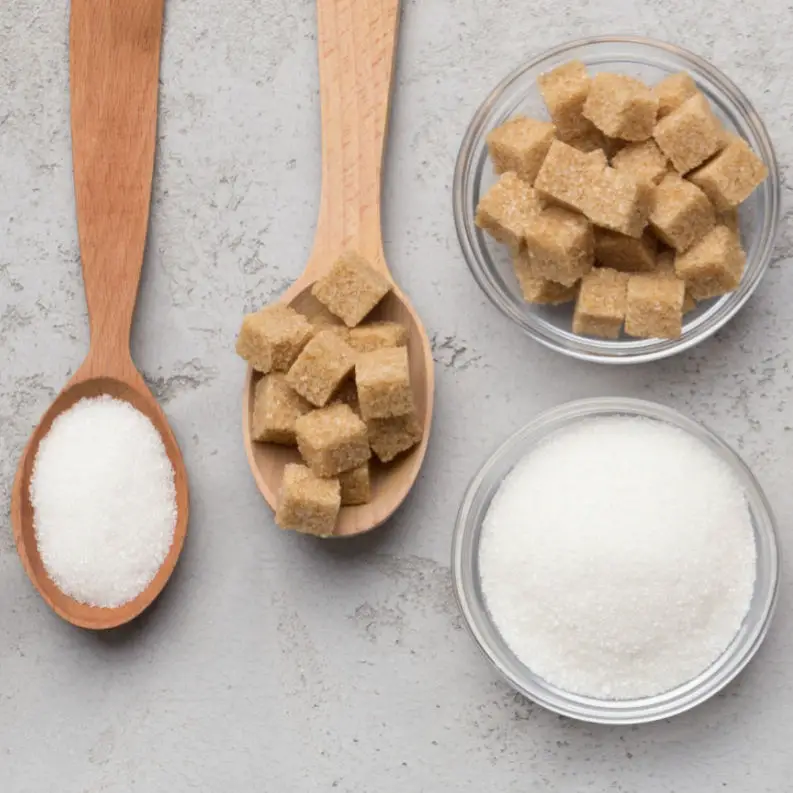
Nestle 'hollow sugar' invention
Nestlé first announced their "structured sugar" breakthrough in November 2016. While the science made headlines immediately, it took their researchers nearly two years to move the technology from the lab to the factory floor.
The first actual product to hit UK shelves using this technology was Milkybar Wowsomes, which launched in March 2018. It was a significant moment for the industry, as it was the first time we saw "hollow sugar" being used in a mass-market snack bar specifically aimed at parents and children.
This "hollow sugar" works by fooling your taste buds. Standard sugar crystals are solid and take time to dissolve, meaning you swallow much of it before you even taste the sweetness. Because these aerated sugar particles dissolve immediately, they provide an instant hit of flavour and it means that Nestlé was able to use 30% to 40% less sugar without losing the sweet taste.
One catch is that this innovation only works in dry products like chocolate. Because the sugar is designed to dissolve the moment it touches moisture, it would disappear instantly in "wet" products like soft drinks. This is why you won' t see "hollow sugar" in your fizzy drinks any time soon.
However, the innovation was short-lived. By February 2020, Nestlé confirmed it had discontinued the Wowsomes range due to disappointing sales and struggles with consistent distribution. While the science was a marvel, the high-street shoppers seemed to prefer the classic texture and taste of traditional recipes.
Since then, the industry has shifted its focus. While the "hollow sugar" invention proved that we could physically change sugar, many brands have moved toward simpler methods. You'll now see more companies—including Nestlé—using techniques like enzymatic conversion or adding natural fibres to reach their sugar-reduction goals.
This blog post was originally written on 26 November 2016 and last updated on 3 February 2026




Leave a Reply