
Discover the fascinating history of England's 17th-century chocolate houses—exclusive venues where the elite gathered, politics flourished, and a luxury drink shaped British culture.
Long before modern cafés lined our streets, 17th-century London was buzzing with a fascinating phenomenon—chocolate houses. These elegant establishments, first appearing in the 1650s, were in fact the original social hubs where London's elite gathered to enjoy the city's most luxurious new drink - the chocolate!
But, chocolate houses weren't simply places to drink chocolate. They were fashionable meeting spots, political discussion forums, and early business centres where deals were struck over cups of a new exotic drink. Only the wealthy could afford this fairly expensive drink, which ment, that chocolate houses were exclusive gathering places for gentlemen, merchants, and influential figures of the day.
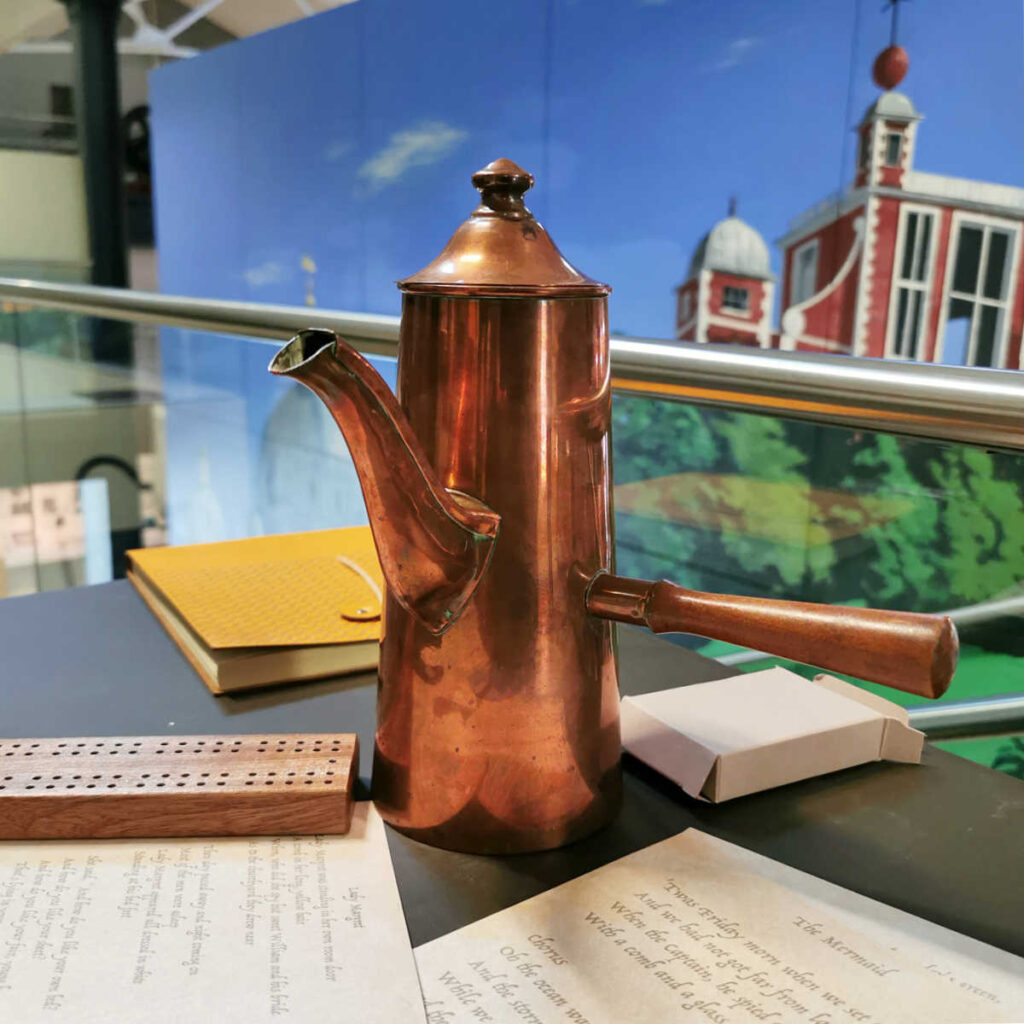
I've recently visited an exhibition about the Cocoa Tree House at Greenwich Maritime Museum, which inspired me to dig deeper into the fascinating history of chocolate houses. In this blog post I wanted to explore the rise of London's chocolate houses, what made them so special and why they don't exist anymore.
Chocolate first arrives to England
Just before the chocolate houses opened, the chocolate first arrived in England sometime in the 1650s. It was brought over from Spain where it had been popular since the Spanish conquistadors encountered it in Mexico and Central America.
The Spanish had been drinking chocolate since the early 1500s, mixing it with sugar and spices to make it more palatable to European tastes. The original Aztec version was quite bitter and often mixed with chilli peppers – nothing like the sweet hot chocolate you might grab at a cafe today.
The First Chocolate House Opens Its Doors
The very first chocolate drinking house in England opened in 1657, and here's the interesting bit – it appeared in London before chocolate houses became fashionable anywhere else in Europe.
A Frenchman (we think his name was either Roux or possibly La Routh, the records are a bit unclear on this) opened his establishment in Bishopsgate Street. This is pretty significant because it means England was ahead of the curve for once. The French usually led the way with these fashionable food trends, but not this time.
White's: From Chocolate House to Gentleman's Club
White's Chocolate House is probably the most famous of all the London chocolate establishments, and it's got quite the story. Francis White opened his chocolate house in 1693 on St James's Street and the place soon became the absolute centre of fashionable society. You could find aristocrats, politicians, writers, and basically anyone who thought they were important crowding into White's to drink chocolate and, honestly, to see and be seen.
What makes White's particularly fascinating is that it eventually transformed into a private gentleman's club in 1736, and it still exists today. You can walk past the original building on St James's Street right now – it's one of the oldest and most exclusive clubs in London.
The Cocoa Tree: Where Politics Brewed with Chocolate
The Cocoa Tree on St James's Street (yes, the same street – this was clearly THE fashionable address) opened around 1698 and became the meeting place for Tory politicians.
This is exactly what I mean about these places being socially important. These weren't just spots to have a drink. The Cocoa Tree was where political plots were hatched, where alliances were formed, where the actual business of running the country happened over cups of chocolate.
You'll find references to the Cocoa Tree throughout 18th-century political correspondence and diaries. Robert Harley, the Earl of Oxford, was a regular. So was Henry St John, Viscount Bolingbroke. These weren't minor figures – these were the people making decisions about war, peace, and everything in between.
The Whig politicians, by the way, had their own chocolate house called St James's, because apparently even your choice of chocolate establishment was a political statement.
Cocoa Tree operated as a chocolate house until about 1746, when it also transformed into a private club. This pattern – chocolate house to gentleman's club – happened repeatedly. They were semi-public at first, open to anyone who could afford the entrance and the drinks, but they gradually became more exclusive as the wealthy patrons wanted more control over who they wanted to socialise with.
Other famous London chocolate houses
You'll find that London had significantly more chocolate houses than just White's and the Cocoa Tree, though those two definitely grabbed most of the historical attention.
By the early 1700s, there were at least 20-30 chocolate houses operating in London at various times, though pinning down exact numbers is tricky because many came and went fairly quickly, and the historical records aren't always clear about whether an establishment was primarily a chocolate house, coffee house, or both.
White's (1693-1736 as a chocolate house) on St James's Street - this one we've already covered, but it's worth repeating because it was absolutely the most famous.
The Cocoa Tree (c.1698-1746) also on St James's Street - the Tory political headquarters I mentioned earlier.
Ozinda's Chocolate House opened in the 1690s on St James's Street (yes, the same street again - this really was chocolate house central). This one was named after its proprietor and was particularly fashionable in the early 1700s. You'll find it mentioned in contemporary letters and diaries as a meeting place for literary figures and aristocrats.
Mrs. Bland's Chocolate House operated in the late 1690s and early 1700s. What makes this one interesting is that it was run by a woman, which wasn't actually that unusual for chocolate houses. Women proprietors were more common in chocolate houses than in coffee houses or taverns. Mrs. Bland's became known for being slightly more respectable than some of the gambling-focused establishments.
The Smyrna Coffee and Chocolate House on Pall Mall (opened around 1702) is particularly interesting because it shows how the boundaries between coffee houses and chocolate houses were pretty fluid. This place served both drinks, but it was especially known for its chocolate.
The name "Smyrna" referenced the Turkish coffee connection, but they mainly specialised in chocolate. The poet Alexander Pope was a regular here, and you'll find the Smyrna mentioned in various literary works from the period.
Grigsby's Chocolate House was located near St James's Palace and operated in the early 1700s. This one became notorious for gambling, even by chocolate house standards. There are records of spectacularly large bets being placed here.
The St. James's Chocolate House (different from St James's Street - confusing, I know) was the Whig answer to the Tory Cocoa Tree. This was where Whig politicians gathered, making your choice of chocolate house a very public political statement.
The Orange Coffee and Chocolate House in the Haymarket was established around 1700 and became a meeting place for lawyers and those involved in the nearby theaters. The theatrical connection is pretty cool - actors, playwrights, and theater managers would gather here.
Moll King's Coffee House and Chocolate House in Covent Garden (early 1700s) was run by another woman, Moll King, and had a particularly colorful reputation. It stayed open very late - or very early, depending on how you look at it! - and attracted a mix of high society slumming it and lowlifes pretending to be high society. The artist William Hogarth actually painted scenes of the crowds outside Moll King's.
Chocolate houses outside London
Chocolate houses weren't, of course, just a London phenomenon. They spread to other English towns, though nowhere near the concentration you'd find in the capital.
In smaller towns, you'd often get "The Coffee and Chocolate House" rather than specialized venues. This makes tracking specifically chocolate-focused places harder because the records just call them "coffee houses" even if they served chocolate.
Chocolate houses in Oxford
Oxford had several chocolate houses catering to the university population. The most famous was Tillyard's Chocolate House (sometimes called just "the Chocolate House") which operated from around 1655-1660 - this might actually predate the first London chocolate house, though the dates are disputed. It was located on High Street and was popular with students and scholars.
Oxford also had a chocolate house run by someone named Arthur Tillyard (possibly the same establishment, or possibly a relative - the records aren't clear) that operated into the early 1700s.
I like that Oxford's chocolate houses became study spots where students would spend hours nursing a single cup of chocolate while reading or debating. Sounds familiar, doesn't it? Like modern students camping out in coffee shops with a laptop and one latte.
Chocolate houses in Cambridge
Cambridge similarly had chocolate houses serving the university community. The Rose Chocolate and Coffee House is mentioned in various accounts from the early 1700s.
Cambridge's chocolate houses seemed to be more integrated with coffee houses than London's were - possibly because the market was smaller and couldn't support as many specialized establishments.
Chocolate houses in Bath
Bath had at least one significant chocolate house during its heyday as a fashionable spa town in the early 1700s. The town was packed with wealthy visitors taking the waters and looking for entertainment and social opportunities.
There are references to a chocolate house near the Pump Room, though I haven't found a specific name that I'm confident about. Bath's chocolate house culture would have peaked around 1700-1740, when Bath was absolutely THE place to be seen.
Chocolate houses in Bristol
Bristol was a major port and a wealthy city, so it definitely had chocolate houses, though again, specific names are harder to pin down.
Bristol's importance in the early England chocolate story is actually more about chocolate manufacturing - this is where Fry's established their chocolate business in 1761, eventually shifting chocolate from a drink to a confection.
Chocolate Houses in York
York had chocolate house establishments, though these seemed to be combined coffee and chocolate houses rather than chocolate specialists. York was a significant social center in the North, with its own fashionable season, assembly rooms, and social scene, so chocolate houses would have fit right in.
Chocolate Houses in Chester
Chester also had references to chocolate houses in the early 1700s, serving the local gentry and visitors to this important regional center.
How many chocolate houses existed?
So how many chocolate houses were there in total? This is genuinely difficult to answer with precision. In London, I'd estimate there were probably 30-40 establishments that were mainly chocolate houses at some point between 1657 and 1750, though they wouldn't all have been operating simultaneously. The peak was probably around 1710-1720, when you might have had 15-20 chocolate houses operating in London at the same time.
For provincial England, I'd guess there were maybe 15-30 dedicated chocolate houses across all the other towns combined, again operating at various times rather than all simultaneously. But if you count coffee houses that served chocolate, you're looking at hundreds of establishments across England.
Scandalous reputation of some of the chocolate houses
Now, I need to tell you about the gambling because this is where chocolate houses got their slightly scandalous reputation. These establishments became notorious gambling dens.
We're not talking about friendly card games – we're talking about aristocrats losing entire estates over a single night at the tables. White's was particularly infamous for this. There are records of men betting thousands of pounds (when thousands of pounds could buy you multiple country houses) on the turn of a card.
One famous story from White's involved a man collapsing outside the establishment, and the members immediately started betting on whether he was dead or alive. When someone suggested they should probably help him, the betters objected because medical intervention might affect the odds. That's pretty dark, I know, but it tells you about the culture at the time.
The chocolate itself became almost secondary to the gambling, the gossip, and the social networking. Mothers warned their sons about the chocolate houses the same way they might warn them about any establishment where you could lose your fortune and your reputation.
The journalist and essayist Richard Steele wrote about chocolate houses in The Spectator and The Tatler, often gently mocking the pretensions and vices he observed there.
How was chocolate served in the chocolate houses
Drinking chocolate in chocolate houses back in the 17th century was quite different from ordering a hot chocolate today. The chocolate arrived in solid blocks or cakes, imported mainly from Central and South America via Spain or directly from Jamaica and other Caribbean colonies after England established its own trade routes.
The chocolate house owner would first scrape or chop the chocolate, then mix it with hot water or sometimes milk, sugar, and various spices. The mixture was heated in special tall copper pots and whisked vigorously with a wooden whisk called a molinet until it became frothy. This froth was absolutely essential – the drink was considered inferior if it didn't have a good foam on top.
The serving process was quite theatrical. The chocolate would arrive at your table in these special chocolate cups that were taller and narrower than teacups, often made of porcelain or sometimes silver for the fanciest establishments.
You'd typically get two cups' worth from a single serving, and the chocolate was drunk quite hot. Some chocolate houses added vanilla, cinnamon, nutmeg, or even ambergris (yes, from whales – it was considered a luxury flavouring) to create their signature blends.
You'd typically pay about 10 to 15 shillings per pound for chocolate in the late 1600s – that's actually quite expensive when you consider that a working person might earn only about a shilling a day. This wasn't a drink for everyone, and that exclusivity was entirely the point.
The medical claims that made chocolate fashionable
The chocolate houses were thriving also because chocolate was seen as incredibly healthy. Doctors and apothecaries in the 17th and early 18th centuries promoted chocolate as a cure for practically everything. It was supposed to aid digestion, provide strength, work as an aphrodisiac (this claim appeared everywhere), and generally promote good health and long life.
There were also medical books written about chocolate's benefits. Henry Stubbe published "The Indian Nectar" in 1662, which was basically a book-length advertisement for chocolate's medicinal properties. The Royal College of Physicians even debated whether chocolate should be classified as a food or a medicine! This medical endorsement meant that people felt virtuous drinking chocolate rather than, say, alcohol.
The reality, of course, was that chocolate drinking houses served a chocolate drink that was absolutely loaded with sugar and probably not particularly healthy at all, especially given the quantities some patrons consumed. But the medical reputation certainly helped chocolate's social acceptability, particularly among the upper classes who could afford both the drink and the doctors who recommended it.
The sad decline of chocolate houses
So what happened? Why don't we have chocolate houses on every corner today? The decline came gradually throughout the 18th century and I found quite a few interesting reasons for this.
First, coffee became more fashionable and, crucially, cheaper. Coffee houses multiplied rapidly, and they were more democratic spaces. The entrance fee was lower, the drink was less expensive, and you'd find a broader mix of social classes there.
Tea, imported from China and India, became dominant by the mid-1700s. The British love affair with tea eclipsed both coffee and chocolate. Tea drinking happened at home as well as in public spaces, which meant it became part of domestic social life in ways that chocolate never quite managed. The afternoon tea tradition, which developed in the 1840s, essentially sealed tea's position as England's drink of choice.
Chocolate itself also changed. By the early 1800s, chocolate was being developed as a solid confection rather than primarily a drink. Companies like Fry's (established in Bristol in 1761) and later Cadbury's (1824) and Rowntree's (1862) transformed chocolate into the bars and sweets we recognize today. The drink became old-fashioned, something your grandparents might have consumed but which felt outdated to younger generations.
The social function that chocolate houses served – providing exclusive gathering spaces for the elite – was taken over by the private gentlemen's clubs I mentioned earlier. White's, the Cocoa Tree, and similar establishments transformed from semi-public chocolate houses into strictly private clubs with membership lists and hefty fees. The wealthy didn't need chocolate houses anymore because they had clubs instead.
The legacy of chocolate houses
You might think chocolate drinking houses just disappeared without a trace, but actually, their influence on British social life was pretty significant.
They established the template for the gentleman's club, which became a defining feature of British upper-class life for the next two centuries. The idea that you could have a home away from home, a place with comfortable chairs, newspapers, good drinks, and conversation with your peers – that came directly from chocolate house culture.
The chocolate houses directly helped to create such a high concentration of private clubs around St James's. That area of London developed because that's where White's and the Cocoa Tree and other chocolate houses were back in the 1690s and early 1700s. Walk around St James's today, and you're walking through the geography created by chocolate house culture.
My favourite places where you can experience the chocolate houses history
If you want to actually experience something of this history, there are a few places you can visit in London. White's Club still exists at 37-38 St James's Street, though you can't go inside unless you're a member or a guest of a member (and trust me, membership is nearly impossible to obtain unless you're born into a certain social class). But you can walk past and look at the building, which is pretty much on the same spot where Francis White opened his chocolate house in 1693.
The London Museum (formerly the Museum of London, currently being relocated and renovated) has exhibits about London's social history that include information about coffee houses and chocolate houses. You'll find period chocolate pots, cups, and other artifacts there. The British Museum also has examples of early chocolate drinking equipment in its collections, though they're not always on display.
Several modern chocolate shops have tried to recreate the chocolate house experience. Hotel Chocolat, a British chocolate company, operates chocolate cafes that serve drinking chocolate, although these are usually made with milk, sugar and using cocoa powder and much less cocoa butter than chocolate from the 17th century.
I've noticed, that drinking chocolate is actually having a bit of a renaissance. I't's lovely to see artisan chocolate makers creating drinking chocolate that's much closer to the historical version than the instant hot chocolate most people grew up with. Companies are going back to single-origin cacao, traditional preparation methods, and the idea that drinking chocolate should be thick, rich, and luxurious rather than sweet and thin.
This blog post was originally written on 12 February 2026 and last updated on 12 February 2026




Leave a Reply