
Don't have white chocolate? I've tried & tested 10 reliable substitutes, that you can use instead of white chocolate in any recipe.
White chocolate is probably the least favourite chocolate, when it comes to baking or confectionery making. Some people think that white chocolate is not chocolate at all, because it often doesn't contain much of the original cocoa bean ingredients.
But, I usually say, if you don't like white chocolate, it could be because you've not found the one you love yet! Every time I buy chocolate for my courses I always add some samples of chocolates I've not tried before.
Recently I went through a 'white chocolate phase' and discovered some amazing 40% cocoa solids white chocolate, which tasted like a creamy cappuccino and wasn't sweet at all!
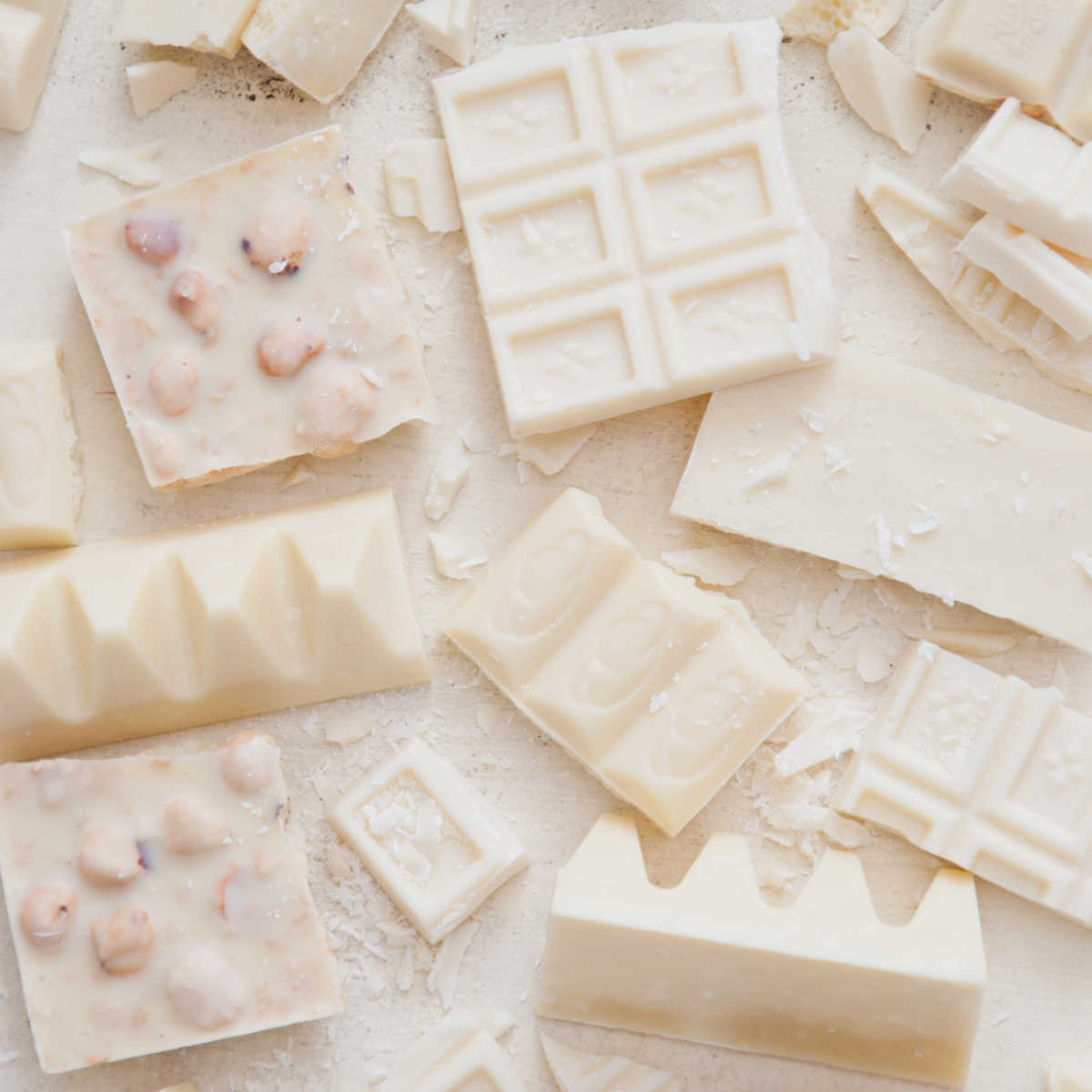
White chocolate ingredients in regular white chocolate
In order to know how to substitute white chocolate, we need to know what is white chocolate made of in the first place.
- Cocoa butter (or mixture of other fats)
- Powdered dairy milk
- Powdered white sugar
- Lecithin (to make the chocolate smoother)
- Vanilla
If you've never tasted cocoa butter (and to be honest, not sure I'd actually recommend it...), is tastes like a high fatty substance with a faint flavour of a chocolate.
Good quality white chocolate would still have cocoa butter in as one of the ingredients, but cheaper brands usually replace all or some of the cocoa butter with other fats (which are cheaper to buy)
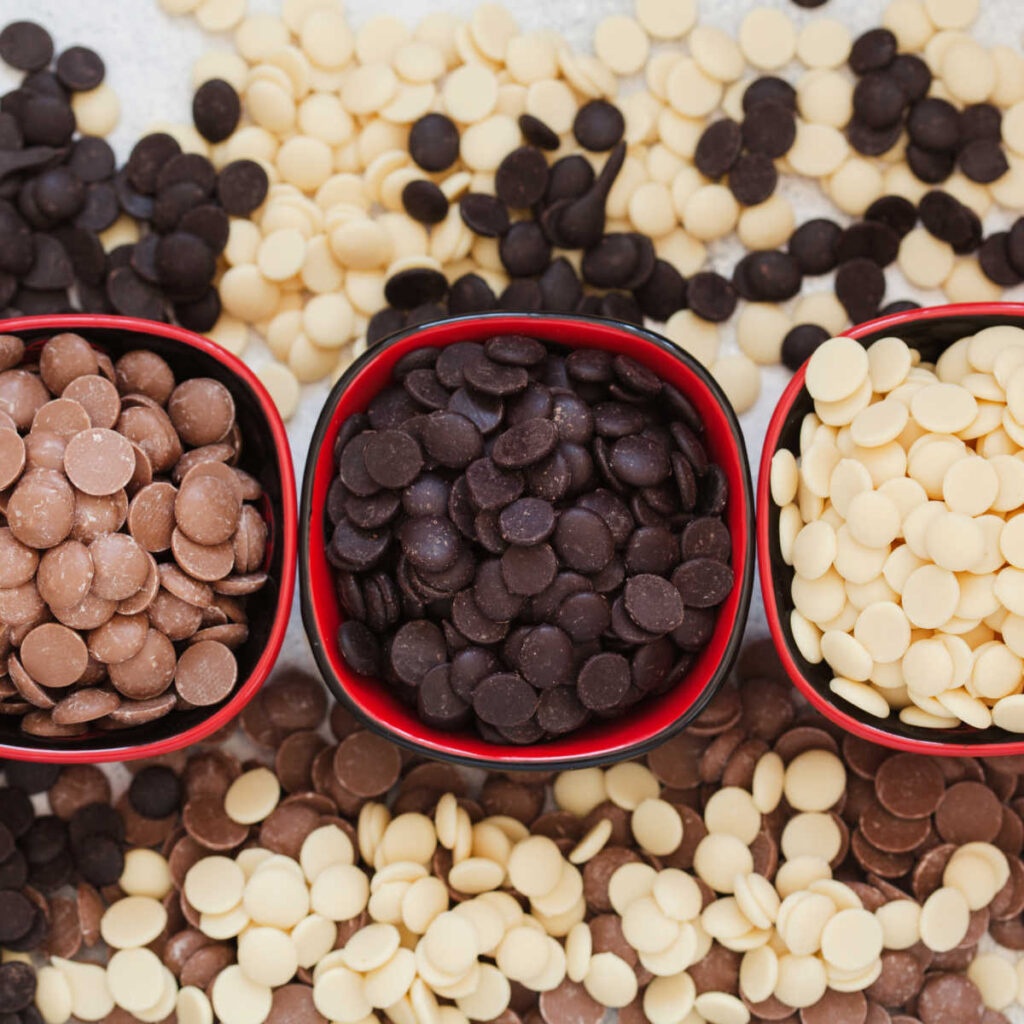
My top tips on substituting white chocolate in baking
Replace the white chocolate with the same amount of white chocolate substitute to make sure your recipe will turn out well.
1. White chocolate baking chips
In most recipes swaping white chocolate for the same amount of white baking chocolate chips will work fine. The only time when it might be a problem is if you need your white chocolate to melt fully.
White chocolate chips are specially made to withstand the high oven temperatures, so that when you bake them they don't loose their shape and cool right down without melting.
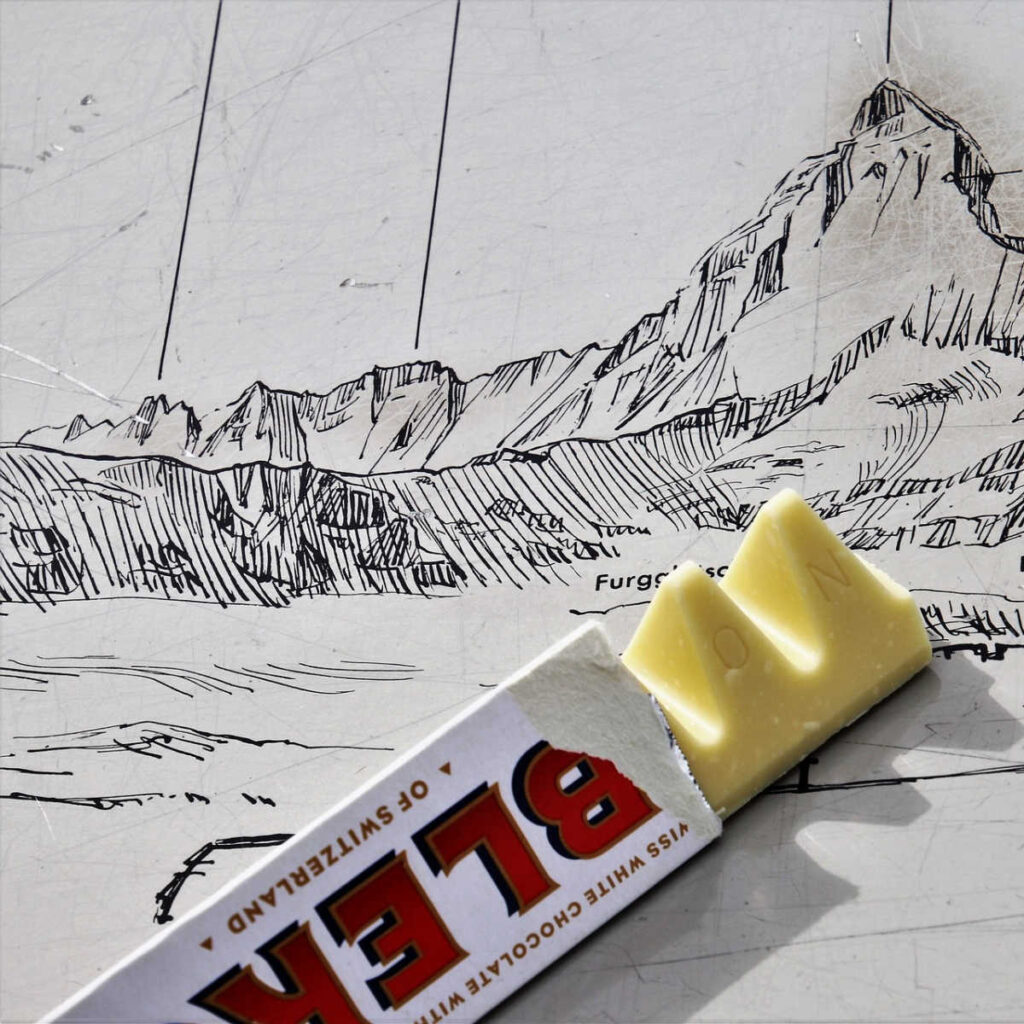
2. White chocolate eating bar
You can easily swap the white chocolate in the recipe for any kind of white chocolate eating bar, using the exact same weight. This swap is simple because both bars contain the same core ingredients, offering a flavor that should be very similar to what your recipe intended, though a higher quality eating bar might taste richer and less sweet.
The main consideration is the texture when melted. Since eating bars are designed to hold their shape at room temperature, they sometimes contain slightly different stabilizers or less fluidizing fat than specialized baking bars.
This means that when melted, an eating bar might result in a slightly thicker or less perfectly smooth texture compared to baking chocolate.
For recipes where the chocolate needs to melt perfectly smooth and blend into a thin liquid, like a delicate mirror glaze, this might be a minor issue. However, for most other uses, such as mixing into cookie dough or making a thick frosting, this substitution works wonderfully.
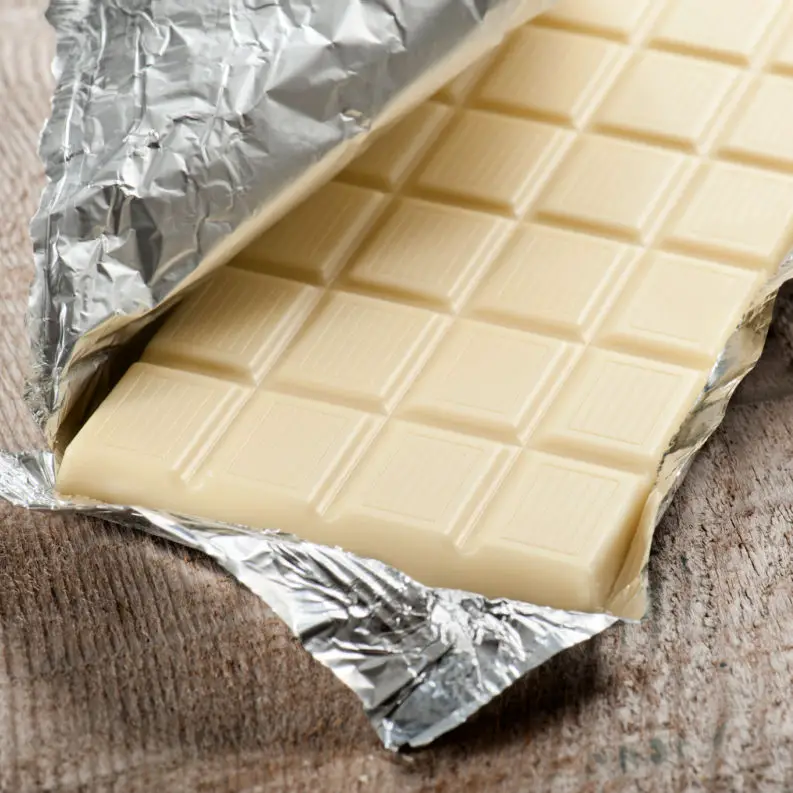
3. White chocolate baking or cooking bar
Baking chocolate has usually highter amount of vegetable or other cheaper type of fat, which not only melts better but it also makes the chocolate more pliable (which is perfect if you are making something like a chocolate mirror glaze).
In terms of flavor, baking bars are often made to be a neutral, reliable base, so they provide the classic sweet, creamy white chocolate taste without being overly strong. The main potential issue is that if the fat used is not pure cocoa butter, the final flavor might be less rich than a very high-end eating bar, but its reliable texture and melt make it the professional choice for almost any baking recipe.

4. Milk chocolate
When swapping white chocolate for milk chocolate, stick to the simple rule: Use the exact same amount of milk chocolate as the white chocolate called for in the recipe.
This keeps the recipe balanced by volume and fat content, ensuring your bake doesn't end up too dry or wet.
However, be prepared for a major flavor change. Milk chocolate adds a richer, bolder cocoa taste and is generally much less sweet than white chocolate. It will also make your finished product a light brown color instead of white.
Consider the other flavors in your recipe—if the white chocolate was meant to be light and delicate, the strong flavor of milk chocolate might overpower it. If you're okay with a completely new chocolate experience, this substitution works perfectly!
MORE CHOCOLATE MAKING TIPS

5. Dark chocolate
Use the same amount of dark chocolate as the white chocolate in the recipe.
Most recipes can be adapted to suit other types of chocolate, but if you do replace it, you will of course end up with a completely different cake.
I've seen a lot of people recommending to swap white chocolate with milk in baking recipes, but to be honest most recipes with white chocolate are designed so that they work best with the sweet and light flavour and the white flavour. This is why, you need to think about the flavour combinations first and consider the second flavour before you swap the white chocolate for milk or dark chocolate.
For example, if you have a recipe for a White chocolate & Raspberry cake, you'd be better off swapping the white chocolate for rich dark chocolate, which will bring out the best in the raspberries. On the other hand, milk chocolate is going to drawn the sharpness of the raspberries and make the whole cake taste a little dull. It's not totally right or wrong, your cake will be edible either way.
MORE CHOCOLATE MAKING TIPS

6. Vanilla or Yogurt Chips
If your recipe calls for white chocolate chips to be mixed into a dough (like in cookies or muffins), Vanilla or Yogurt Chips are the easiest swap.
These chips are usually found right next to the white chocolate chips in the baking aisle. They share the same light color and high sweetness, but they are made using vegetable oils and vanilla flavoring instead of cocoa butter. Just like white chocolate chips, they are specially designed to hold their shape during baking, meaning they won't melt all over the pan.
However, be aware that their flavor is pure vanilla and sugar, lacking the subtle, buttery taste that cocoa butter provides. For recipes where the chocolate isn't supposed to melt completely, such as cookies, brownies, or simple trail mix bars, they are a perfect and convenient substitute.
MORE CHOCOLATE TIPS

7. Confectionery Coating (Almond Bark or Melting Wafers)
When your recipe needs a large amount of white chocolate to melt into a thin, smooth, and easy-to-use liquid—for example, when coating or dipping treats—you can use Confectionery Coating, sometimes sold as Almond Bark or Melting Wafers.
These products are made with vegetable fats and stabilizers, which means they are engineered to melt incredibly smoothly without needing careful tempering. Their texture is much better for dipping than a standard eating bar.
They provide a very sweet and creamy vanilla flavor, but because they contain no cocoa butter, they are chemically different from real chocolate.
They work best as a simple, reliable coating or drizzle, but you should avoid using them when mixing a large amount of melted chocolate directly into a cake batter, as the different fats can sometimes affect the texture of the finished bake.

8. Macadamia Nut Butter
For a sophisticated and unique non-chocolate alternative, especially in creamy applications, consider Macadamia Nut Butter.
This substitute is best used in recipes where the white chocolate is being melted and blended into a creamy mixture, like in a cheesecake filling, a frosting, or a soft bar cookie. Macadamia nut butter has a light, ivory color and a high natural fat content, which gives it a wonderfully rich and buttery texture that mimics the mouthfeel of cocoa butter.
Unlike white chocolate, however, this nut butter is not sweet, so you must add extra powdered sugar to your recipe to balance out the lost sweetness. Also, remember that this substitution introduces a clear, rich, nutty flavor, which should be considered alongside the other ingredients in your dessert.

9. Homemade white chocolate
The next thing you can do is to replace the white chocolate in a recipe with your own homemade chocolate.
You can make the chocolate first and then use it or just add the ingredients in the recipe, depending on what you are baking or making.
If you are using white chocolate to blend into your recipe (it doesn't have to stay whole like a chocolate chips or decorations on the top of a cake) you can easily just use the ingredients for white chocolate, mix it together and add it to the rest of the recipe, without actually making the white chocolate into a chocolate bar.
If you need a vegan recipe, my dairy free version of white chocolate recipe is very easy to make.
To replace 100 grams of regular white chocolate use;
- 50 grams of cocoa butter (suitable for culinary use)
- 50 grams of powdered milk
- 20 grams of fondant (white, icing) sugar
- 1/4 teaspoon of vanilla seeds (optional)
- To make the white chocolate simply melt the cocoa butter first in the microwave or on a bain marie; slowly and carefully.
- Add the powdered milk and stir in.
- Add the powdered sugar and vanilla if using.
- Stir until it's all mixed and the mixture thickens a little.
- Normally you'd pour the chocolate to a chocolate mould (or just on a tray) and leave it to set in the fridge.
- If you are using the chocolate straightaway, you can just leave it in the bowl to set a little, but don't have to leave it to set completely.
WHITE CHOCOLATE RECIPES

10. Homemade milk or dark chocolate
If you decide to go with the milk or dark chocolate option and don't have a chocolate bar, you can use coco powder with butter, icing sugar and milk powder.
Depending on what type you chocolate you are trying to replace, you can find the exact quantities in my blog post about cocoa powder. Using cocoa powder will result in either milk or dark chocolate, but of course not white chocolate.
This blog post was originally written on 26 March 2021 and last updated on 26 November 2025





Leave a Reply