
A lot of my chocolate baking recipes call for cocoa powder and whilst I always provide substitution ideas in each recipe, it can be still a bit confusing to know what to use instead of cocoa powder in baking, cooking and general chocolate making.
In this blog post I wanted to summarise all my favourite 8 substitutions for cocoa powder and their use, including carob powder, chocolate bar or hot chocolate powder.
I also wanted to give you the lowdown on how exactly to replace cocoa powder in the baking recipes and how you can adapt your recipe based on what cocoa powder you have at home.
I use these cocoa powder substitutes all the time, when I run out of cocoa powder or if I'm running short of it.

What are the best cocoa powder substitutions? The quick answer
The best substitute is cacao powder, while the second-best is Dutch-processed cocoa powder. A reasonable substitute is baking chocolate unsweetened chocolate, but use ½ tablespoon less fat for every tablespoon used.
Cocoa powder, cacao powder, baking cocoa, and Dutch cocoa are all slightly different versions of the same ingredient: defatted cocoa. They can be used as a cocoa substitute in a 1-to-1 ratio.
Other ingredients that can substitute for cocoa powder include chocolate chips, cacao nibs, dark chocolate bar, couverture, drinking chocolate powder, carob powder, chocolate spread (not Nutella), and hot cocoa mix (hot chocolate mix).
PIN IT & KEEP IT FOR LATER
What is cocoa powder
To give you a better understanding of how to use cocoa powder in baking, I think it's a good idea to briefly recap what cocoa powder actually is.
Cocoa powder is the dry and ground element of cacao beans, which is created when the cocoa butter is extracted from the beans. It basically means that cocoa powder has the flavour of chocolate, but it doesn't have any fat. That is why if you want to make a super simple chocolate bars at home, you can use cocoa powder, sugar and butter or other fat to create your chocolates.
RECIPES WITH CHOCOLATE
1. Dutch Cocoa Powder
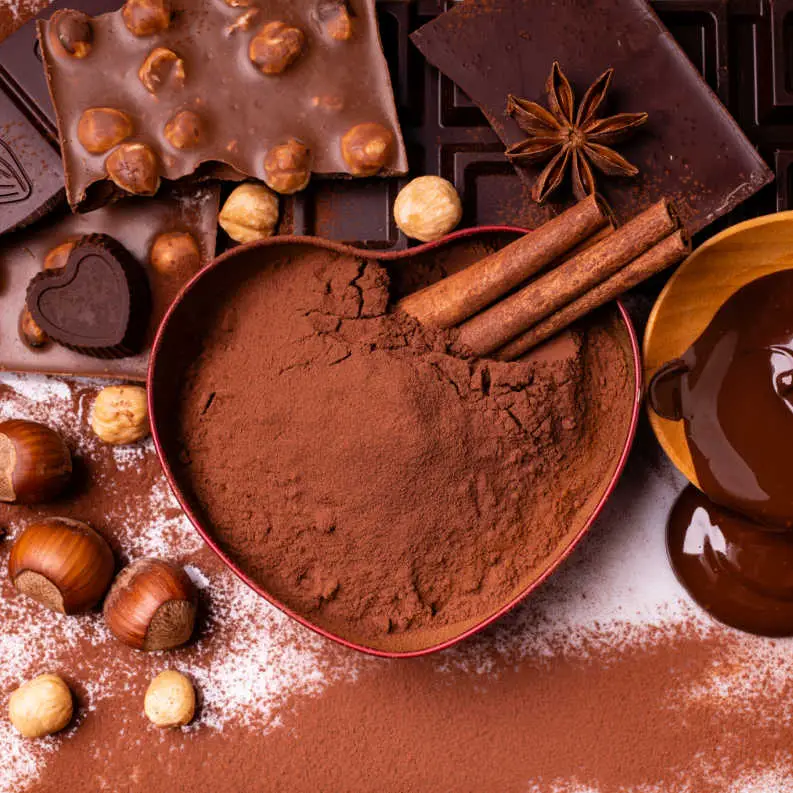
When you shop for cocoa powder in the supermarket, you might come across two different types - regular natural unsweetened cocoa powder and Dutch cocoa powder. There is a bit of a difference between the two types, but you can easily replace cocoa powder with Duch process cocoa powder in a ratio of 1:1.
Unsweetened cocoa powder is completely natural and the Dutch cocoa powder is processed further by neutralising the cocoa powder pH, making the powder less bitter. This makes the Dutch cocoa powder stronger in flavour, but less bitter to taste.
The natural (untreated) cocoa powder is more acidic and reacts with baking soda (it helps the cake to rise better). Depending on how much rise you want on your cake (or not) you can use either Dutch cocoa powder (for all recipes with baking powder) or the natural cocoa powder for any recipes with baking soda (if you want them to rise more).
Just a side note, the difference is only marginal, it's not like your cake is going to double in size or not going to rise at all if you use the different types of cocoa powder.
Cocoa powder is quite strong in flavour, so whatever you decide it to swap it with you might need to up the quantity of the substitution ingredient to get the same strength of cocoa powder flavour.
MORE RECIPES WITH CHOCOLATE
2. Dark Chocolate Bar
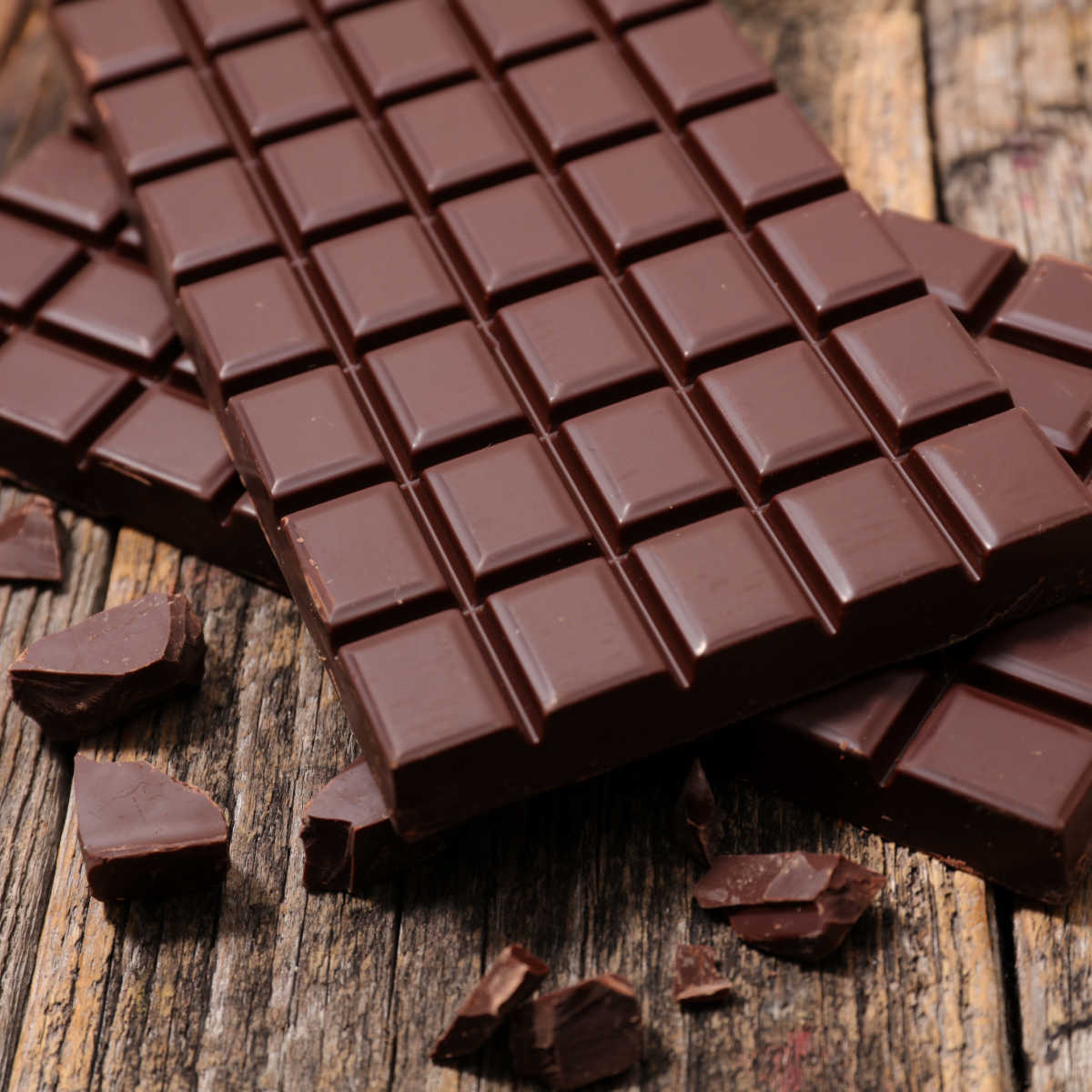
Use dark or milk chocolate bar with high cocoa solids content. 70% or higher is best, but if you have just milk chocolate or milk chocolate substitute, you can add 1/2-1 teaspoon of instant coffee granules to make the chocolate flavour stronger.
You can use any shop bought plain chocolate bar or use a homemade plain chocolate bar.
Depending on your recipe, you might need to up the amount of chocolate to get the flavour right. To mix the chocolate well into your cake mixture, chop it finely first or melt it gently in a microwave to soften.
For every tablespoon of cocoa powder, replace it with the same amount of chopped up chocolate bar.
Depending on how much chocolate you need to add, you can reduce sugar and butter in the recipe, but if the recipe calls for say 3 tablespoons of cocoa powder I wouldn't bother to make any changes to the rest of the recipe. Just replace it like for like.
RECIPES WITH CHOCOLATE
3. Dark Chocolate Chips
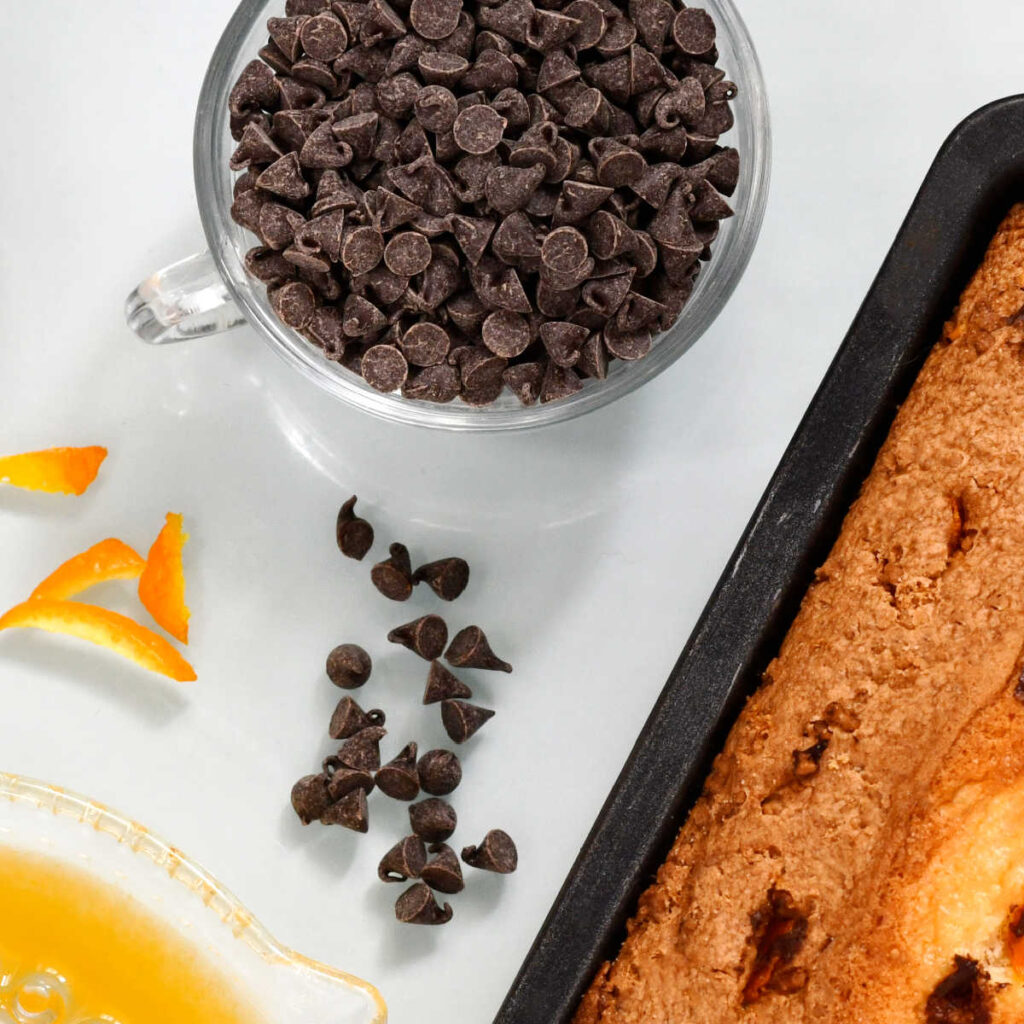
Baking chocolate chips are designed so that they withstand high temperature and they hold their shape. This means that if you use them, they will not melt completely into the cake mixture, but you will have a chocolate flavour in a form of chocolate buttons/chips.
If you wanted to achieve similar effect like with cocoa powder, you can also ground the chocolate baking chips with a rolling pin (make sure you place your chocolate chips in a plastic bag first) or put them through a food blender.
To replace cocoa powder in your recipe, use 1/2 cup of chocolate chips for every 3 tablespoons of cocoa powder.

4. Dark Chocolate Coverture
Chocolate coverture is what professional chocolatiers use for making chocolate, but this type of chocolate is readily available for the home cook too.
If you are lucky to have some in your kitchen you can easily use it instead of cocoa powder. Like with a chocolate bar, the higher cocoa solids chocolate you use the better the flavour. Make sure that you melt the chocolate coverture very slowly before adding to the rest of your recipe ingredients.

5. Hot chocolate drink powder
If you want to add at least some chocolate flavour to your cake, you can also use hot chocolate drink mix. Please bear in mind that the original hot chocolate powder is usually mix of cocoa powder, milk powder and sugar, so you might need to adjust the amount of sugar you add to your cake.
You will need about 2x times more hot chocolate drink powder than the cocoa powder amount in your recipe, but I would always taste the batter to make sure you are happy with the chocolate flavour and add more hot chocolate powder if needed.
1/2 - 1 teaspoon of instant coffee granules (dissolved in tiny amount of hot water) and a tiny pinch of salt will help to strengthen the chocolate flavour.

6. Baking Chocolate (Unsweetened Chocolate)
Baking chocolate or unsweetened chocolate is made from 100% chocolate liquor or cacao paste and you can easily find it in any baking section of your local supermarket. It contains both cocoa solids and cocoa butter in roughly equal measure and is generally used in baking as well as to make desserts.
Because it has higher percentage of cocoa solids, baking chocolate is one of the simplest and best substitutes for cacao powder. The chocolate flavour can be quite bitter when made with lower-quality cacao, but it can still be used to achieve a dark and richer colour in your baking recipes and desserts.
To substitute cocoa powder with baking chocolate, use four tablespoons of unsweetened baking chocolate for every three tablespoons of cocoa powder called for in a recipe. To make the swap, before adding the chocolate to your wet ingredients, melt it slowly until it's fully liquid.
I also find useful to reduce the amount of fat in the recipe if I'm using a large amount of the baking chocolate. Thi is because chocolate contains more fat than cocoa powder, so you need to reduce the amount of fat used in your recipe by about 2 tablespoons per every 4 tablespoons of baking chocolate used.
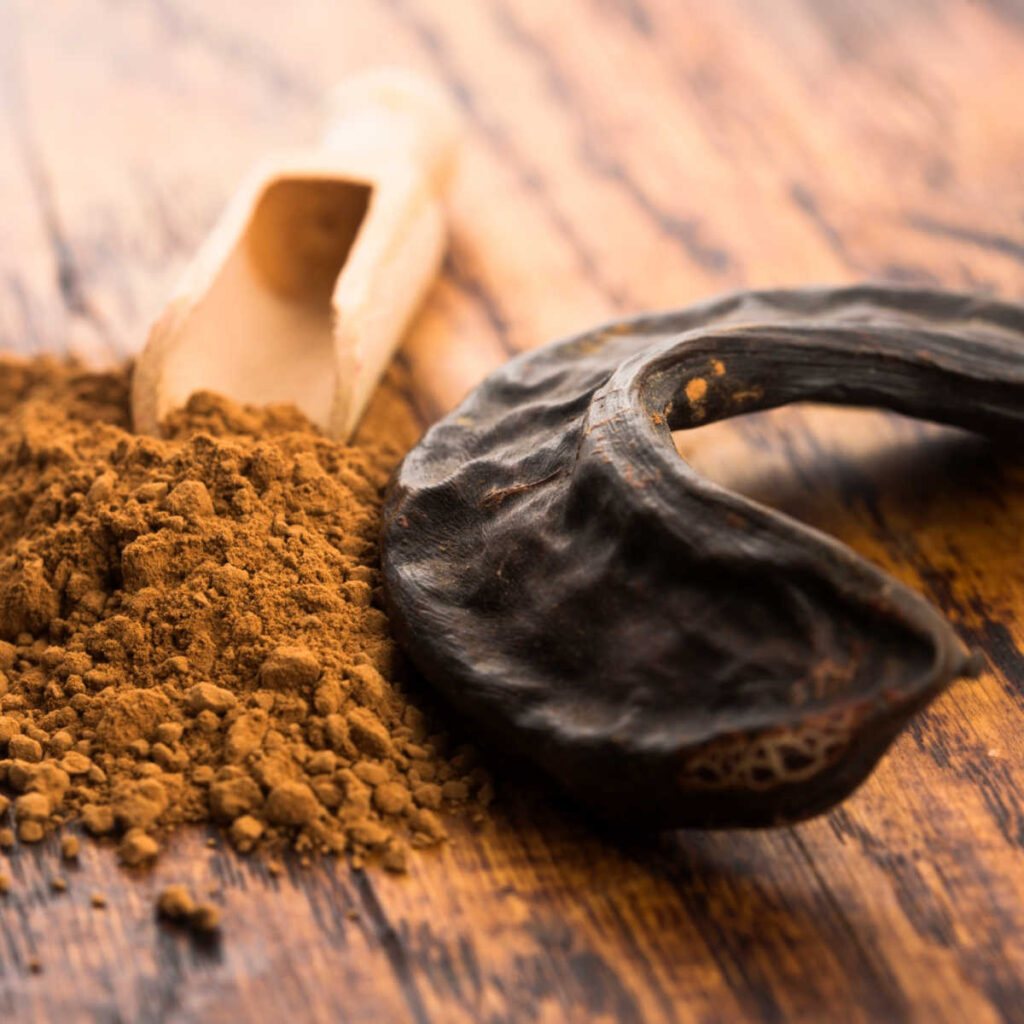
7. Carob Powder
The chances are that if you don't have a cocoa powder in the house, you are very unlikely to have a tub of carob powder bouncing around, but it's worth mentioning this substitution too.
Carob is the equivalent of chocolate and the carob powder can be used instead of cocoa powder. I would use the carob powder in the same way as cocoa powder and I've previously made these delicious carob truffles. Some people find it less strong (or more) than cocoa powder, but that's a personal preference. I normally replace the carob powder for cocoa powder in a ratio of 1:1.
The fab thing about carob is that it's naturally caffeine-free, so if you are one of the people who gets headache when you eat chocolate, you should be able to eat carob cakes or sweets without any problem.

8. Cacao Nibs (Cocoa Nibs)
Cacao nibs are a great substitution for cocoa powder as they are the full-fat, less-processed version of cocoa powder. They're the raw material from which cacao butter is pressed, and then cacao powder is made by grinding it into the fine dust.
They are also popular as toppings for breakfast porridge bowls, which means you can easily get them in most health shops. I use cocoa nibs to top my homemade chocolate bars as they add a nice crunch.
The problem is that you can't just add cocoa nibs to your recipe as they won't melt by themselves. To substitute cacao powder with cacao nibs, it's best to first lightly roast them in the oven for about 5 minutes at 200°F (95°C).
Then add the warm cocoa nibs to a strong blender or food processor and grind them in 2-5-second pulses for about 1-2 minutes. You should end up with a mixture that's quite thick similar to a cacao paste although the cocoa nibs mixture will be much thicker and drier.
To use the grinded cocoa nibs replace cocoa powder in a 1-to-1 ratio. They are quite strong in taste, so if you prefer to have a milder flavour, you can use a little less. If you wish, you can also continue to make a homemade cocoa nibs chocolate following my recipe.
Why not stay in touch...
I hope you enjoy making this recipe and if you do, I'd love to know what you think! Let me know in the comments below or find me on Instagram or Facebook and add the hashtag #cocoaandheart so that I can see your post.
Or why not subscribe to my weekly newsletter with new recipes and baking tips straight to your mailbox.
Magdalena
This blog post was originally written on 21 February 2021 and last tested and updated on 10 December 2023




Leave a Reply